 Guide On Map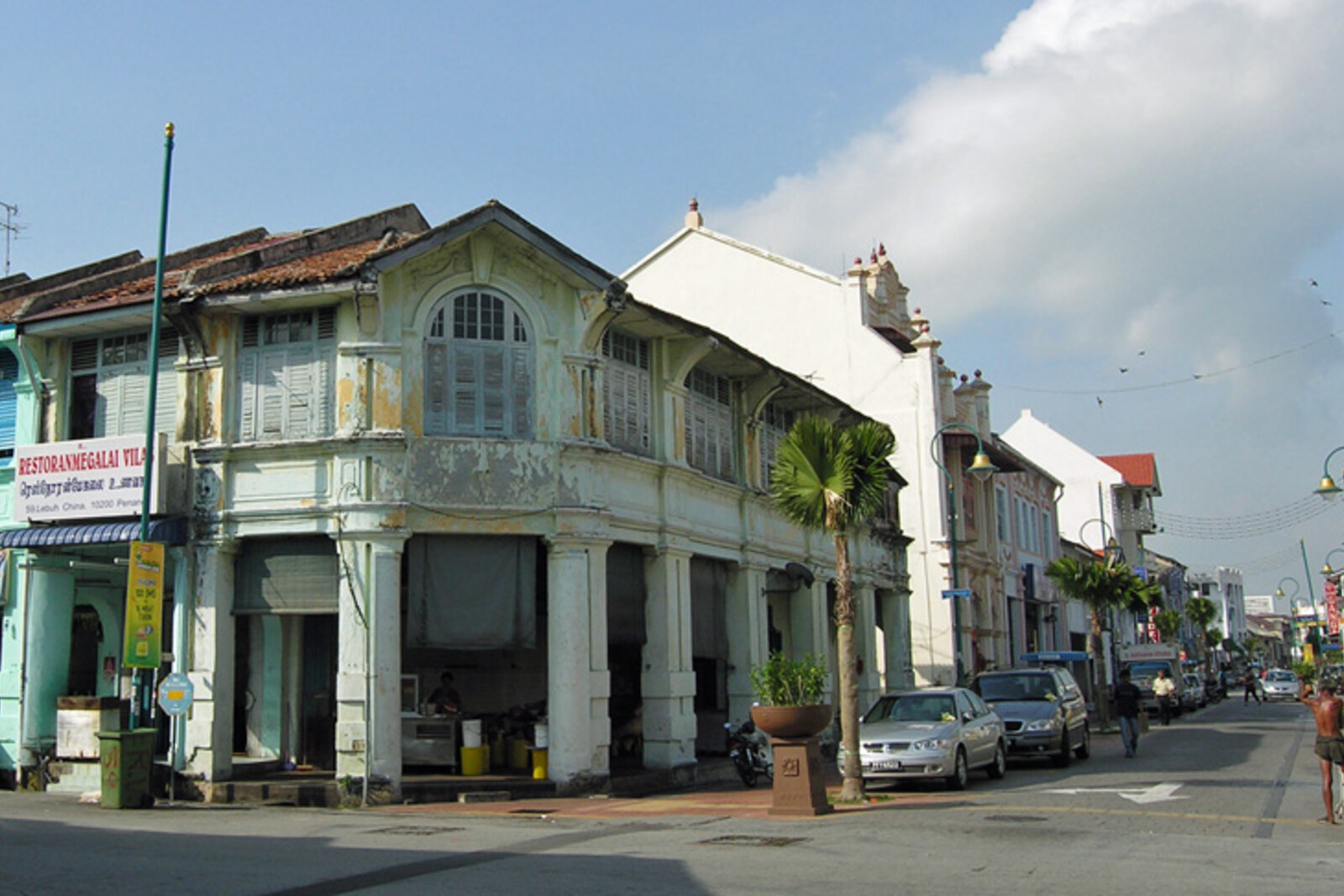
Look around first
What to notice
- Official street sign
- Facades of old shophouses
- Entrance to Tua Pek Kong Temple
- Neighboring community-association buildings
The story of the place
King Street runs along old shophouses, and behind their narrow facades, homes, commerce, and community spaces stand side by side. At houses thirty-two and thirty-four is the entrance to the city temple; inside, rituals are still performed and charitable work is still carried out. Among the shop signs, a place has survived where newcomers could come for help from people from their own home communities.
King Street was named after George III—a British king during whose reign an East India Company settlement appeared on Penang. In seventeen eighty-six, its agent Francis Light was seeking a harbor on the trade route between India and China and declared the local port duty-free. The colonial planners placed the name of the reigning monarch in the original street grid. George III himself had nothing to do with the life of this street.
Light's decision quickly filled the harbor with work. In its founding year, eighty-five ships arrived here, and in eighteen oh two there were already three thousand five hundred sixty-nine. South Indian sailors, boatmen, and stevedores settled near the port, including on the southern stretch of King Street. They sought work on every arriving ship: they moved cargo on lighters—small sailing barges—between ships and shore warehouses, provisioned crews, and unloaded sacks and bales. Some boatmen lived and slept on the same barges on which they earned their living.
The Tamils called this stretch Padahukara Teru—the street of boatmen. This name accurately indicated how its inhabitants made their living. Shops, a market, shrines, and housing for people connected with the harbor appeared nearby. An Indian commercial district grew out of the port settlement. In nineteen seventy-four, the main cargo operations were moved across the strait to Butterworth, but the stretch between Market Street and Chulia Street remained part of Little India.
The northern blocks of the same street acquired a different local name. Cantonese and Hakka migrants from Chinese peoples found it difficult to reach Tua Pek Kong Temple in Tanjung Tokong: at the beginning of the nineteenth century, convenient roads did not yet exist. The Cantonese collected donations and in eighteen ten built a city temple on King Street for their patron deity. After that, the Chinese called the stretch between Bishop Street and China Street the Street of the Cantonese Tua Pek Kong; community associations and clan associations were established nearby, helping newcomers find their own people, find work, and bury the dead.
The official sign retained the name of George III. Behind the facades of houses thirty-two through thirty-four, the rituals and community charity for which migrants once built their own temple are still carried out.
Useful on site
around the clock
Checked: June 17, 2026. Check the official source before visiting.Most of the stories are connected with active community buildings; do not count on free entry, and read the street through its facades.