 Guide On Map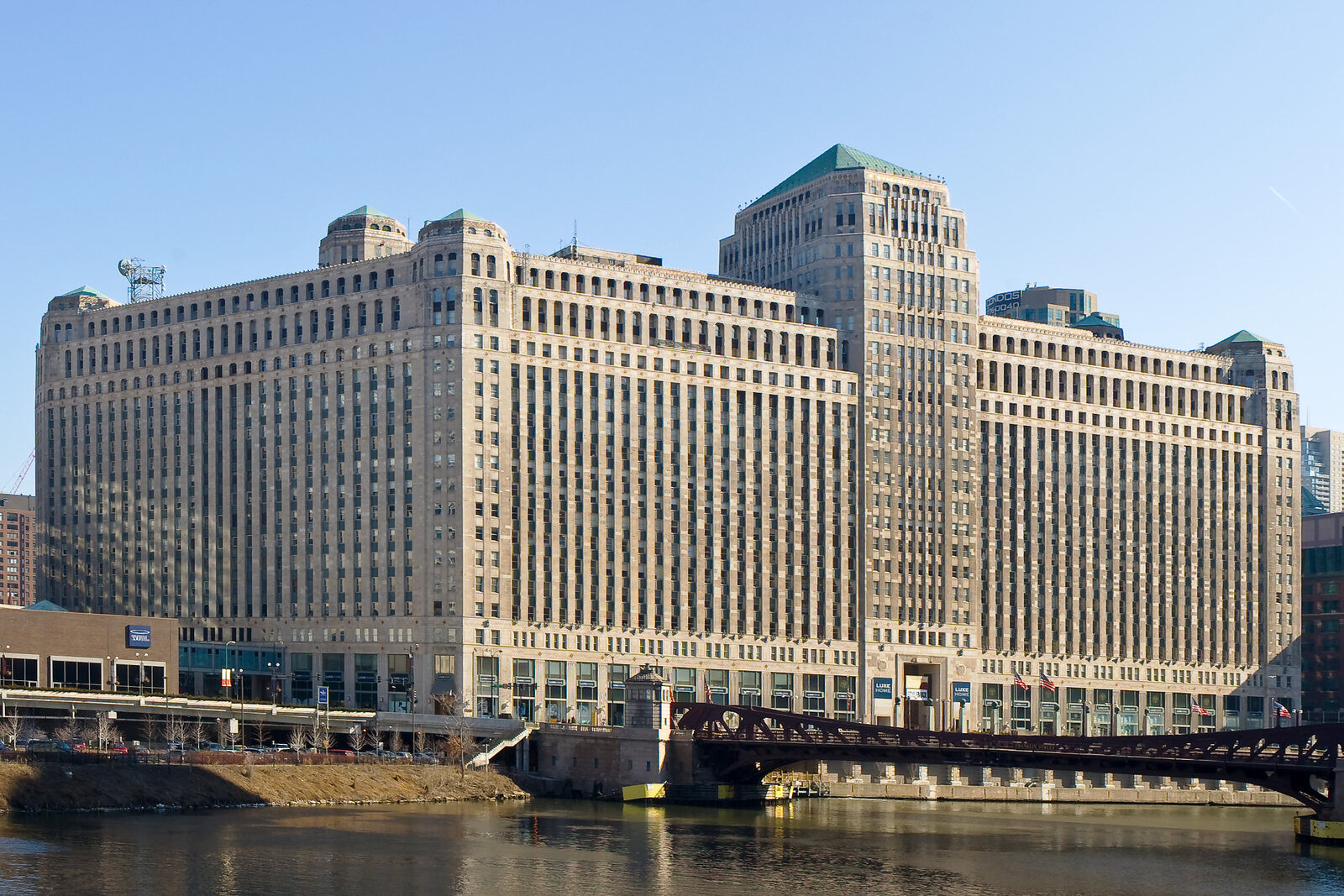
Look around first
What to notice
- Long facade along the river
- Massive central structure
- “theMART” sign
- River plaza in front of the building
The story of the place
Railroad-station tracks once ran beneath the massive central structure. Freight cars were meant to move below, with unloading platforms, warehouses, and offices above them, while the upper floors were set aside for displaying goods. Barges approached the building at the river fork, and trucks came from the streets; that is why its long facade follows the bank instead of soaring upward as a narrow tower. Offices and hundreds of halls now operate behind it, where architects and designers choose furniture, lighting, and finishing materials.
The current brand is written as one word—theMART (formerly the Merchandise Mart). The name is an abbreviation of its former name, meaning a wholesale trade center. Inside such a center, the owner of a furniture store chose sofas, fabrics, and light fixtures for resale, while manufacturers displayed samples and took orders. The long facade along the river was created for this work: thirteen warehouses scattered across Chicago were to be moved here.
James Simpson, president of Marshall Field & Company, insisted on it. By the end of the nineteen twenties, its wholesale business was already losing ground: chain stores were increasingly buying goods directly from manufacturers. Simpson wanted to win customers back by bringing warehouses, showrooms, and offices together in one place. At the same time, he chaired the Chicago Plan Commission and pushed for development along the river’s north bank.
Simpson chose a site above the former tracks of a railroad station. There was no need to buy the land: the company paid about two million dollars for the right to build in the air above the tracks. Freight cars were to run below; unloading areas, warehouses, and offices were placed above them; still higher were the showrooms. A river dock and streets for trucks stood nearby. That is why theMART stands here, at the fork of the river, and why it stretches along the bank rather than rising as one narrow tower.
Simpson wagered tens of millions of the company’s dollars on this plan. His colleague John McKinlay, the executive responsible for the firm’s day-to-day affairs, warned that a new building would not save a trading system that customers had already begun to bypass. Simpson nevertheless secured its construction.
theMART opened in May nineteen thirty. The stock-market crash had already happened, and the country was entering the Great Depression. Customers were offered an enormous covered market: shops and restaurants operated below, the company itself occupied several floors, and the rest were leased to manufacturers and wholesalers. But the scale that was supposed to restore profits increased expenses. In nineteen thirty-one, the wholesale and manufacturing divisions lost about five million dollars; the next year, about eight million.
Simpson lost control of the company. The board of directors brought in James O. McKinsey, a consultant tasked with stopping the losses. McKinsey recommended closing the wholesale departments and personally led the reorganization. By nineteen thirty-six, the division for which theMART had been built had ceased to exist.
During World War Two, federal agencies occupied the vacated premises. After the war, officials began moving out, and the owners again faced the prospect of empty floors. Then Joseph P. Kennedy, an investor expecting to earn money from rent, bought the building. Sources disagree on the exact price of the deal, but it was about thirteen million dollars—less than half the original construction cost.
Kennedy appointed Wallace Allman as manager and instructed him to replace government tenants with private ones. Allman bet on postwar demand: Americans returning from the war were setting up homes, and merchants again needed furniture and textile samples. He and Kennedy filled the floors with showrooms, installed air conditioning, and opened paid tours for fifty cents. Within a few years, rental income had turned Simpson’s former failure into the largest source of the Kennedy family’s fortune.
The family owned theMART until nineteen ninety-eight. The current owner, Vornado Realty Trust, shortened the old name to the familiar Chicago “Mart.” It now contains offices and more than two hundred fifty showrooms for architects and designers. Marshall Field’s wholesale company has long been gone, but the work for which Simpson brought thirteen warehouses under one roof still takes place behind this long facade.
Useful on site
Exterior viewing from the street and riverwalk; interior shops, restaurants, and events operate on the building’s schedule.
Checked: June 29, 2026. Check the official source before visiting.To appreciate its size, first look at the building from a distance, then walk along its facade. Access to individual spaces depends on their current use.