 Guide On Map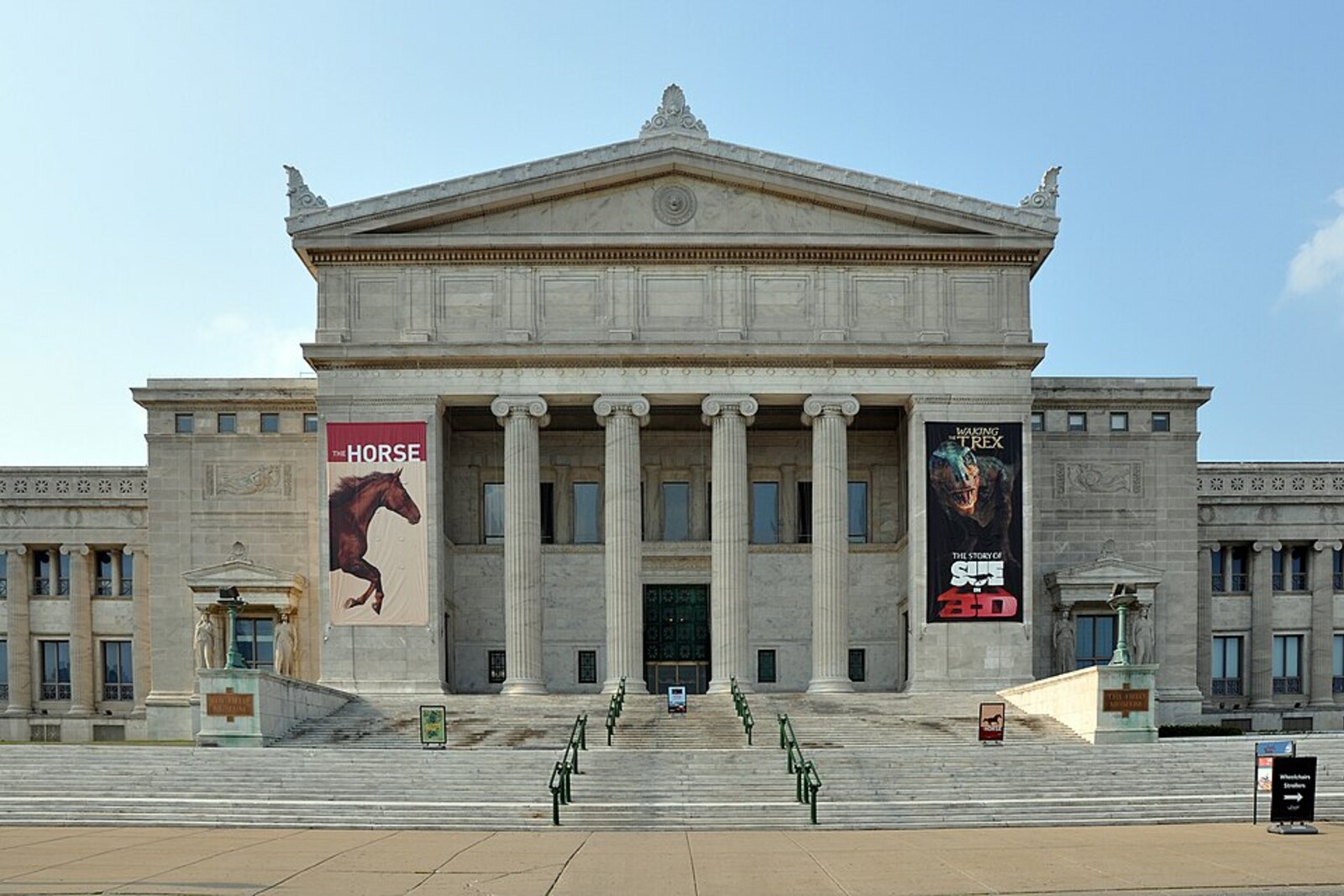
Look around first
What to notice
- Field's surname on the facade
- The main hall named for Stanley Field
The story of the place
Field's surname on the facade identifies the natural history museum that occupied a permanent building near Grant Park. Inside, about forty million objects and natural specimens are kept, but only about one hundredth of the collection is displayed in the galleries. The remaining objects stay in storage areas and laboratories, where they are described, compared, and reexamined.
In the spring of nineteen twenty, crates of taxidermy specimens, fossils, plants, minerals, and objects from human cultures were brought to this still-closed building. Some of the cargo came by rail, some in horse-drawn wagons. Museum employees were moving the collection here from Jackson Park, where it had been stored in a former pavilion of the World’s Columbian Exposition.
These crates might never have appeared. The World’s Columbian Exposition of eighteen ninety-three was a temporary undertaking: after it closed, the exhibits were to be returned to their owners or sold. Frederick Ward Putnam, head of the exposition's ethnographic department, worked to create a permanent museum. He was supported by Edward E. Ayer, a merchant who had made a fortune supplying railroad ties to railroads and spent money on books and collections. To preserve the exposition's collections, they needed someone capable of immediately providing an enormous sum.
That person was Marshall Field, owner of Chicago's largest firm dealing in textiles and ready-made goods. At first, the museum did not interest him. Ayer spent several weeks trying to secure his agreement and finally came to his office. In the museum chronicle, Field greets his visitor with the words: “You want to talk to me about that damned museum again.”
Ayer offered Field an exchange a merchant would understand: one million dollars now—and a name that would remain after the stores had closed and the goods had been sold off. Field agreed to inspect the exposition the next day, and after the visit he wrote a check for one million dollars. His contribution prompted other Chicago entrepreneurs to give money. The trustees were able to buy the first collections, and Ayer became the first president of the new museum.
At first, the institution was called the Columbian Museum of Chicago. As early as eighteen ninety-four, the trustees added the principal donor's surname, and in nineteen oh five they established its present name—the Field Museum of Natural History. Field bequeathed another eight million dollars to the museum. The trustees directed that money toward a permanent building, but the benefactor himself died long before it opened.
The move was completed by his nephew Stanley Field, the new museum president, who worked to locate the collections near Grant Park. Employees unpacked the crates they had brought, arranged the exhibits, and opened the doors on May second, nineteen twenty-one; the line stretched for several miles from the new building. The main hall inside now bears Stanley's name, and the facade bears Marshall's surname.
Today, museum staff keep about forty million objects and natural specimens here. Visitors are shown about one percent; everything else remains in storage areas and laboratories, where scientists describe species, compare finds, and reexamine the contents of those collections that Ayer once prevented from being sold off after the temporary exposition.
Useful on site
Daily 9:00–17:00, last entry 16:00; closed on Thanksgiving and Christmas.
Checked: July 1, 2026. Check the official source before visiting.The facade is suitable for a short exterior stop; the collections are enormous, so plan admission and viewing time separately.