 Guide On Map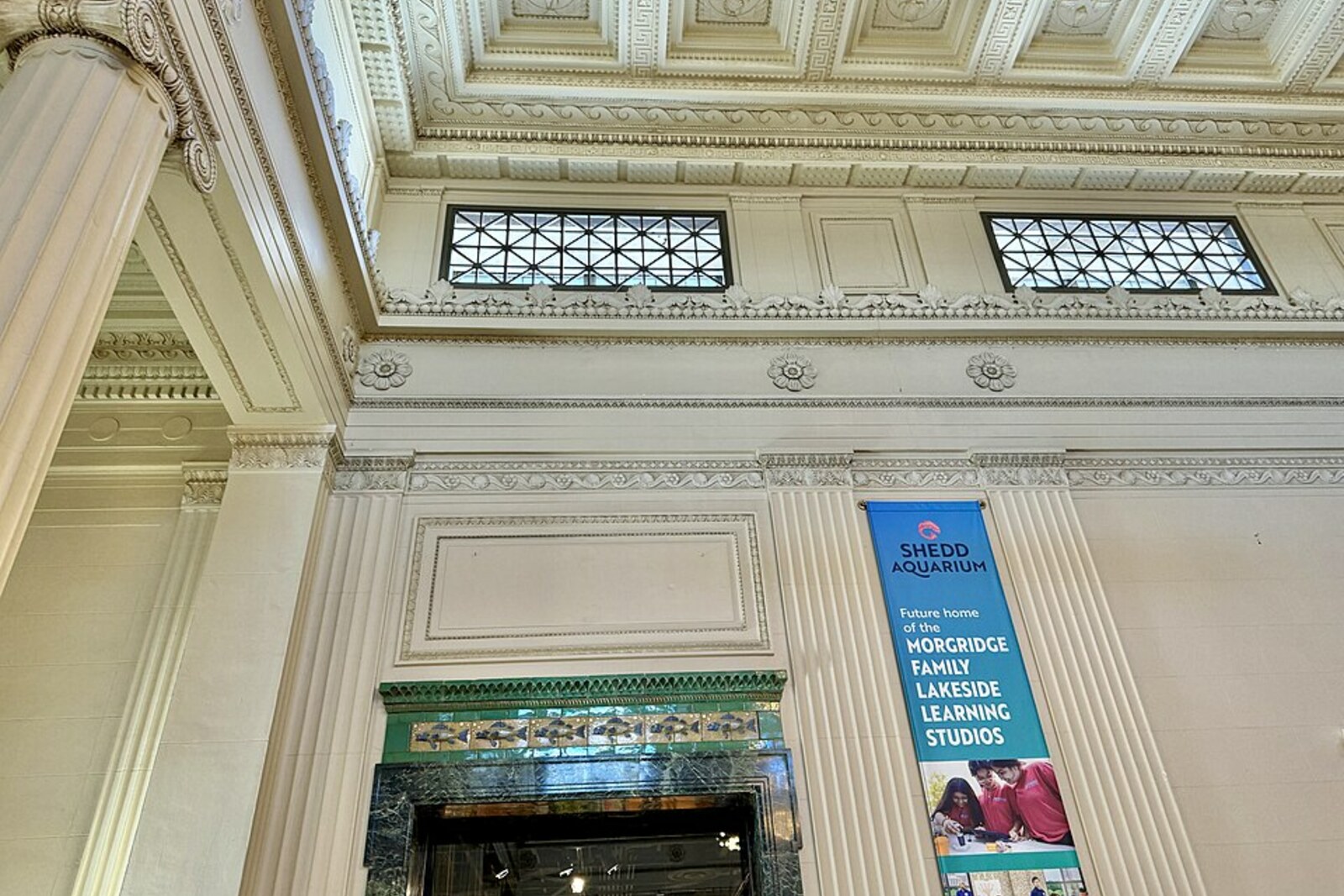
Look around first
What to notice
- White-marble octagonal building
- Figures of fish on the facade
- Figures of turtles on the facade
- Shedd's surname above the entrance
The story of the place
A light-colored marble building with eight sides was placed by Lake Michigan for a city aquarium with inhabitants of seas and fresh waters. Fish and turtles recur on the facade, and animals from different bodies of water are kept in the halls. The lake water here is fresh, while the marine pools need salt water. Water from the lake and the city system is purified and reused, and the required salinity is created inside the building.
The surname above the entrance belongs to a merchant. John Graves Shedd did not study fish: he made his money from department-store merchandise. In eighteen seventy-two, Shedd joined Marshall Field's company as a stock clerk and salesman, earning ten dollars a week. Thirty-four years later, he headed the firm where he had started by unpacking merchandise.
Shedd decided to give Chicago an institution that, in his view, a great city lacked: an aquarium with animals from the seas and fresh waters of the entire world. He wanted to place it beside the Field Museum and the Art Institute of Chicago, continuing the chain of public institutions by Grant Park. The site chosen for construction was at the end of Twelfth Street—now Roosevelt Road.
In nineteen twenty-four, Shedd gave two million dollars to the new Aquarium Association. When estimates showed how much the project would cost, he added another million. But the money paid for walls and equipment; the living animals needed spaces, water at the right temperature, and constant care.
This part of the project was taken on by the future director Walter Chute, a specialist in keeping fish. He toured American and European aquariums and found the same recurring mistake: architects left plenty of space for the public and too little for the people who fed, treated, and moved the animals. Shedd's designers began with a classical cruciform plan. Chute insisted that they fill in the four corners. The building thus became octagonal, and inside it gained backup pools, feeding rooms, laboratories, and one of the early hospitals for aquatic animals. From the outset, behind the exhibition glass stood a second institution, closed to the public: a support operation without which the collection would quickly have died.
Water remained the problem. Lake Michigan lay right beside the walls, but its water is fresh, while Shedd had promised Chicago marine fish. Chute's team sent twenty railroad tank cars to Florida. They made the trip between Key West and Chicago eight times and delivered about one million gallons of ocean water. For the animals themselves, the Pullman Company built a separate car, the Nautilus. It had tanks for freshwater and marine species, and the water could be cooled or heated during the journey. The fish arrived here by rail as a living collection with its own mobile aquarium.
John Shedd did not live to see the result. He died in October nineteen twenty-six; earthworks began only a year later. The trustees continued the project, and Walter Chute became director and led the aquarium until nineteen sixty-four. On May thirtieth, nineteen thirty, the halls, already bearing the name of the man who had paid for them, opened to the public.
Trains carrying ocean water came here until nineteen seventy. Now the staff take water from the lake and the city system, filter it, reuse it, and prepare a salt mixture on site for the marine pools. The white-marble octagon preserves Chute's solution, figures of fish and turtles on the facade indicate the building's purpose, and above the entrance is carved the surname of John Graves Shedd—the man who died before the first hall with fish opened in his aquarium.
Useful on site
In summer 2026, the official page lists 9:00–21:00; check tickets, free days, and separate programs online.
Checked: July 1, 2026. Check the official source before visiting.The exterior decoration can be viewed without visiting; exhibits and programs with animals require separate planning.