 Guide On Map
Parks and Museums of Chicago’s Lakefront
From the Chicago Cultural Center through Millennium Park and Grant Park to Adler Planetarium
Guide On Map on your phone
Open the walk like a regular app
It takes about 10 seconds to install. No app store needed.
The whole path
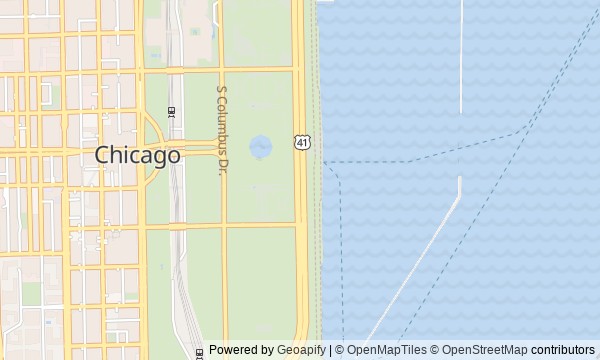
Route map
About the walk
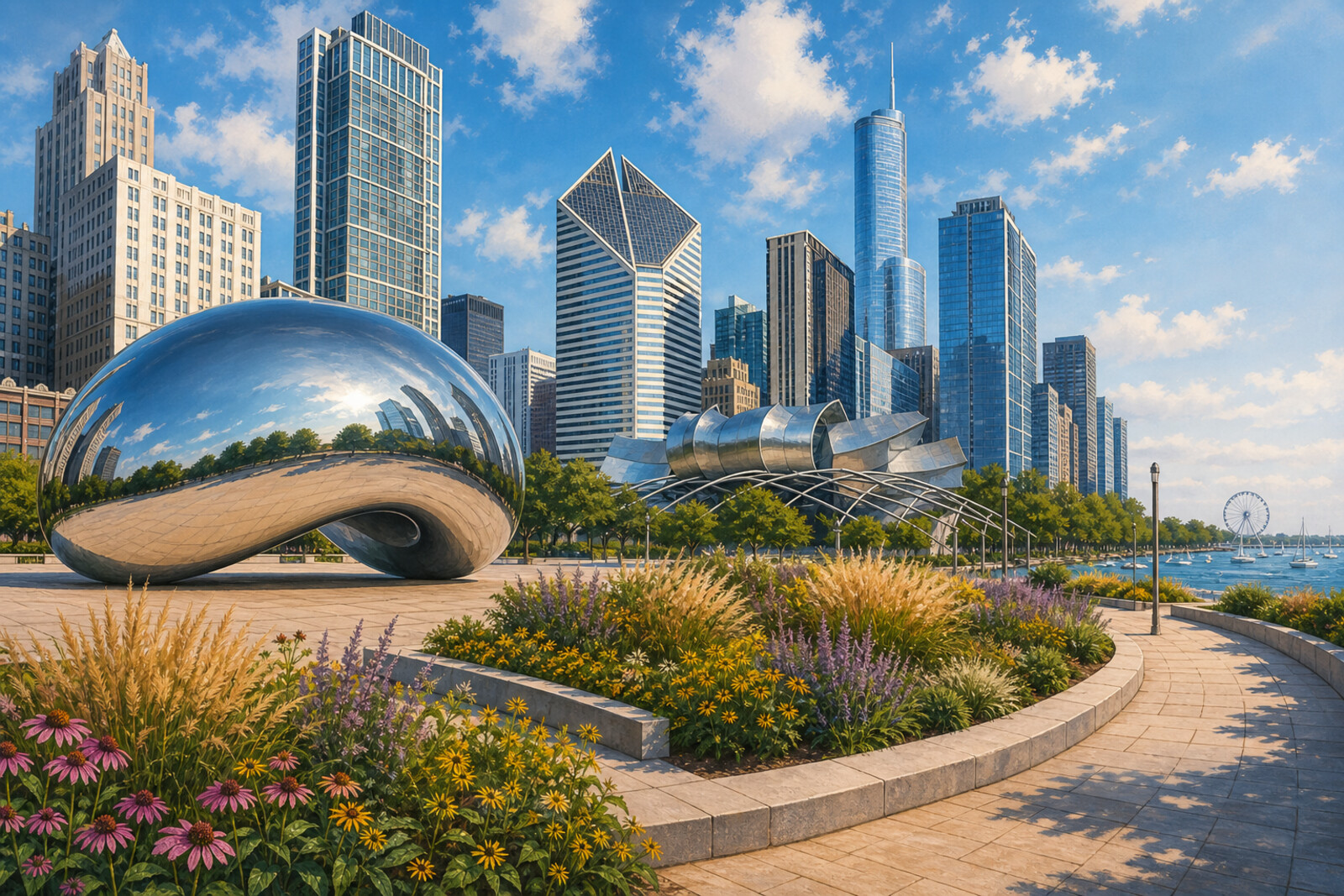
You will begin in the old Chicago Public Library building, cross Millennium Park, and walk through Grant Park toward the city’s museum-lined lakefront. Mirrored steel, a concert lawn, and a quiet garden come first. Then a bridge will lead you to the Art Institute of Chicago, and a broad park road to a fountain and 3 institutions on Museum Campus.
The story is not about architectural styles, but about people’s decisions. Along the way, you will encounter one hundred sixty-eight panels without a single visible seam, a drawing on a tablecloth, and colored filters adjusted night after night. Why all this was necessary, you will find out on site.
The account moves at an unhurried, concrete pace. It follows who argued, paid, and changed the plans. By the end, you will be able to explain why a route beginning on Michigan Avenue ends at the only island built out of 5 that were planned.
Why this order
Chicago Cultural Center sets the route’s opening theme: an old public building was preserved and given a new role in city life. Crossing Michigan Avenue immediately brings that story up against Millennium Park, where Cloud Gate (“The Bean”) shows not the rescue of something old, but the difficulty of creating something new. Next, Jay Pritzker Pavilion reveals how a private gift changed the scale of a public project, while Lurie Garden offers another form of that collaboration—by dividing the work between architect and gardener. Nichols Bridgeway continues the idea literally: a donation becomes a crossing from park to museum. After it, the Art Institute of Chicago explains why the connection to the museum building mattered. Clarence F. Buckingham Memorial Fountain appears farther on as the result of an argument over whether the center of Grant Park should remain open. The road then leads to Field Museum, which was ultimately built farther south. The aquarium and planetarium continue the chain of civic institutions along the water, and the final walk out to the point marks the limit of the vision: of 5 islands, only 1 was built here.
Those who want to see the major spaces by the lake as one connected urban story Those interested in architecture, parks, and museums through human decisions Those who enjoy dense stories built around specific objects and episodes
Those looking for a detailed tour of museum collections Those who need a short loop without a long stretch along the lakefront Those who prefer a list of styles and dates to human stories
Before you go
Decide in advance whether you want to enter museum collections: the Art Institute of Chicago, Field Museum, Shedd Aquarium, and Adler Planetarium are best treated as separate options, not required stops on one walk. Check access to your chosen museum and book it separately. Concerts, festivals, and event setup can change routes through Millennium Park and Grant Park; the bridge, garden paths, and individual plazas may also close temporarily. The fountain’s operation depends on the season and conditions, so do not build the whole plan around the water display. Bring comfortable shoes, water, and protection from sun or wind: after the fountain, there is less shelter and the distances feel longer.
When to go
Start in the first half of the day, so you can take your time with the interiors of Chicago Cultural Center and walk the northern section before visitor numbers rise. Without entering museum exhibitions, the route keeps the rhythm of a walk; 1 full museum noticeably extends it, while 2 will almost certainly require a full day. If you want to combine the street and a collection, choose a single main museum stop in advance. Save energy and daylight for the final stretch: the way to Adler Planetarium matters not only for the planetarium itself, but for the view gradually opening behind you.
Backup plan
In rain, strong wind, or during closures, take the shorter northern version: Chicago Cultural Center, Cloud Gate (“The Bean”), the pavilion, the garden, and the Art Institute of Chicago. Short outdoor crossings remain between accessible indoor spaces, while the main theme of public luxury and hidden infrastructure stays intact. If the northern part of the park is unavailable because of an event, connect Chicago Cultural Center with your chosen museum and do not try to get around barriers. If you are tired, end the route at Clarence F. Buckingham Memorial Fountain. If you have already reached Museum Campus but the lakefront has become uncomfortable, choose the nearest accessible institution instead of continuing toward the final stop.
Route conditions
Surface. Paved — 3 km (data covers 63% of the route)
Stairs. Flights: 9, 57 m in total
Access. Wheelchair — no; stroller — limited (stairs)
Facilities. Toilets — 12; drinking water — 14
Elevation. Ascent — 51 m; descent — 93 m
OpenStreetMap extract of June 18, 2026: database data, not a check on the ground. Data © OpenStreetMap contributors, ODbL licence
Walk plan
Open in maps ↗- 1
Chicago Cultural Center
This is where the story begins of how a public campaign preserved a civic palace and found it a new purpose. - 2
Cloud Gate (“The Bean”)
The sculpture will show how much engineering work was required to make a huge steel form look seamless. - 3
Jay Pritzker Pavilion
This stop will show how a single donation changed the architect and enlarged the scale of a city concert venue. - 4
Lurie Garden
The garden will help show how an architectural framework and perennial plants came together through the collaboration of two authors. - 5
Nichols Bridgeway
The crossing will turn the story of a donation into a visible result—a direct, barrier-free connection between the park and the museum. - 6
Art Institute of Chicago
The museum offers a rare example of how an institution admitted controversial new art and found itself with a scandal inside its own school. - 7
Clarence F. Buckingham Memorial Fountain
The fountain will explain how the long dispute over construction in the open center of Grant Park ended. - 8
Field Museum
Here, the temporary collections of the World’s Columbian Exposition become the story of a permanent museum and millions of preserved objects. - 9
Shedd Aquarium
The aquarium will show why a separate support operation for a living collection had to be designed in advance behind the exhibition halls. - 10
Adler Planetarium
The final stop will connect a new city institution with the unfinished plan for artificial islands.
Route features
Everything you need stays in the browser
Progress, saves and your trip plan are stored on this device.
Add Guide On Map to your home screen so the walk opens outside the browser.
How we handle sources, maps and corrections: our editorial standards