 Guide On Map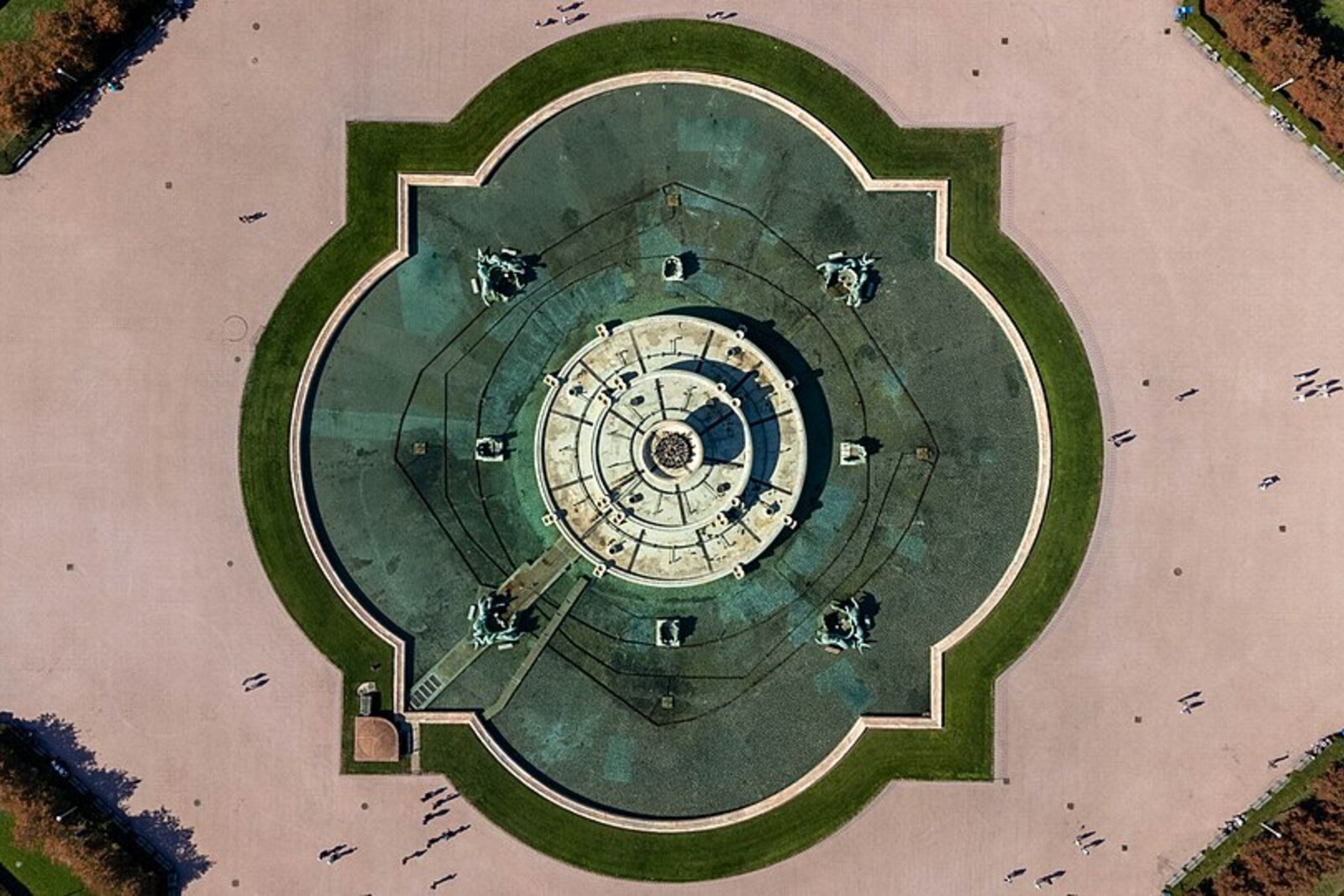
Look around first
What to notice
- Broad marble basins
- Four groups of seahorses
- Central jet
- Open view of the lake
The story of the place
The broad marble basins conceal a pump chamber beneath them: three pumps from nineteen twenty-seven have survived there, and they still drive water around a closed circuit. The fountain was conceived as a miniature lake, so it is not supplied with lake water; around the edges stand four bronze groups of seahorses representing the states around Lake Michigan. At full power, the central jet rises to nearly forty-six meters without blocking the open shoreline. This gift to the city was intended for the ordinary life of the park, where people come both for a short walk and for a lunch break.
Before the fountain opened, Kate Buckingham worked night after night with technicians. Together, they changed colored glass filters and adjusted the current in hundreds of lamps. Kate sought the effect of soft moonlight. She personally set the way the memorial to her late brother was meant to be remembered.
Clarence Buckingham was a Chicago businessman, collector, and trustee of the Art Institute of Chicago. He died of heart disease in nineteen thirteen. The family made its money from grain elevators, real estate, and steelmaking; after her brother’s death, Kate controlled an immense fortune. In the mid-nineteen twenties, she decided to leave the city a memorial to Clarence, open to everyone. The structure’s full name is Clarence F. Buckingham Memorial Fountain.
Construction cost Kate seven hundred fifty thousand dollars. She put another three hundred thousand into a separate fund for its future maintenance. The everyday life of the square mattered to her: both office workers and company executives were meant to come here for lunch. The water, light, and unobstructed view of the lake were intended for anyone who found themselves in the center of the city.
A long court battle prepared the site for such a gift. Architect Daniel Burnham planned to build the Field Museum precisely here. Aaron Montgomery Ward, who had made his fortune in mail-order catalog sales, opposed it. His office on Michigan Avenue faced the lake, and the deeds to neighboring lots promised their owners that the park would remain free of buildings. Ward used this private right to demand that the shoreline remain open.
For more than twenty years, his cases reached the Illinois Supreme Court four times. Many Chicagoans criticized Ward as someone who stood in the way of improvement. In nineteen nine, the court nevertheless prohibited the museum from being built in the center of Grant Park. The Field Museum was moved farther south, while an undeveloped site remained here for many more years.
Architect Edward H. Bennett proposed filling it with a structure that preserved the view of the lake: a broad basin instead of a museum building. The city did not want to pay for such an expensive project, so Bennett turned to Kate Buckingham. Her family memorial became the solution to the dispute over the park’s empty center.
When the fountain runs at full power, its central jet rises to nearly forty-six meters. Four groups of bronze seahorses represent Illinois, Wisconsin, Michigan, and Indiana—the four states on the shores of Lake Michigan. The water circulates within a closed system; the fountain depicts the lake but is not supplied by it.
Beneath the marble basins, the pump chamber and three pumps from nineteen twenty-seven have survived. They still send water into the Clarence F. Buckingham Memorial Fountain on the very site where Ward did not allow the walls of a museum to rise.
Useful on site
Seasonal, usually May–mid-October, 8:00–23:00; major events in Grant Park may turn off the fountain or close access.
Checked: July 1, 2026. Check the official source before visiting.The water and lighting do not operate continuously; even when the jets are off, the sculptures and the unobstructed shoreline still reveal the stop.