 Guide On Map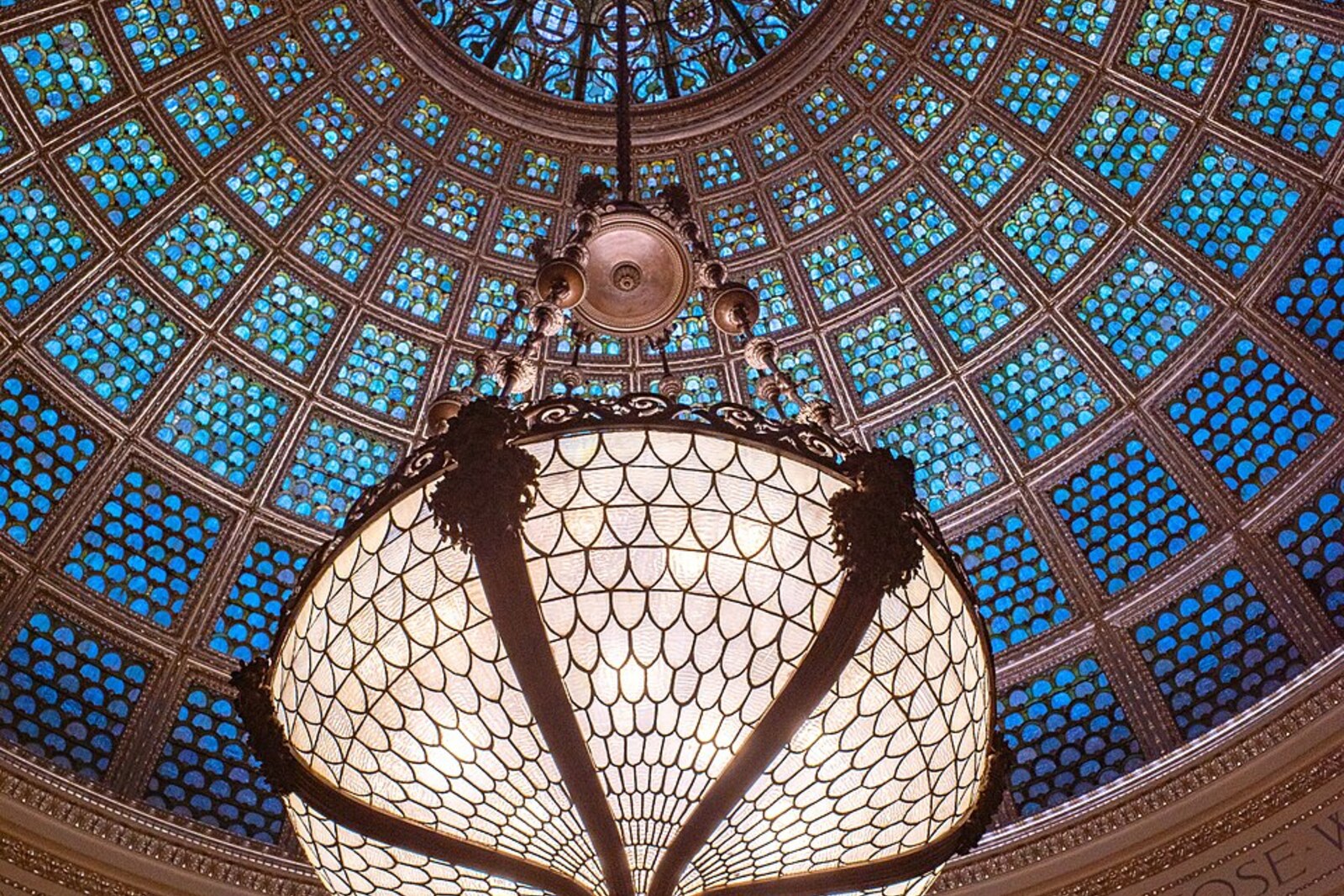
Look around first
What to notice
- Northern glass dome
- Southern glass dome
- Gilded battle names in the memorial hall
The story of the place
In eighteen ninety-one, Chicago Public Library planned to occupy the entire site where the present Chicago Cultural Center stands. But the northern quarter of the land had already been set aside by law for veterans of the American Civil War in the United States. Without their consent, the library could not build its first permanent building here.
The veterans’ interests were represented by the Grand Army of the Republic Memorial Hall Association. This was the name of a brotherhood of former soldiers and sailors who had fought on the Union side. Its chapters dealt with very immediate concerns. In surviving letters, veterans ask for help when they cannot buy food or coal; the organization paid for medical treatment and gave money to families in emergencies. Its aging members needed rooms for meetings, while their flags, portraits, and military relics needed permanent storage.
The two sides made a deal. The veterans surrendered their rights to the land, and the library undertook to provide them with a large memorial hall, offices, and meeting rooms on the second floor. The hall was to be preserved forever as a memorial to the Grand Army of the Republic. The association received the rooms for a nominal fee until nineteen forty-eight; after that, responsibility for them passed to the library.
The architects built the agreement into the very layout of the building. The northern half, with an entrance from Randolph Street, was assigned to the veterans; the southern half, on the Washington Street side, to readers. The two sections are the same height, but the northern one has four floors and the southern one has five. Each was topped with its own separate glass dome. The library opened in eighteen ninety-seven, and the veterans moved into their rooms a year later.
The names of American Civil War battles are still carved and gilded in the memorial hall. The Grand Army of the Republic dissolved in nineteen fifty-six, when the last participants in the war died. After the recent restoration, the original finishes and glass dome can again be seen in the northern rotunda, and the name of the veterans’ organization has remained on the hall exactly as it was written in the agreement.
The building itself nearly disappeared before these rooms were restored. By the mid-nineteen-sixties, the old library was considered cramped and outdated, and its downtown site was too valuable; demolition was seriously discussed. Charles Staples, an employee of Chicago Public Schools, together with his wife Joan Staples, began gathering city residents and specialists willing to campaign for the building’s preservation and new use. They spoke with visitors, sought allies, and turned a private initiative into a public campaign.
In nineteen seventy-two, a special committee considered the library’s fate. Eleanor “Sis” Daley, the wife of Chicago’s mayor, publicly supported restoration. Her single speech did not save the building by itself, but it showed that supporters of demolition could no longer be regarded as the only side in the discussion. In nineteen seventy-six, the former library was designated a city landmark, and exhibition spaces were then fitted out inside it.
When the books were moved to a new central library in nineteen ninety-one, cultural affairs commissioner Lois Weisberg completed the transformation of the old building into the country’s first free municipal cultural center. Charles Staples later came here every Wednesday for decades, from nine in the morning until noon, welcoming visitors and giving tours of the building he had helped preserve.
Now the former reading rooms and memorial rooms host free exhibitions, concerts, dance and theater performances, film screenings, lectures, and classes. The northern and southern wings are still each covered by their own glass dome.
Useful on site
Daily 10:00–17:00; free admission, galleries may close earlier.
Checked: July 1, 2026. Check the official source before visiting.If the interior rooms are accessible, do not stop at the first grand hall: the two domes are in different parts of the building.