 Guide On Map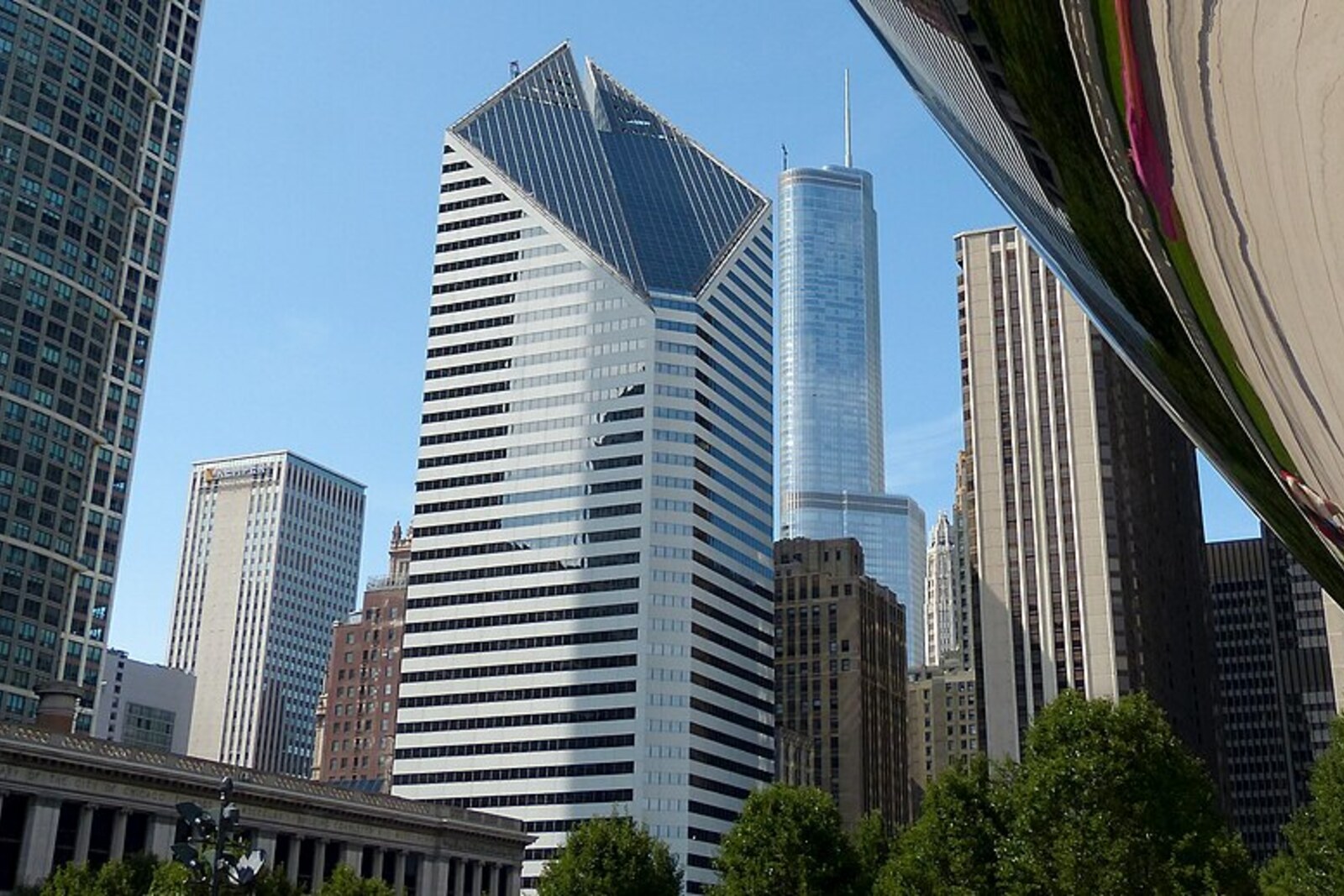
Look around first
What to notice
- Mirrored steel shell
- Passage beneath the sculpture
- Distorted reflections of skyscrapers
- Reflection of the sky
The story of the place
In the open plaza of Millennium Park lies a large polished steel sculpture. Its curved shell gathers the sky, high-rise buildings, and nearby people into a single reflection, while below, the space continues beneath the vault. There is no pedestal or fence here, so people come right up to the metal and pass through the lower arch. The city’s reflections are constantly changing, becoming part of the view itself.
In nineteen ninety-nine, the commission for the future Millennium Park selected a design by the sculptor Anish Kapoor. He was seeking the effect of a drop of liquid mercury: a low mirrored form was to reflect skyscrapers and the open sky, with a passage left beneath it.
At first, the sculpture was planned for the site now occupied by Lurie Garden. When the organizers saw its size, they asked Kapoor to make the design smaller. He replied that he could make it smaller if they made Chicago smaller. The object was considered too large for the garden and was moved here, to the open plaza, although Kapoor himself objected. That put the mirrored shell opposite the skyscrapers whose reflections were meant to become part of the work.
The size was defended, but now the form had to be made. Several specialists considered a seamless steel shell impossible. Kapoor ordered test sheets from three firms and chose the engineer Ethan Silva, owner of a California workshop who had been seeking this contract. Silva’s firm first made its money from steel boat hulls, then from stage machinery and unusual metal structures. Here, it was precisely the ability to bend steel sheet into a complex curve that proved useful: Silva’s sample was the most accurate, and its welded seam the least visible.
Silva intended to manufacture the entire shell in Oakland and ship it to Chicago by sea, through the Panama Canal and the Saint Lawrence River. Park officials considered transporting such a load too risky. So one hundred sixty-eight curved panels were brought here by truck, and Chicago installers welded them together on the plaza.
By the opening of Millennium Park in the summer of two thousand four, the surface remained unfinished. Kapoor did not want to show the work with seams, but the enormous protective tent was removed for the ceremony. Visitors responded so well to the unfinished sculpture that the organizers postponed putting the tent back up for several months.
The public had time to give the object a name as well. While the panels were still being assembled, Chicagoans and newspapers began calling it “The Bean.” Kapoor gave the sculpture another name, “Cloud Gate”: the sky fits in its mirror, and a passage really is cut through beneath the twelve-meter shell. At first, he considered the word “Bean” stupid, but the nickname outlasted his objections. Later, the artist admitted that he uses it himself.
When the tent was put back up, twenty-four metalworkers went over every seam by hand: they ground down the welds, leveled them, sanded them, and polished them in five stages. The work was completed by two thousand six, and both participating firms received a special award from the American Welding Society.
Under the concave vault, people’s reflections multiply and converge overhead; outside, skyscrapers and clouds bend across the surface. Before your eyes are one hundred sixty-eight separate panels and almost three quarters of a kilometer of welded seams. Not a single line by which they could be counted is visible.
Useful on site
Millennium Park daily 6:00–23:00; the plaza may close due to events, security, or maintenance.
Checked: July 1, 2026. Check the official source before visiting.Walk around the sculpture and go beneath it: the main optical effect cannot be seen from a single point.