 Guide On Map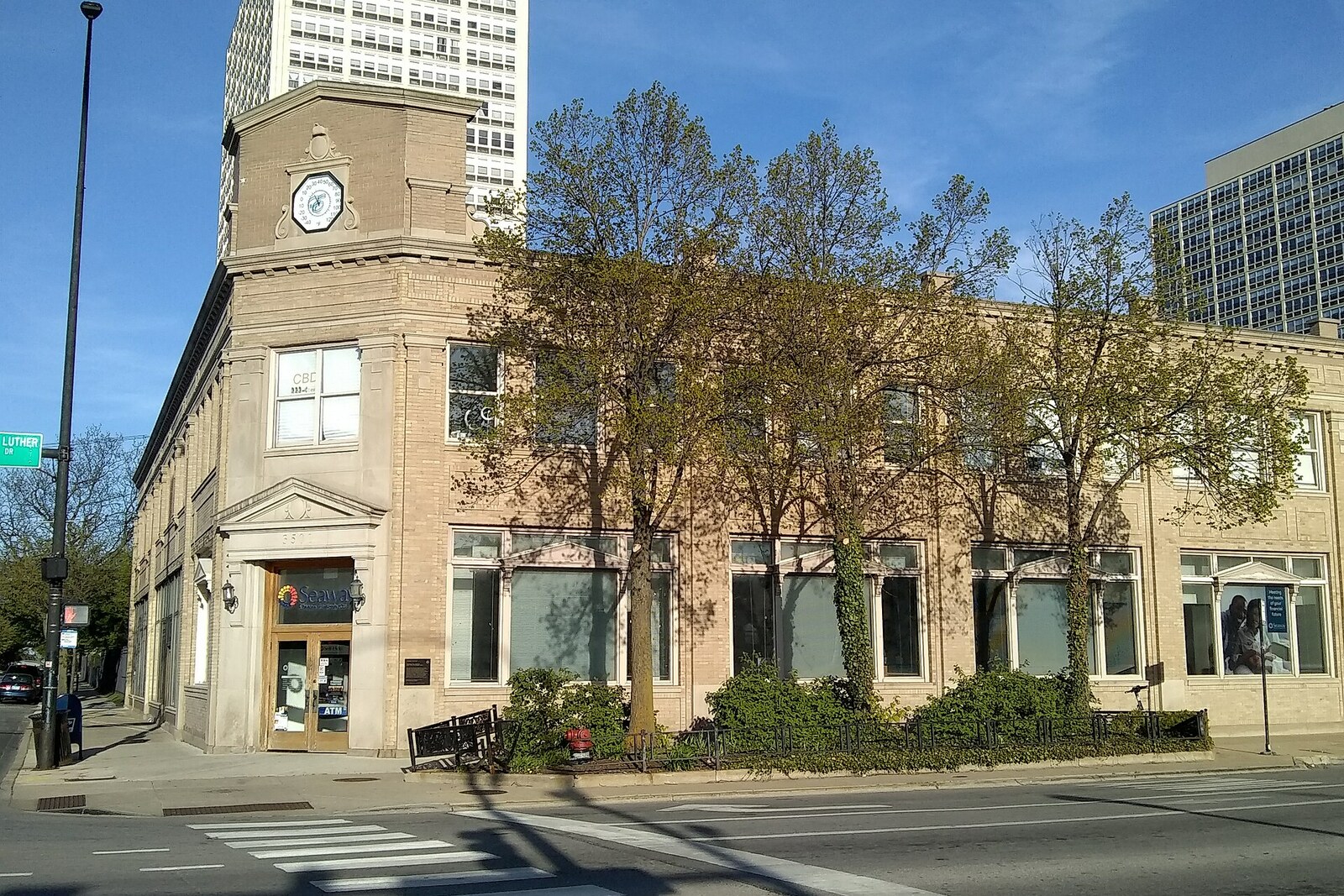
Look around first
What to notice
- The clock above the corner entrance
- Metal letters spelling “Supreme Life”
- The corner entrance
The story of the place
The corner building with the clock above its entrance long served as the office of an insurance company that worked with Black residents of Chicago at a time when major insurers often offered them worse terms. Metal letters on the facade preserve its name, while inside the everyday work with policyholders went on: messengers and employees prepared internal materials for management. The company was later headed by a man who began here in the most junior position.
Above the corner entrance, a clock and metal letters spelling “Supreme Life” have survived. That is the name of an insurance company. It was founded in nineteen nineteen by Frank L. Gillespie, an insurance agent who saw that Black clients were offered inferior policies at white-owned companies. At first, the firm was called Liberty Life Insurance Company. Two years later, it leased the second floor of this bank building; in nineteen twenty-four, it bought the entire building, and after merging with two other insurers, it took the name Supreme Life Insurance Company.
In nineteen thirty-six, the company’s president, Harry H. Pace, hired eighteen-year-old John H. Johnson. Johnson had a scholarship to the University of Chicago, but he had no way to pay his living expenses while studying. Here, he began as a messenger and then started preparing the company’s internal publication. Pace assigned him to gather newspaper material about the lives of Black Americans, so that Pace himself could keep track of events and discuss them with visitors to his law office.
Reading this press every day, Johnson noticed that information was scattered across many newspapers, while most of his acquaintances did not even know the stories he had just processed. He conceived Negro Digest, a monthly collection of such publications. He had neither investors nor money for printing. Even to test demand, he needed five hundred dollars for postage stamps. He was able to get a loan only by putting up furniture his mother had spent a long time saving for as collateral. If subscribers did not respond, the lender would take the furnishings from her apartment.
The main capital was here. Johnson operated the Supreme Life Insurance Company addressing machine and had access to the names of twenty thousand policyholders. With Pace’s permission, he sent them an offer on company letterhead: send two dollars for an annual subscription to a magazine that did not yet exist. Three thousand people responded. Six thousand dollars was enough for the first issue, which came out on November first, nineteen forty-two.
Within a year, circulation reached fifty thousand copies. Johnson then launched Ebony and Jet and built the country’s largest Black-owned publishing company. His mother’s furniture remained at home. In nineteen seventy-four, the former messenger acquired a controlling stake in Supreme Life Insurance Company and headed the firm that had once given him a job.
The addressing machine is no longer in the building. The company’s name remains on the facade; Johnson got his first three thousand subscribers from its client list.
Useful on site
Outdoor stop at a landmark; check current entry separately.
Checked: June 28, 2026. Check the official source before visiting.View the modern exterior from outside: the original classical facade is hidden beneath it.