 Guide On Map
Bronzeville: the business and civic center of Black Chicago
From 35th-Bronzeville-IIT to The Forum
Guide On Map on your phone
Open the walk like a regular app
It takes about 10 seconds to install. No app store needed.
The whole path
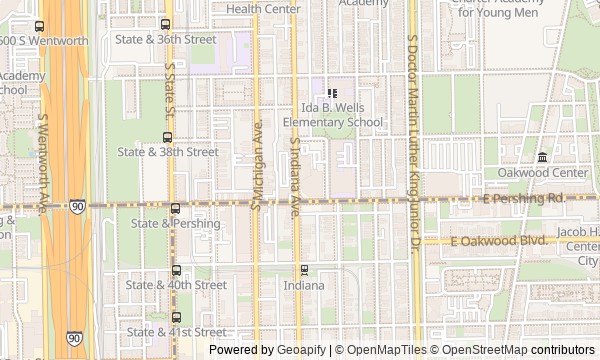
Route map
About the walk
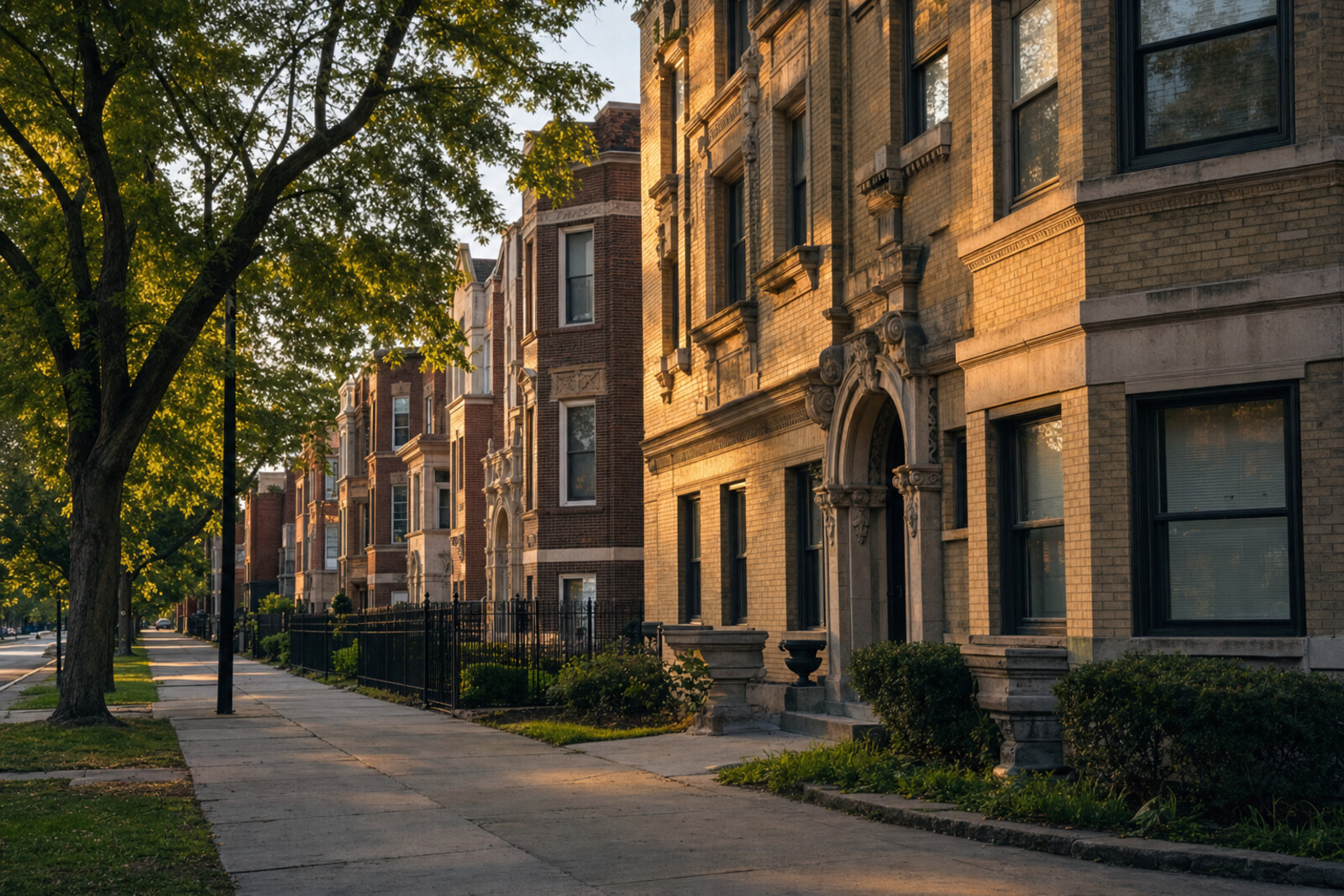
You will step off the train at 35th Street and head south through Bronzeville: first along State Street, then across Wabash Avenue to King Drive and on to The Forum. Along the way you will find business buildings with terracotta signs, a former residence hall, a monument on the boulevard, a private home, and a hall behind arched windows.
This is not a walk through downtown Chicago, but through a neighborhood where banks, newspapers, insurance companies, and independent civic organizations were created within a few blocks. Why will an elevator shaft rise above the roof? Why was household furniture put up as collateral for a magazine that did not yet exist? And what kept a monument from being placed at once where residents demanded it?
The story follows decisions, risks, and losses without turning them into a ceremonial chronicle. By the end, you will be able to read the names on these facades as traces of how Black Chicago assembled its own money, press, memory, and public voice.
Why this order
The station gives the route its name and raises the question of how the neighborhood named itself. From there, the walk heads south along State Street to two neighboring Overton buildings: first to the business building where manufacturing, offices, and a bank came together, then to an editorial office connected to the same entrepreneurial circle. A short walk to Wabash Avenue continues the story of independent institutions, shifting it from business to education and historical work. Returning to 35th Street brings that work into public space at Victory Monument. The nearby Supreme Life Building again links civic change with money and print. King Drive then leads from corporate archives to the private home of a journalist and the fate of her papers. The final stretch continues south to The Forum, where personal work with evidence gives way to a collective campaign and petition sheets.
Those who want to understand the history of Black Chicago through specific places Fans of urban history, journalism, and entrepreneurship Those interested in the human decisions behind civic change
Those looking for a walk among Chicago's skyscrapers and downtown Those who prefer a light architectural overview without difficult subjects Those who do not enjoy detailed historical storytelling
Before you go
Plan primarily to view the sites from the street. The station remains part of an operating transit system, Ida B. Wells-Barnett House is a private residence, and the interior of The Forum should be visited only during a separately announced event or with arranged access. Before setting out, check Green Line service and current visiting conditions at active buildings if you plan to go inside. Choose daylight hours, dress for the weather, and bring water: much of the route has no guaranteed indoor stops.
When to go
Set aside 2.5–3 hours for the full route, including walking, listening, and an unhurried look at the facades. Plan any visit to an accessible interior or event at The Forum separately, and do not include it in the walk's basic time.
Backup plan
If Green Line service is disrupted or viewing the station is inconvenient, begin at Overton Hygienic Building and listen to the first story separately without lingering on the platform. In bad weather, the route is easy to split after Victory Monument: visit the business buildings and YMCA on one day, then King Drive, Ida B. Wells-Barnett House, and The Forum on another. A closed door does not make a stop pointless: every main story is designed to be read from the exterior. Do not attempt to enter a private home or unsafe and restoration spaces without permission.
Route conditions
Elevation. Ascent — 12 m; descent — 12 m
OpenStreetMap extract of June 18, 2026: database data, not a check on the ground. Data © OpenStreetMap contributors, ODbL licence
Walk plan
Open in maps ↗- 1
Green Line Station 35th-Bronzeville-IIT
Here the route gets its name and begins at a place that had to be built anew. - 2
Overton Hygienic Building
This stop will show how several floors connected cosmetics manufacturing, offices, insurance, and banking money. - 3
Chicago Bee Building
Here you can see what remains of a newspaper when its editorial office and almost all of its archive disappear. - 4
Wabash Avenue YMCA
This stop connects everyday help for newcomers with the birth of historical publishing. - 5
Victory Monument
Here, private initiative and newspaper pressure will move out of the offices and onto the neighborhood's main boulevard. - 6
Supreme Life Building
This stop will show how access to an ordinary addressing machine made it possible to test a major publishing idea. - 7
Ida B. Wells-Barnett House
Here the history of public investigation comes up against the fate of a private home archive. - 8
The Forum
At the end, the meeting's participants will turn scattered discontent into organized pressure.
Route features
Everything you need stays in the browser
Progress, saves and your trip plan are stored on this device.
Add Guide On Map to your home screen so the walk opens outside the browser.
How we handle sources, maps and corrections: our editorial standards