 Guide On Map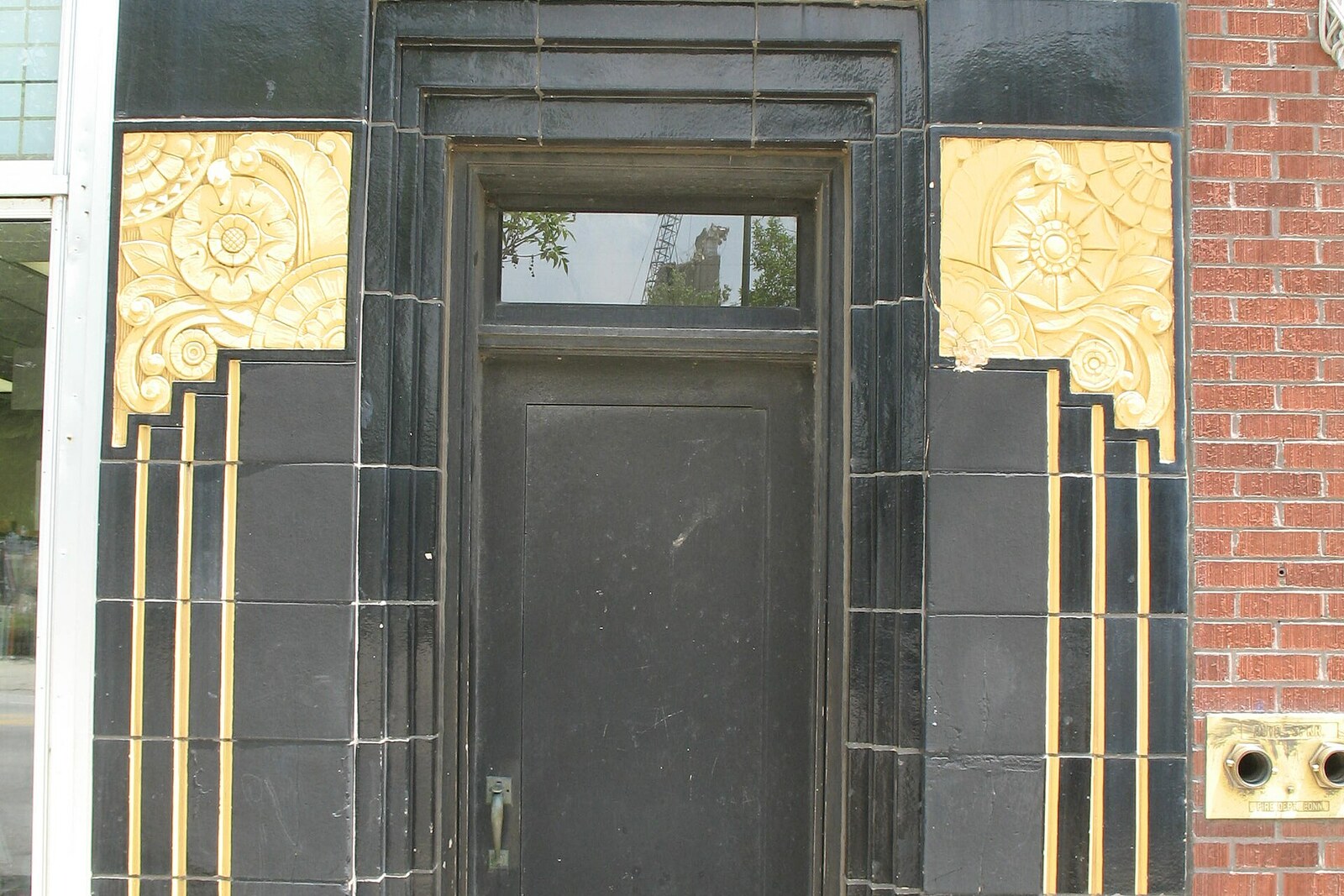
Look around first
What to notice
- Terra-cotta gears on the façade
- The Chicago Bee library sign
The story of the place
The terra-cotta gears on the façade reveal the building’s former purpose: it was planned to unite a weekly newspaper’s editorial office with its printing shop. Later, these premises became the fallback address for the cosmetics company and other surviving enterprises of its owner. After a long period of neglect, the building was preserved when details had already begun to be removed from the façade. It now houses a Chicago Public Library branch, while the Chicago Bee name remains on the sign.
In the fall of nineteen twenty-nine, Anthony Overton signed construction contracts worth about two hundred thousand dollars. He had made his capital from cosmetics for Black customers; now the publisher was investing that money in a building of his own for the Chicago Bee newspaper—literally, the “Chicago Bee.” The weekly advertised Overton’s products and competed for readers with the far more influential Chicago Defender.
Before this, the Bee staff had worked in Overton’s building a little farther north, while the printing shop occupied a separate space to the south. Overton wanted to bring them together under one roof. He did not stop construction even after the Great Depression began, and in nineteen thirty-one the editorial office moved here. The gears in the façade’s terra-cotta ornament recalled the printing presses for which the new building had been designed.
While the building was still under construction, theater editor James Gentry suggested the name Bronzeville, which had already come up on the tour. In nineteen thirty, it first appeared in the Bee’s pages in an advertisement for the Mayor of Bronzeville contest. It was an honorary title for a prominent neighborhood resident, not a municipal office. Overton paid for this newspaper campaign, hoping to attract readers, but the contest was unsuccessful.
Two years later, Gentry left the editorial office, which was already operating in this building, and took the idea to a competitor. Robert S. Abbott, publisher of the Chicago Defender, assigned his promotions specialist Charles Browning to remake the contest. Browning drew prominent Bronzeville businesspeople and professionals into taking part; the election of an honorary mayor became the Defender’s second most profitable advertising campaign. The neighborhood’s name spread along with the contest. Gentry achieved his aim under a different publisher, while the Bee lost the project conceived by its employee.
The new building also brought Overton a different result from the one he had expected. After the collapse of Douglass National Bank, which occurred soon after the newspaper moved, the businessman had to sell his former business building and move the cosmetics company and his other surviving enterprises here. The premises intended for a growing weekly became the fallback address for his entire business.
Overton died in nineteen forty-six. His sons briefly continued publishing the Bee, but closed the newspaper the following year; much of the editorial archive was sold as waste paper. The cosmetics company remained here until nineteen eighty-three. Then the building stood empty, and thieves began removing terra-cotta details from the façade.
Local preservation advocates secured the building’s preservation, the city acquired it, and a Chicago Public Library branch opened here in May nineteen ninety-six. It kept the newspaper’s name—the Chicago Bee Branch. The weekly whose archive has been largely lost is now named on the library sign.
Useful on site
Chicago Bee Branch has limited hours; check CPL before entering.
Checked: June 28, 2026. Check the official source before visiting.The façade can be viewed independently; check separately whether you can enter the active premises.