 Guide On Map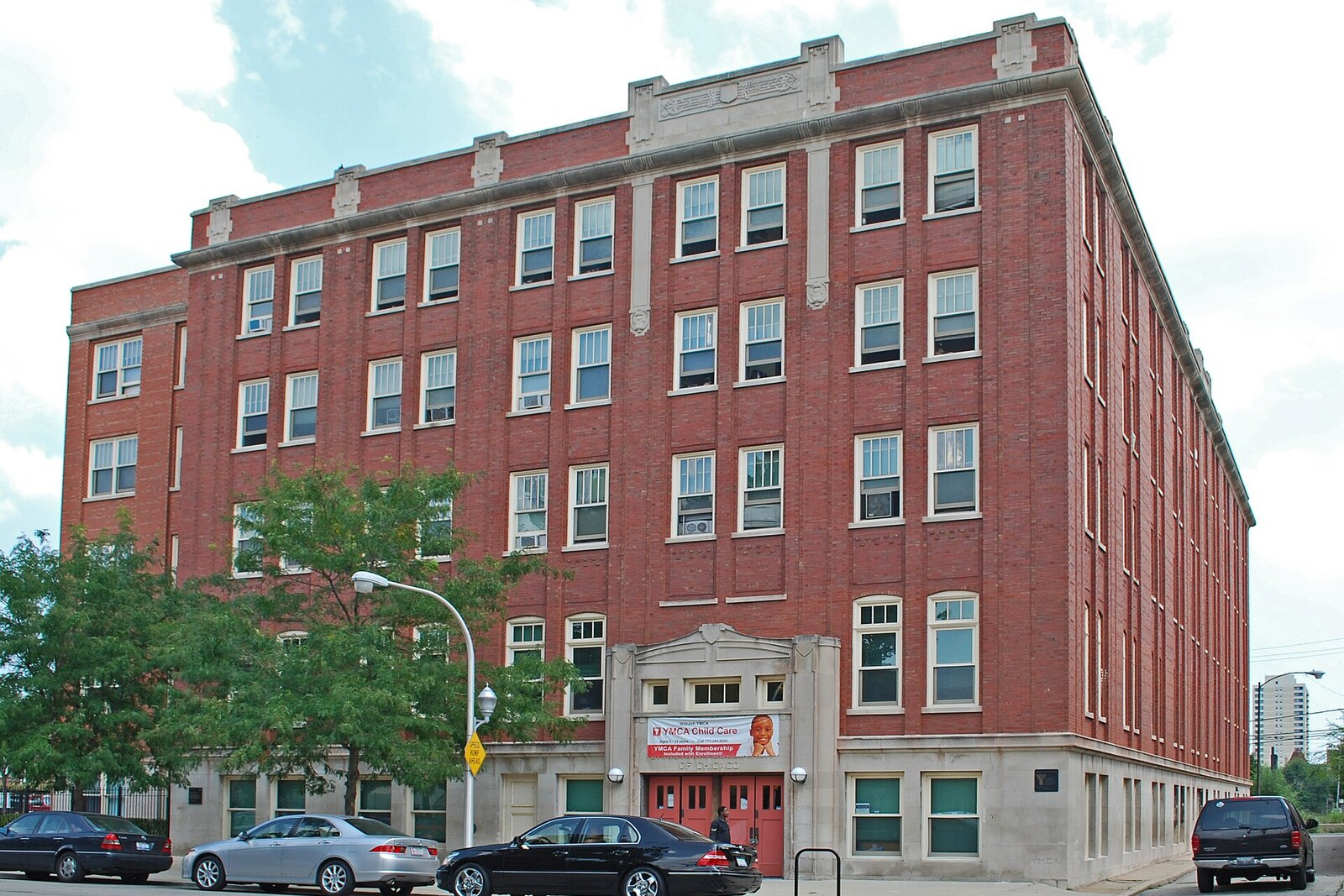
Look around first
What to notice
- Red doors
- Carved inscription above the entrance
The story of the place
A separate city center for Black men opened on Wabash Avenue. In a city where many regular association branches kept them outside their doors, newcomers from the South received a temporary room and help finding their first job here. When the center stopped operating, four neighboring churches prevented the building from being demolished and secured its restoration. The scarlet entrance doors and the carved words above them survived, while the former residential floors now hold one hundred one small apartments for adults who had recently been without housing.
Carved above the red doors are the words: “Young Men's Christian Association of Chicago.” This is where the familiar American abbreviation YMCA comes from. Behind the inscription once stood a swimming pool, a gymnasium, classrooms, a dining hall, meeting rooms, and inexpensive lodging.
In early twentieth-century Chicago, most association branches did not admit Black people. Julius Rosenwald, head of Sears, Roebuck and Company, agreed to pay part of the cost of a separate center if city residents raised the rest. Neighborhood residents and private donors met the condition. In nineteen thirteen, a branch for Black men opened on Wabash Avenue. Newcomers from the South could rent a room here, find work through the employment bureau, and prepare for life in a new city.
Carter G. Woodson also used this opportunity. He was a public-school principal in Washington, D.C., and a historian who sought to have the past of Black Americans studied through documents and taught in schools. In the summer of nineteen fifteen, he came to Chicago for an exhibition marking the fiftieth anniversary of the abolition of slavery. The pavilions displayed the accomplishments of Black doctors, entrepreneurs, artists, and civic organizations—the material Woodson could scarcely find in textbooks. He stayed here, in the lodging house on Wabash Avenue.
On September ninth, the executive secretary of this branch, Alexander Jackson, gathered Woodson and three other like-minded people in an office. The five men founded the Association for the Study of Negro Life and History—the accepted official term of the time appeared in its original name. They intended to seek out documents, train researchers, and publish work for which existing scholarly journals left almost no room.
As early as January of the following year, Woodson published the first issue of his own historical journal, The Journal of Negro History. Money was short, and the school principal borrowed against his life-insurance policy. Later, he left his teaching position altogether and devoted himself to the association and its publishing work. In nineteen twenty-six, he introduced the annual Negro History Week; fifty years later, organizers expanded it into Black History Month. Woodson himself did not live to see this: he died in nineteen fifty.
The YMCA branch closed in the late nineteen seventies. Four neighboring churches saved the building from demolition and secured its restoration. The building's former purpose is still carved above the entrance, and its residential floors now contain one hundred one small apartments for adults who had previously been without housing.
Useful on site
An outdoor stop at a landmark; interior access is not part of the route.
Checked: June 28, 2026. Check the official source before visiting.Listen from the public sidewalk and treat this stop as an exterior visit unless interior access is announced.