 Guide On Map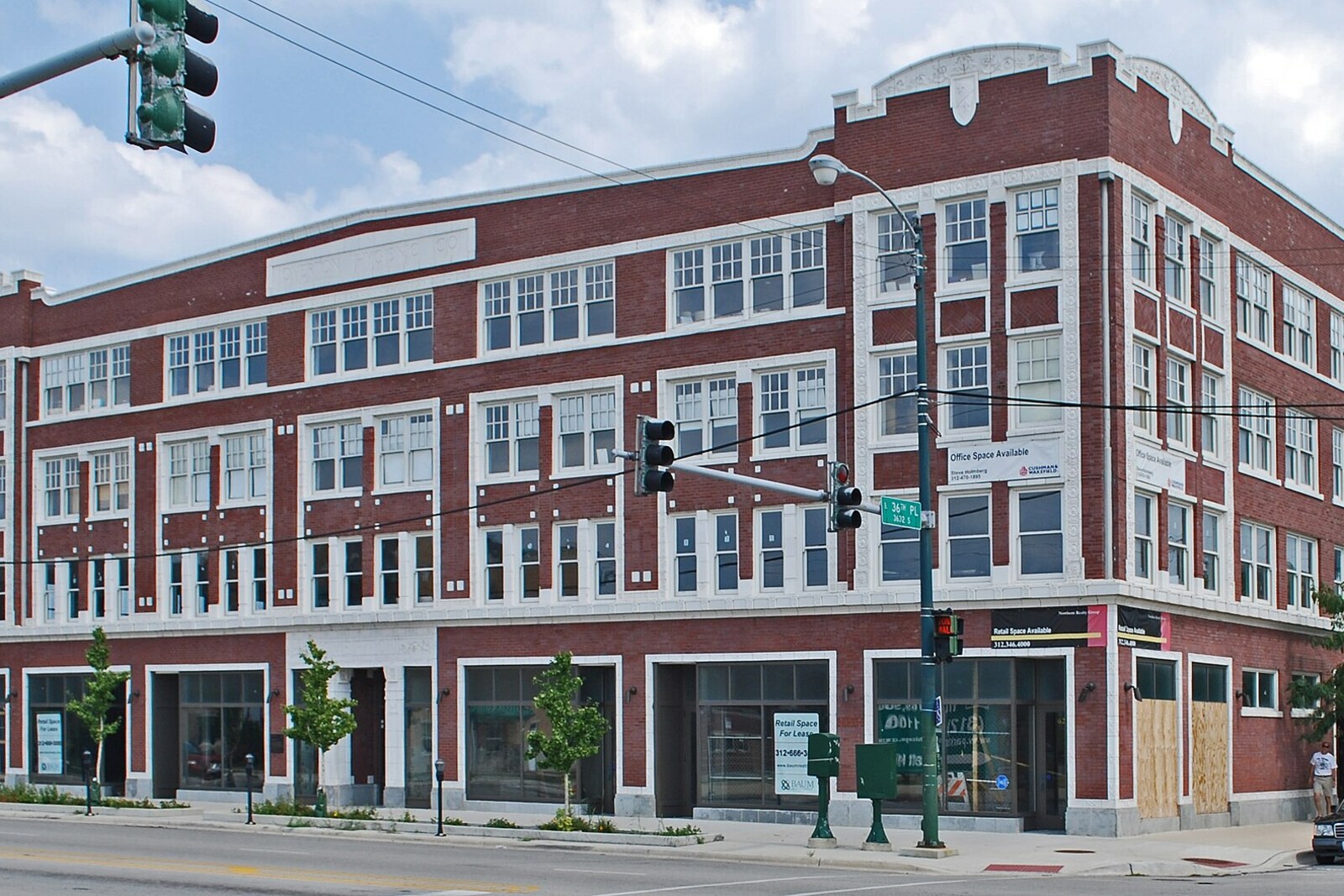
Look around first
What to notice
- The white terra-cotta inscription “Overton Hygienic Company”
- The elevator shaft above the roof
The story of the place
The building on State Street brought cosmetics manufacturing, offices, insurance, and a bank under one roof. Cosmetics were made upstairs, while sales, advertising, and accounts were handled below; doctors, lawyers, and architects rented offices, finding it hard to find a place to work in a city with housing segregation. Above the former bank floor, the white terra-cotta letters bearing the company's name can still be read, and the elevator shaft above the roof was designed for two floors that never appeared.
In the spring of nineteen thirty-two, employees of the bank on this building's first floor hung a reassuring notice in the lobby. It reminded people that the bank had received a federal charter, joined the Federal Reserve System, and could count on emergency assistance. Depositors had a simpler question: would they manage to withdraw their savings in time?
Douglass National Bank, named after the abolitionist Frederick Douglass, was headed by Anthony Overton, a cosmetics manufacturer who invested what he earned from products for Black women in businesses in the same neighborhood. He moved to Chicago from Kansas City in nineteen eleven. His High-Brown Face Powder, perfumes, and toiletries found buyers whom major manufacturers barely noticed. The cosmetics company's profits provided the bank's initial capital.
In nineteen twenty-two to nineteen twenty-three, Overton built this building on State Street for his businesses. Because of housing segregation, Black Chicagoans were confined to a narrow strip of the South Side; their shops, offices, and financial institutions were concentrated here as well. Workers manufactured cosmetics on the top floor. Below, they handled sales, advertising, and accounts. The second floor was shared by Victory Life Insurance Company and Black doctors, lawyers, and architects who rented offices. On the first floor, Douglass National Bank accepted deposits and made loans. The word “Hygienic” on the facade belonged to Overton Hygienic Company; its income connected all these floors.
The bank lent to businesses, churches, and homebuyers who found it difficult to obtain money from other institutions. But such loans could not quickly be turned into cash. During the Great Depression, real estate in Black neighborhoods fell in value, borrowers delayed payments, and depositors who had lost their income spent their savings. After the collapse of the neighboring Binga Bank, people began withdrawing money simply out of fear. The Federal Reserve System gave Overton's bank two hundred thousand dollars, and the employees withstood three rushes of depositors. The notice in the lobby could not stop them.
Over nine months, total deposits fell from about one and a half million to four hundred thousand dollars. On May twentieth, nineteen thirty-two, the directors voted to close; the next day, the institution passed into the hands of bank examiners. In the liquidation, depositors eventually got their money back. Overton lost the bank, lost control of Victory Life Insurance Company, and moved his remaining businesses to the Chicago Bee building one block to the south. After his death, his son and grandson continued the cosmetics company; it closed in nineteen eighty-three.
Above the former bank floor, the white terra-cotta inscription “Overton Hygienic Company” remains. Above the roof rises an elevator and utilities shaft, designed in advance for two more floors. Overton never built those floors.
Useful on site
Outdoor stop at a landmark; there is no free museum admission.
Checked: June 28, 2026. Check the official source before visiting.The story can be read from the sidewalk; do not expect access to the former offices and manufacturing spaces.