 Guide On Map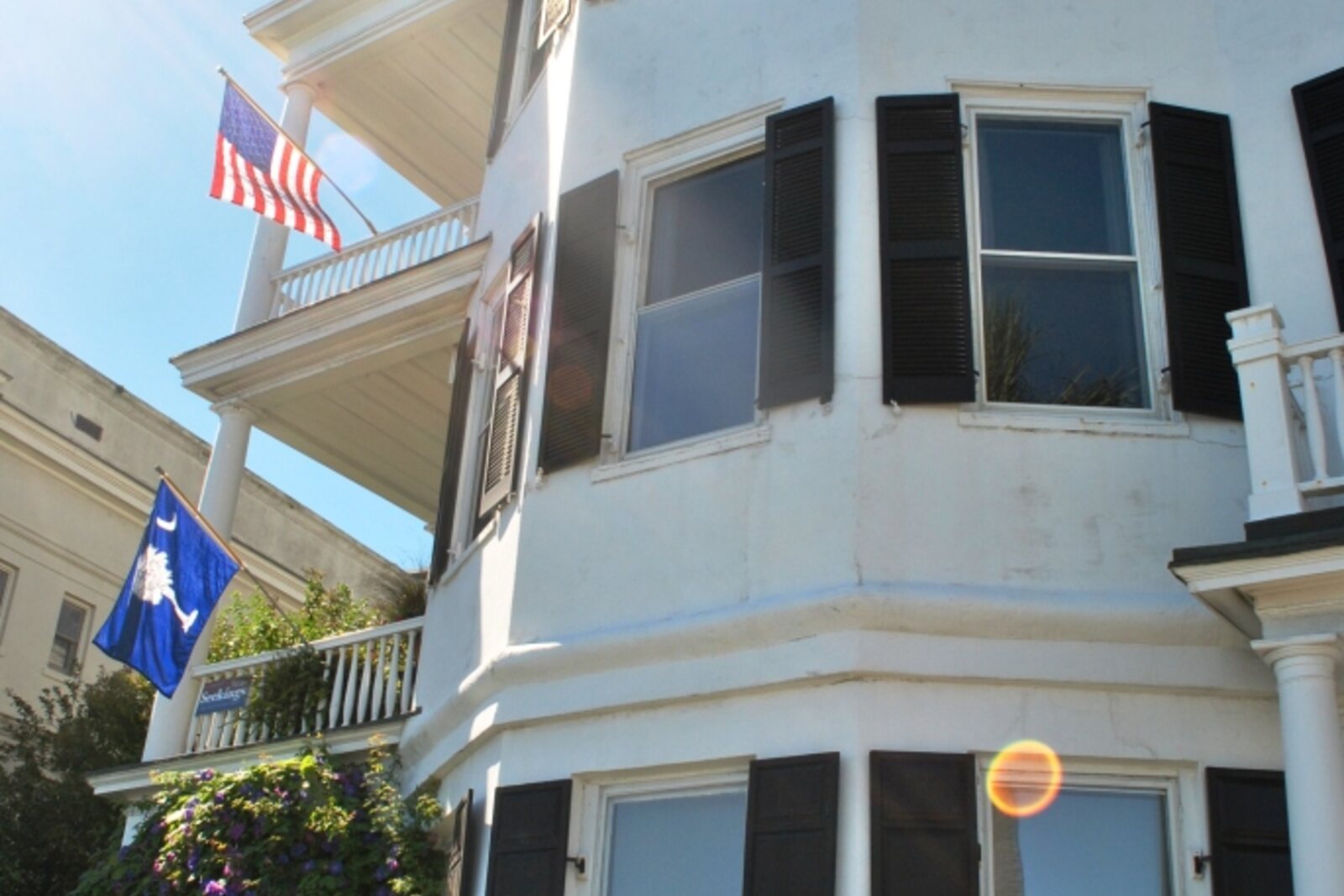
Look around first
What to notice
- The plaque “The Capture of the Planter”
- House number 40
- Cooper River
- Harbor entrance
The story of the place
At house number forty on East Bay, there is a plaque titled “The Capture of the Planter.” It was installed by the former Southern Wharf—a commercial pier that extended east from here into the Cooper River. The paddle steamer Planter was moored here that night.
The Civil War was underway. Charleston was controlled by the Confederate States of America, which united the seceded slaveholding states, while the federal fleet of the United States blockaded the exit from the harbor. Private owners leased Planter to the army of the Confederate States of America: the steamer carried soldiers and guns, delivered orders, and serviced the barriers. Three white officers commanded it, but seven enslaved sailors operated the boilers, deck, and wheel.
One of them was twenty-three-year-old harbor pilot Robert Smalls. He gave most of his earnings to his enslaver. Together with his wife Hannah Smalls, an enslaved seamstress, Smalls was saving eight hundred dollars to buy her and the children out of slavery. By eighteen sixty, they had almost gathered the needed amount, but the war began. Under South Carolina law, their marriage was not recognized anyway, and each family member could be sold separately.
The white officers of Planter violated orders and often went ashore to spend the night, leaving the vessel to the crew. The enslaved sailors understood that this habit gave them their only chance to escape together with their families. They held several secret meetings and chose the night of May twelfth to thirteenth, eighteen sixty-two. Six artillery guns were aboard at the time. If the plan had been discovered, the steamer could have been fired on from the batteries and the participants executed.
At about three in the morning, the crew raised steam and took Planter away from Southern Wharf. Smalls put on the captain's coat and straw hat: in the darkness, the sentries were meant to mistake his silhouette for that of a familiar officer. Abram Allston, an experienced enslaved pilot who joined the escape for his own freedom, stood at the wheel. The others kept the fires going in the boilers and worked on deck.
The steamer first went upriver, to North Atlantic Wharf. Hannah Smalls and the children, along with the families of the other participants, were waiting there. After taking them aboard, the crew turned the vessel toward the harbor entrance. Sixteen people were now aboard.
Smalls knew the channel and the signals because he had previously piloted Planter himself between the fortifications. At Fort Sumter, the steamer found itself between two lines of guns. Smalls gave the agreed whistle signal, and the sentry mistook the vessel for an ordinary guard ship and allowed it to pass.
Beyond the forts, a final danger arose. Sailors aboard the federal ship USS Onward saw an approaching transport of the Confederate States of America and prepared to fire. On Planter, the southern flags were lowered and a white sheet was raised in their place. The steamer was handed over to the federal fleet along with six guns and information about Charleston's defenses. All sixteen people gained their freedom. Allston continued to serve as helmsman on Planter, and Smalls later became its captain.
House number forty was not Smalls's home: historians have not been able to establish its exact Charleston address. The plaque marks the shore from which the vanished Southern Wharf began. From here, Planter first went north to collect the families and only then turned toward Fort Sumter.
Useful on site
Street-level viewing point; use the actual sidewalks and crosswalks, without stepping into the roadway.
Checked: June 29, 2026. Check the official source before visiting.The house is private; read the sign from the sidewalk and choose a place to pause without blocking the entrance or passage.