 Guide On Map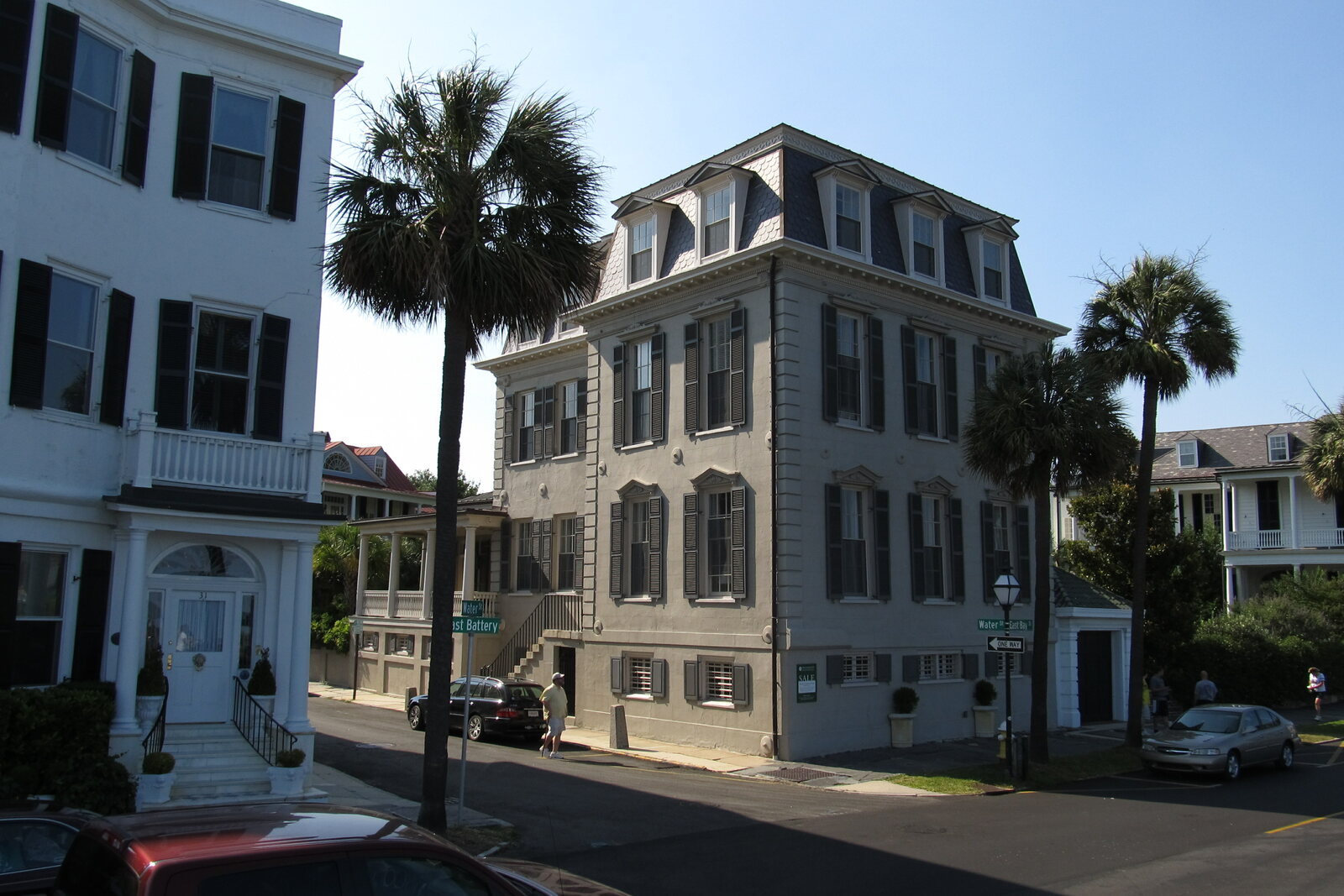
Look around first
What to notice
- Granite protective wall
- Raised walking path
- East Battery Street below the wall
- Harbor beyond the stone edge
The story of the place
High Battery runs across what was water in the eighteenth century. In seventeen eighty-five, Charleston City Council decided to extend East Bay Street—present-day East Battery Street—southward. Under the plan, the road, about eighteen meters wide, was to extend nearly three hundred meters into the harbor. First, a wall had to be built in the water, and the space behind it filled with earth.
The council tried to collect money from the owners of neighboring lots. They objected: some of their land had already been taken for the road, and they were being asked to pay for a structure useful to the whole city. Construction proceeded on credit. The hurricane of seventeen ninety-seven destroyed a substantial part of what had been done, and by the following autumn the city owed thirteen thousand dollars. The council decided to raise the money through a lottery dedicated to the completion of the new East Bay Street and the protective wall.
A ticket cost six dollars. Denmark Vesey, an enslaved man who began seeking freedom after his win, bought one such ticket. The documents do not say how he obtained six dollars. In Charleston, enslaved craftsmen and servants were often hired out; owners sometimes allowed them to keep part of their earnings.
On November eighth, seventeen ninety-nine, number one thousand eight hundred eighty-four was drawn from the lottery drum. Denmark Vesey won the grand prize—one thousand five hundred dollars. But the rules allowed the money to be paid only after all the drawings had ended, no earlier than December twenty-first. Denmark Vesey did not wait. As early as December seventh, his owner, Mary Clodner, signed his manumission in exchange for six hundred dollars. Charles G. Corre, one of the lottery managers, witnessed the document and could confirm that the prize really would be paid. The document itself did not preserve their negotiations, but the dates are exact: Denmark Vesey gained freedom two weeks before he could collect the prize.
After his emancipation, he took the name Denmark Vesey and began working in Charleston as a carpenter. Mary Clodner was due six hundred dollars, and Denmark Vesey had nine hundred left after the settlement. The city received more than four thousand dollars in net revenue from this drawing and continued building the wall.
The hurricane of eighteen hundred washed away most of the work that had been paid for. The council arranged new drawings; after another destruction in eighteen oh four, the builders abandoned wood and brick at the water’s edge and switched to granite. The last stones were laid in eighteen eighteen. It is believed that the word “Battery” became attached to the wall after guns were placed on the still-unfinished line during the War of eighteen twelve.
It was called “High” later. The hurricane of eighteen fifty-four badly damaged the waterfront. City engineer Charles Parker surveyed the destruction and demanded that the wall be raised. After the repairs, the walking path stood about one and a half meters above the neighboring street.
Its present height came from Parker’s calculations, while the strip of land itself exists because of the wall for which the city printed lottery tickets. The harbor begins beyond the stone edge; behind it lie fill earth and a road that did not yet exist in seventeen eighty-five.
Useful on site
Open waterfront; individual sections may change because of work, tides, storms, and city restrictions.
Checked: June 29, 2026. Check the official source before visiting.View the mansions only from the public side of the street; the open waterfront can be windy and offers almost no protection from the sun.