 Guide On Map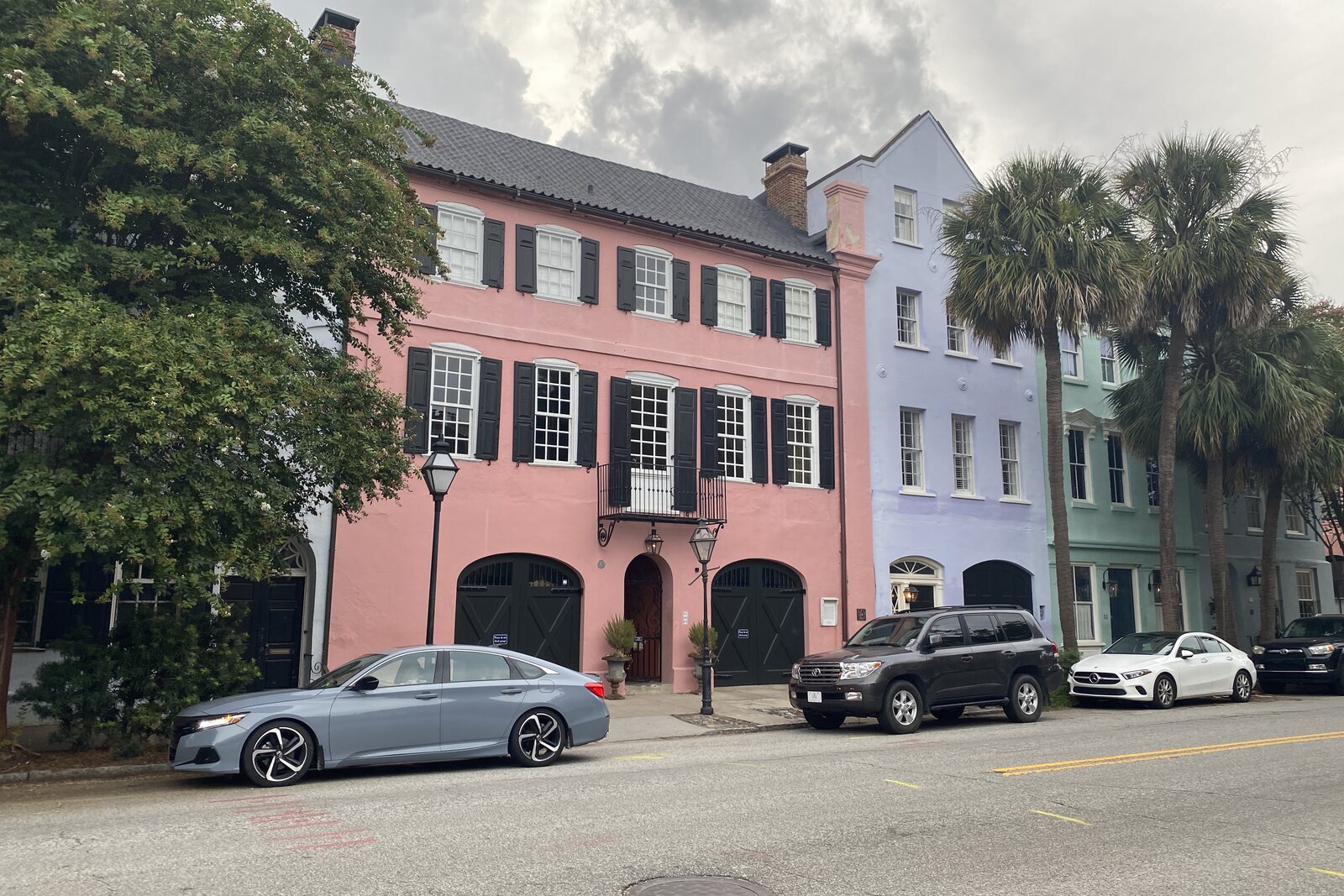
Look around first
What to notice
- Thirteen pastel facades
- The pink facade of houses ninety-nine through one hundred one
- The iron balcony
- The arched passageway to the courtyard
The story of the place
Thirteen pastel facades conceal private rooms and gardens, so passersby are left with only the street. The row grew up at the water's edge as a working edge of the port: people traded below, lived and ran offices above, and arched passageways linked the shops with courtyards and outbuildings. Later, the shore was pushed back with fill, the wharves were relocated, and the houses lost the trade for which they had been built.
In nineteen thirty-one, Dorothy Haskell Porcher Legge, a decorator and preservationist, bought houses ninety-nine through one hundred one on East Bay Street with her husband Lionel Legge. The couple planned to live here, although the surrounding neighborhood was considered a slum and neighboring buildings stood vacant and were falling apart. Dorothy painted her facade a bright Caribbean pink. She was not restoring the original color: the deliberately conspicuous shade was meant to convince other owners that these houses could still be brought back to life.
There was something here to restore. Around seventeen forty, Othniel Beale, a wharf owner and merchant, built houses ninety-nine through one hundred one opposite his own wharf. On the ground floor, he set up two shop rooms, with family living quarters above. An arched passageway between the shops led to the courtyard and outbuildings. The entire row was arranged this way: merchants traded by the water below and lived above their offices. Later, the shore in front of East Bay Street was filled in, the wharves moved, and commerce went with them. Without their former purpose, the buildings lost value and fell into disrepair.
Susan Pringle Frost was the first to try to hold on to them—a court stenographer who became a real estate agent in order to save old houses. In nineteen twenty, she bought six buildings in this row. She did not have enough money: the purchases were paid for with friends' funds and income from rental properties, while Frost spent her commissions on repairs. She never managed to raise enough to restore all six houses, and she sold some of her holdings to other enthusiasts.
The Legges succeeded in bringing the idea to a visible result. They turned houses ninety-nine through one hundred one into their home, and later owners followed their pink facade. During the thirties, forties, and fifties, the buildings were restored one by one and painted in different pastel colors. It was then that the name Rainbow Row became attached to the thirteen buildings between houses seventy-nine and one hundred seven. Stories that sailors supposedly used the colors to find the hotel they needed appeared later; the documented palette began with Dorothy's decision to draw attention to the deteriorating houses.
The row remains residential today: tourists see the facades from the street, while private rooms and gardens lie behind them. The Legges' pink house is recognizable by its iron balcony. It was not found here in its original form, either: the couple removed the balcony from a house on Elizabeth Street that was intended for demolition and moved it here. The metal pattern still preserves the former owner's initials—two letters, “C-P.”
Useful on site
Private residences; exterior viewing from the street only, with no entry onto steps, into passageways, or into gardens.
Checked: June 29, 2026. Check the official source before visiting.All the houses are residences: take photographs from the sidewalk, do not climb onto porches or look into courtyards.