 Guide On Map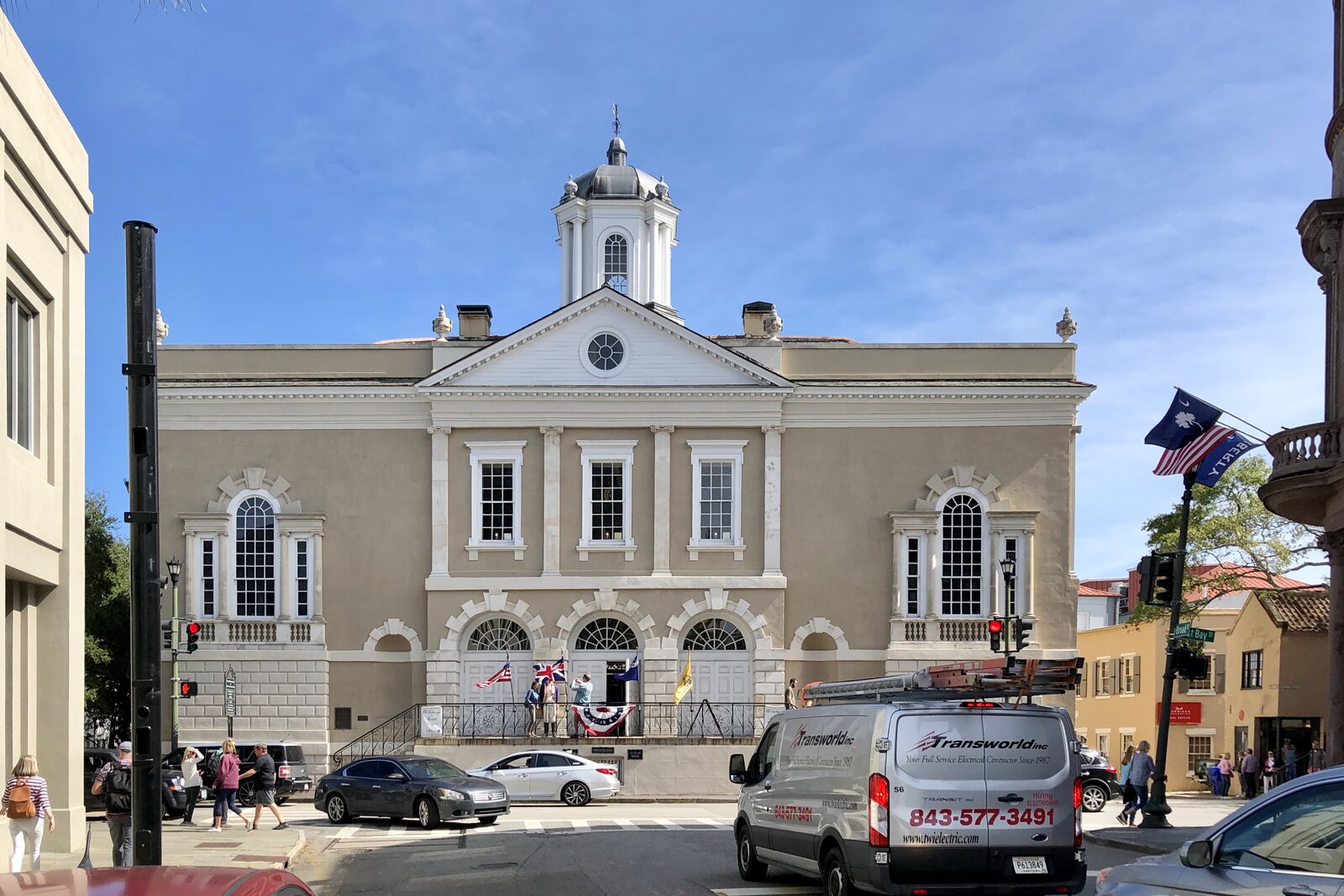
Look around first
What to notice
- The Exchange’s main façade
- Iron grilles on the lower level
- Iron shutters
- Entrance to the preserved lower level
The story of the place
The iron grilles and shutters on the lower level are not museum decoration. When the harbor lay much closer to the building, the colonial authorities established a place at the wharves for customs goods, cargo papers, duties, and deals. British troops acquired a ready-made guarded space and turned it into a military prison run by the head of the army police. The museum route now passes through the preserved lower level; prisoners of war, soldiers, townspeople, and enslaved people were once held here.
On the morning of August fourth, seventeen eighty-one, a British guard led Isaac Hayne out from here. Hayne was a wealthy planter and colonel in the American militia who had sought a trial under the law. He was offered a ride to the gallows in a wagon with a prepared coffin. Hayne walked.
The building had been erected only nine years before his execution. At that time, the harbor shore ran much closer, and the colonial authorities established a trading and customs hub at the wharves. “Exchange” meant a place where cargoes were processed, duties collected, deals made, and auctions held. The lower level was intended for customs goods; iron grilles and shutters on its windows had been planned from the beginning. When the British army occupied Charleston in seventeen eighty, it turned the ready-made guarded space into a military prison. The provost marshal was responsible for army police, prisoners, and punishments—hence the name “Provost Dungeon.” American prisoners of war, British soldiers, townspeople, and enslaved people were held here.
Hayne ended up among them after making a choice for his family. He drew income from several plantations where enslaved people grew rice and indigo. After Charleston’s surrender, he was released home on parole: such a prisoner could live on his estate as long as he did not take up arms. Soon the British demanded that former militiamen recognize themselves as subjects of the king, or face imprisonment.
Smallpox was raging in Hayne’s home. His eighteen-month-old daughter had already died, while his wife and other children were seriously ill; he needed medicine and a doctor. The British commandant, James Paterson, wanted an oath from him. Hayne objected to the obligation to fight his former comrades, but he signed the document and returned to his family.
The following summer, the British command nevertheless demanded military service from him. Hayne decided that this violated the condition, and he rejoined the Americans. After receiving the rank of colonel, he led a detachment to capture a former American general who had gone over to the British. The prisoner was rescued, while Hayne himself was captured and brought to the Exchange.
Now the same signature meant different things to the two sides. Hayne considered himself a prisoner of war freed from his obligations by the breach of the agreement. Nisbet Balfour, the British commandant of Charleston, and Lord Rawdon, commander of the forces in the South, declared him a subject of the king who had betrayed his oath. They needed an exemplary sentence capable of stopping other militiamen who had returned to the ranks.
Hayne demanded in writing that his status be determined. If he was a British subject, he was entitled to an ordinary trial; if he was a prisoner of war, taking part in battle did not make him a spy. He was first told that a council of officers would consider the case, but no full court hearing was held. Balfour and Rawdon ordered him hanged for treason and espionage. The execution was postponed for several days so that his children could come to say goodbye to their father.
Hayne’s death prompted calls for the retaliatory execution of a British officer. After the surrender of General Charles Cornwallis, representatives of South Carolina even proposed that the Continental Congress hang him in retribution, but the proposal was rejected. In Britain, the House of Lords tried to censure Lord Rawdon; that attempt also failed.
The museum route now passes through the preserved lower level where the British held prisoners, although documents do not name Hayne’s exact cell and show that detainees were also housed in other parts of the building. The gallows stood beyond the city’s fortifications at the time. The place from which Isaac Hayne was led out to his execution survives here, but not the place where it was carried out.
Useful on site
Monday–Saturday from 9:00 to 17:00, Sunday from 11:00 to 17:00; tours of the lower level are usually every half hour from 10:00 to 17:00.
Checked: June 29, 2026. Check the official source before visiting.The façade and the site of public ceremonies can be viewed from the street; the lower level requires a separate visit and may be inaccessible.