 Guide On Map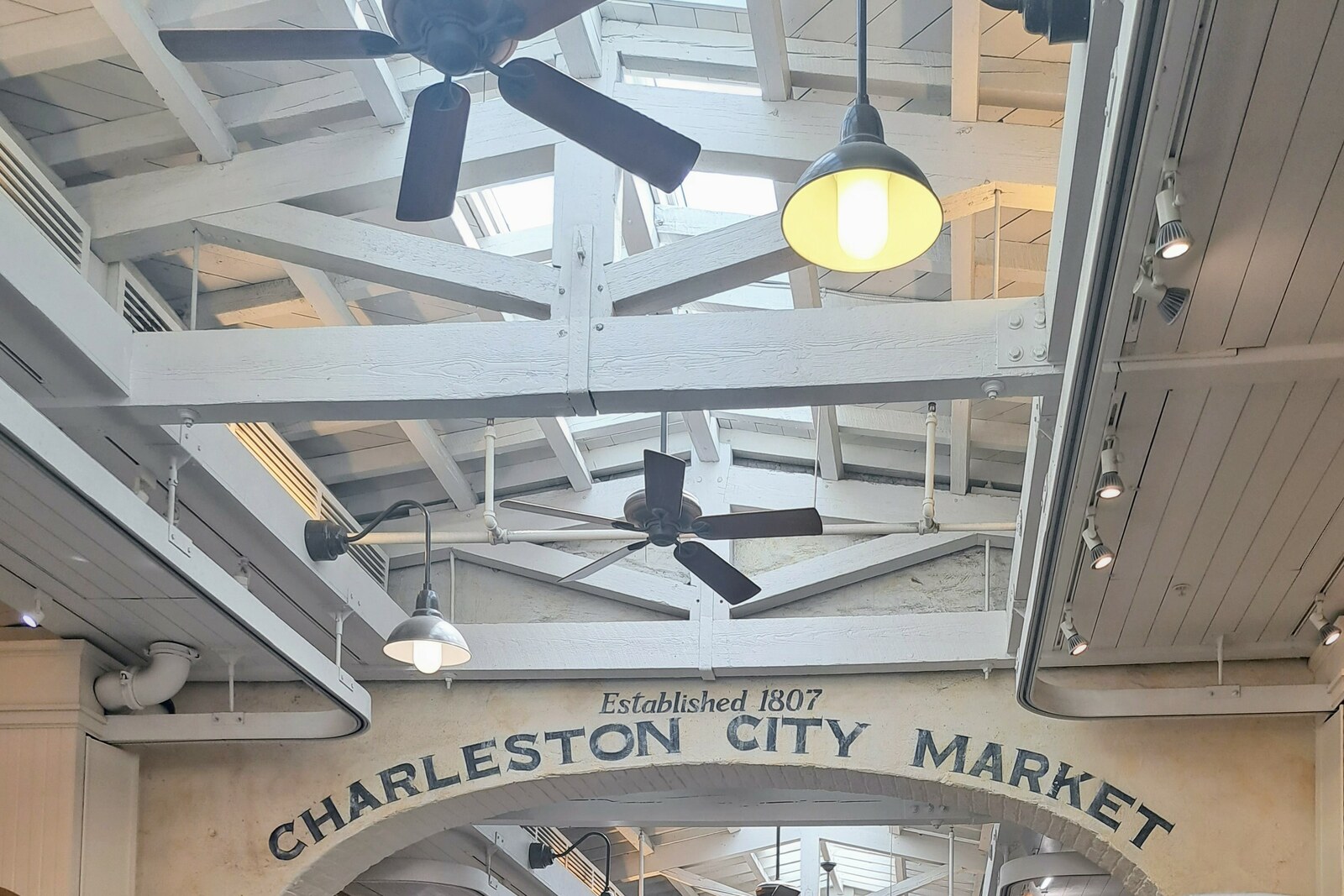
Look around first
What to notice
- Molded bull and ram skulls
- Columned portico
- Arched market passageways
- Stairs to the upper hall
The story of the place
Molded bull and ram skulls beneath the cornice of Market Hall indicated the merchandise. The word “market” in its name meant food stalls: meat, fish, and vegetables were sold here. Slave auctions took place elsewhere in Charleston, although both free and enslaved city residents were among this market’s sellers and buyers.
This elongated shape existed even before the present building. In seventeen eighty-eight, six owners of neighboring land granted the Charleston City Council a narrow strip of tidal lowland running from Meeting Street toward the Cooper River—specifically for a public market. Later, the council closed several scattered markets and concentrated trade here. The sheds occupied the middle of the strip, while a space for wagons carrying farm produce remained by Meeting Street.
In eighteen thirty-five, the Grand Lodge of Ancient Free Masons of South Carolina set its sights on this space—a private fraternity that needed a revenue-producing hall of its own. The Masons proposed building it above the market’s western entrance and making money by renting the premises for balls, dinners, and exhibitions.
The Charleston City Council agreed, but wrote two strict provisions into the contract. The land remained city property. The ground floor beneath the arches had to be kept permanently for the market, and the Masons undertook to provide the upper hall free of charge for general meetings of city residents convened by the municipality. Thus, one building combined trading rows below with a large public hall above.
By the spring of eighteen thirty-eight, the Masons had nearly completed the building. In late April, a major city fire destroyed it along with the neighboring market sheds. Under the contract, the lodge still had five years to rebuild the hall and recover its future rental income. The Charleston City Council, which would have had to restore the market anyway, chose a different calculation: owning the hall itself would allow it to determine its use and collect fees for private events.
In August eighteen thirty-nine, the council paid the Masons four thousand five hundred dollars to relinquish their right to the site. The lodge received compensation, but lost both the hall and the income for which it had begun construction. The competition was won by local architect Edward Brickell White. In the spring of eighteen forty-one, builders completed the present building, with its columned portico, stairs to the upper hall, and passageways for sellers below.
Market commissioners met upstairs—officials who assigned spaces and oversaw scales, product quality, and order in trade. Butchers worked beneath them, while fish and vegetable rows stretched out behind the building. Today, crafts, jewelry, souvenirs, and sweetgrass baskets woven by the Gullah Geechee people are sold beneath the arches and sheds. The food stalls are gone, but the Masonic contract can still be read in the building’s very layout: the hall is raised above, and a passageway for trade remains beneath it. The bull and ram skulls on the frieze indicate what merchandise that passageway was kept for.
Useful on site
Day market daily from 9:30 to 17:30; night market on Fridays and Saturdays from 18:30 to 22:30.
Checked: June 29, 2026. Check the official source before visiting.First examine the exterior decoration, then go inside without lingering in the middle of the narrow market rows.