 Guide On Map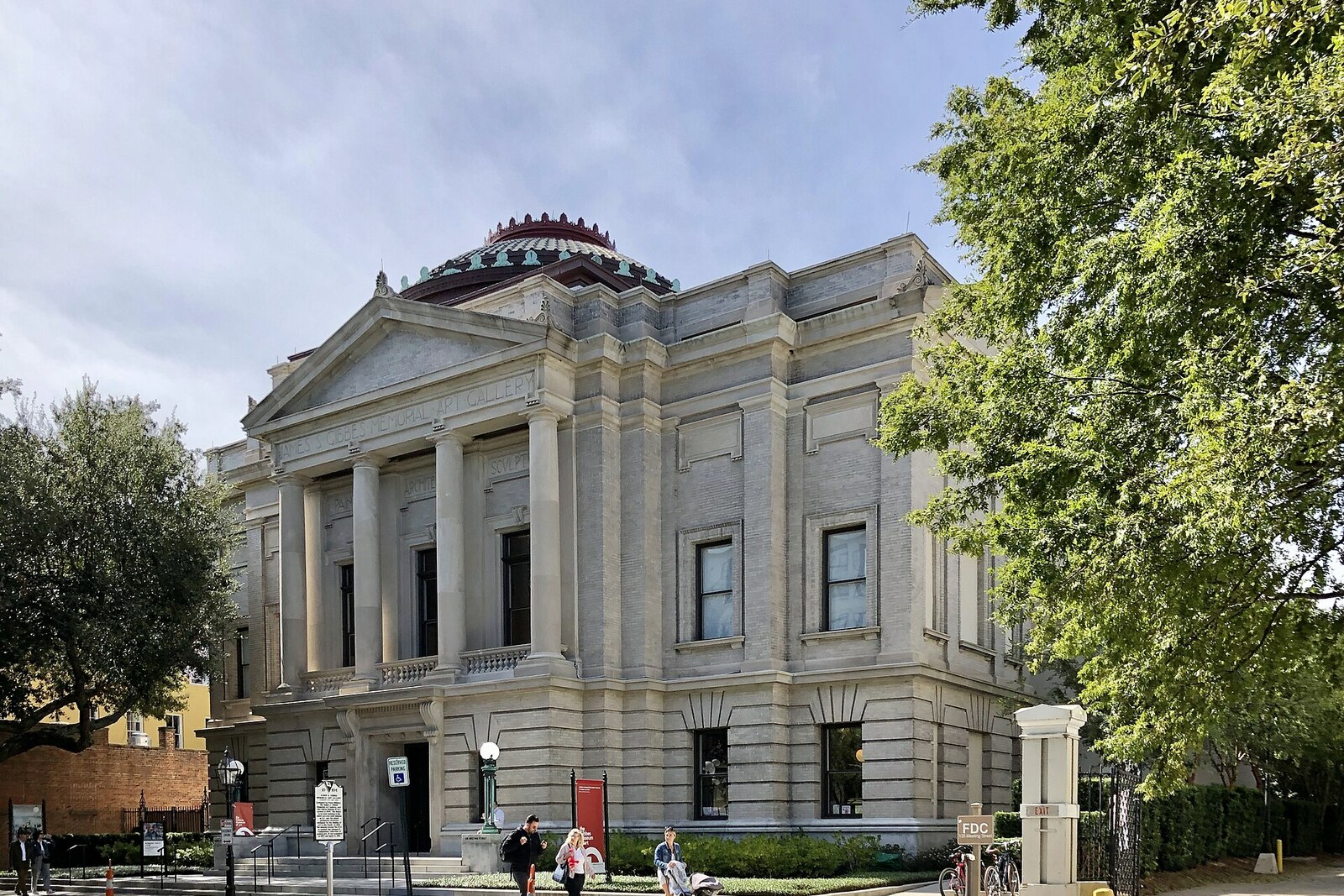
Look around first
What to notice
- Rotunda
- Main hall
- Exhibition galleries on the upper floors
- Classroom spaces on the first floor
The story of the place
The museum is arranged by floor: open spaces for art classes remain below, while exhibitions are gathered above. The rotunda and main hall give the lower part of the building spaciousness, after which staircases lead to the galleries. Students, working artists, and people who have come to look at art are here at the same time; this arrangement still lives within these walls.
In eighteen eighty-eight, the Charleston merchant and philanthropist James Shoolbred Gibbes, Sr. arranged part of his estate so that the city would have exhibition halls and rooms for student artists. He made his money as a commercial broker and through investments in a railroad and a gas company; before the Civil War, Gibbes also owned enslaved people. In his will, he set aside one hundred thousand dollars, but the city could receive it only after the deaths of his direct heirs.
When that condition was met, Gibbes's nieces and nephews tried to return the money to the family. The dispute reached a New York court. In nineteen oh one, the court upheld the bequest: the relatives lost, and Charleston received the funds. The city placed the new building under the care of the Carolina Art Association. In nineteen oh five, the Gibbes Memorial Art Gallery—today's Gibbes Museum of Art—opened here. His surname in the name means something quite specific: the will paid for these walls.
Thirty-one years later, Hilla Rebay, a German artist who sought recognition for non-objective painting—paintings that do not depict recognizable people or objects—needed the main hall. In New York, Rebay made her living from commissioned portraits. While working on a portrait of the industrialist Solomon R. Guggenheim, she showed him abstractions by Kandinsky and Rudolf Bauer and persuaded him to begin a collection. Guggenheim controlled a fortune created by the family mining business and spent it on art that many of his acquaintances considered nonsense.
Charleston was familiar to him: the Guggenheims kept a house on The Battery and a country property in South Carolina. Rebay chose the Gibbes Memorial Art Gallery for the collection's first museum display. In nineteen thirty-six, she installed one hundred twenty-eight works here—by Kandinsky, Chagall, Picasso, Léger, and other artists. Before the exhibition, the floors, lighting, and paintwork in the rotunda and main hall were renewed. So many visitors came that the museum recorded record attendance, and the collection's catalogs circulated throughout the United States and abroad.
Rebay urged Guggenheim first to accustom the public to the new art and only then to build a large museum. A year later, he established a foundation, and in nineteen thirty-nine he opened the Museum of Non-Objective Painting in New York; Rebay became its first director. Frank Lloyd Wright's famous spiral building opened only ten years after Guggenheim's death.
Now artists work and classes take place again on the admission-free first floor, while exhibition galleries occupy the upper floors—the very two functions Gibbes listed in his will. The one hundred twenty-eight paintings left long ago: most of the collection associated with them is kept in New York. Its first museum wall was the rectangular hall here, on Meeting Street.
Useful on site
Mon 10:00-17:00; Tue closed; Wed 10:00-20:00; Thu-Sat 10:00-17:00; Sun 13:00-17:00.
Checked: June 28, 2026. Check the official source before visiting.Exhibitions change, so the portrait of Aaron Douglas and other mentioned works may not be on display. Plan your museum visit separately.