 Guide On Map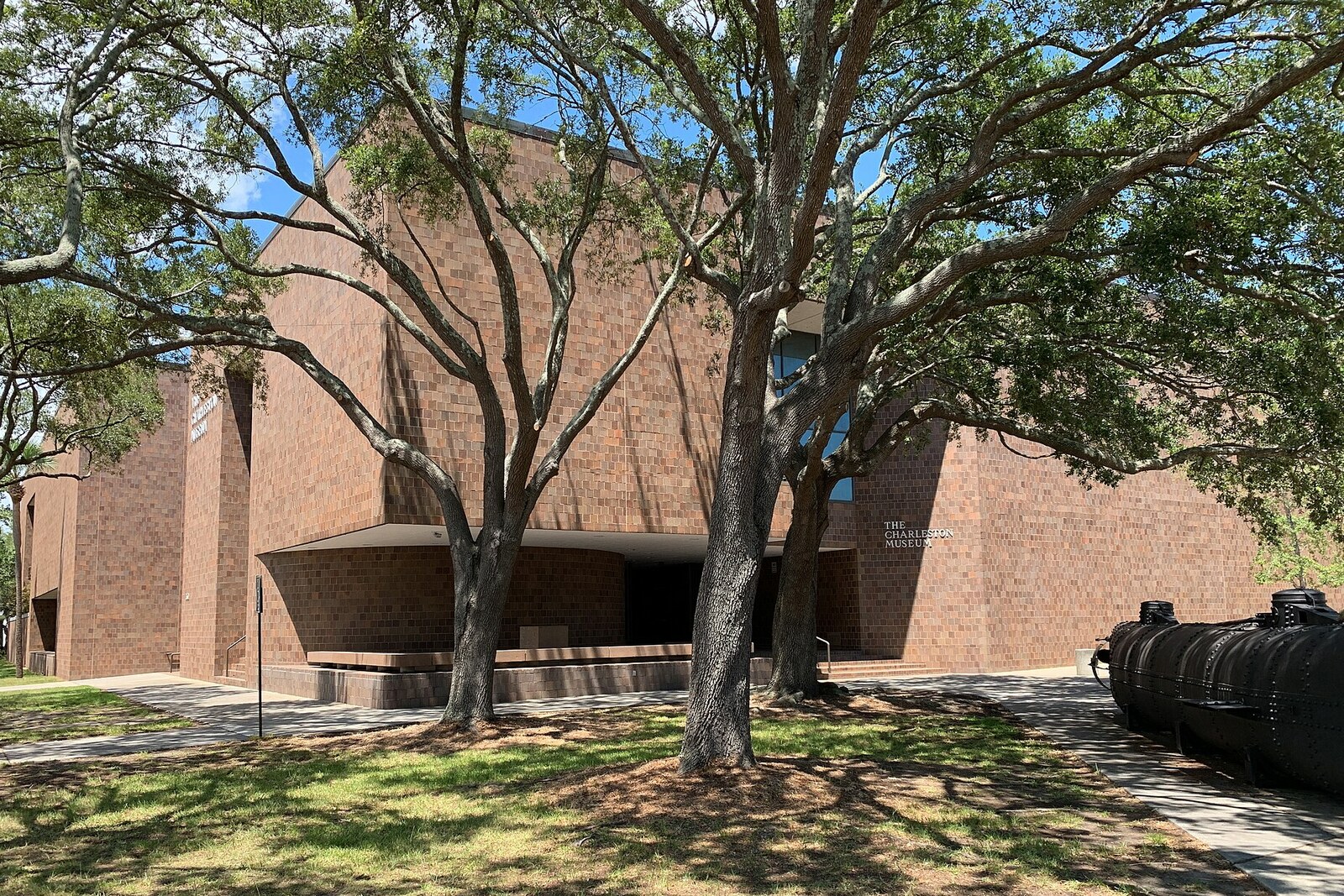
Look around first
What to notice
- Facade of the museum building
- Main entrance
- The Charleston Museum sign
The story of the place
Behind the austere facade on Meeting Street, the museum’s exhibitions, archives, and research facilities were brought together for the first time; its collections had previously moved among private homes, a college, and adapted public buildings. Its holdings grew from South Carolina animals, plants, and minerals that local residents studied for agriculture, trade, and medicine. At the main entrance hangs the sign of an institution that calls itself America’s first museum; its education department still sends schools suitcases containing objects, reproductions of documents, and lessons.
In nineteen oh nine, the museum hired Laura Bragg as a librarian. The present building did not yet exist: the collections occupied the former Thomson Auditorium on Rutledge Avenue. Bragg became deaf at the age of six, received library training, and earned her living working with books. She came to Charleston specifically for this position.
The institution was far older than its premises. In seventeen seventy-three, members of the Charleston Library Society began collecting South Carolina animals, plants, and minerals. Planters and colonial officials wanted to determine what could be used in agriculture, trade, and medicine. The Charleston Museum traces its history to that collection and therefore calls itself America’s first museum. For nearly two centuries, the exhibits were moved among private homes, a college, and adapted public buildings.
Bragg believed that the collections should reach people who could not come themselves. Before she became director, she prepared lessons about nature and different cultures, packing specimens, images, and explanations into small wooden boxes. Staff delivered them to urban and rural schools, both white and Black.
This happened in a city where the museum’s own trustees barred Black visitors from entering. The boxes were already crossing the racial boundary, while the institution’s door remained closed. In nineteen twenty, Bragg was appointed director—the first woman to lead a publicly funded museum in the United States. She could now argue with the trustees on behalf of the entire institution. Bragg persuaded them to lift the complete ban.
Black visitors began to be admitted once a week, separately from white visitors. Segregation remained, but people who had previously been refused at the entrance gained access to the exhibitions. Bragg added a children’s library and a reading room that lent books. By nineteen twenty-eight, her museum boxes were being sent to every school in the county; Charleston’s first free library later grew out of the reading room.
In nineteen eighty, staff moved the collections here, to Meeting Street. For the first time, archives, research facilities, and exhibitions were brought together in a building designed specifically for the museum. The old Thomson Auditorium soon burned down; its columns remain in Cannon Park. The Charleston Museum’s education department still lends schools “Bragg boxes”—suitcases containing museum objects, reproductions, documents, and ready-made lessons.
Useful on site
Mon-Sat 09:00-17:00, Sun 12:00-17:00; holiday closures as determined by the museum.
Checked: June 28, 2026. Check the official source before visiting.Getting acquainted with the collections requires a separate museum visit; choose the sections in advance, or this stop can easily take up a significant part of the day.