 Guide On Map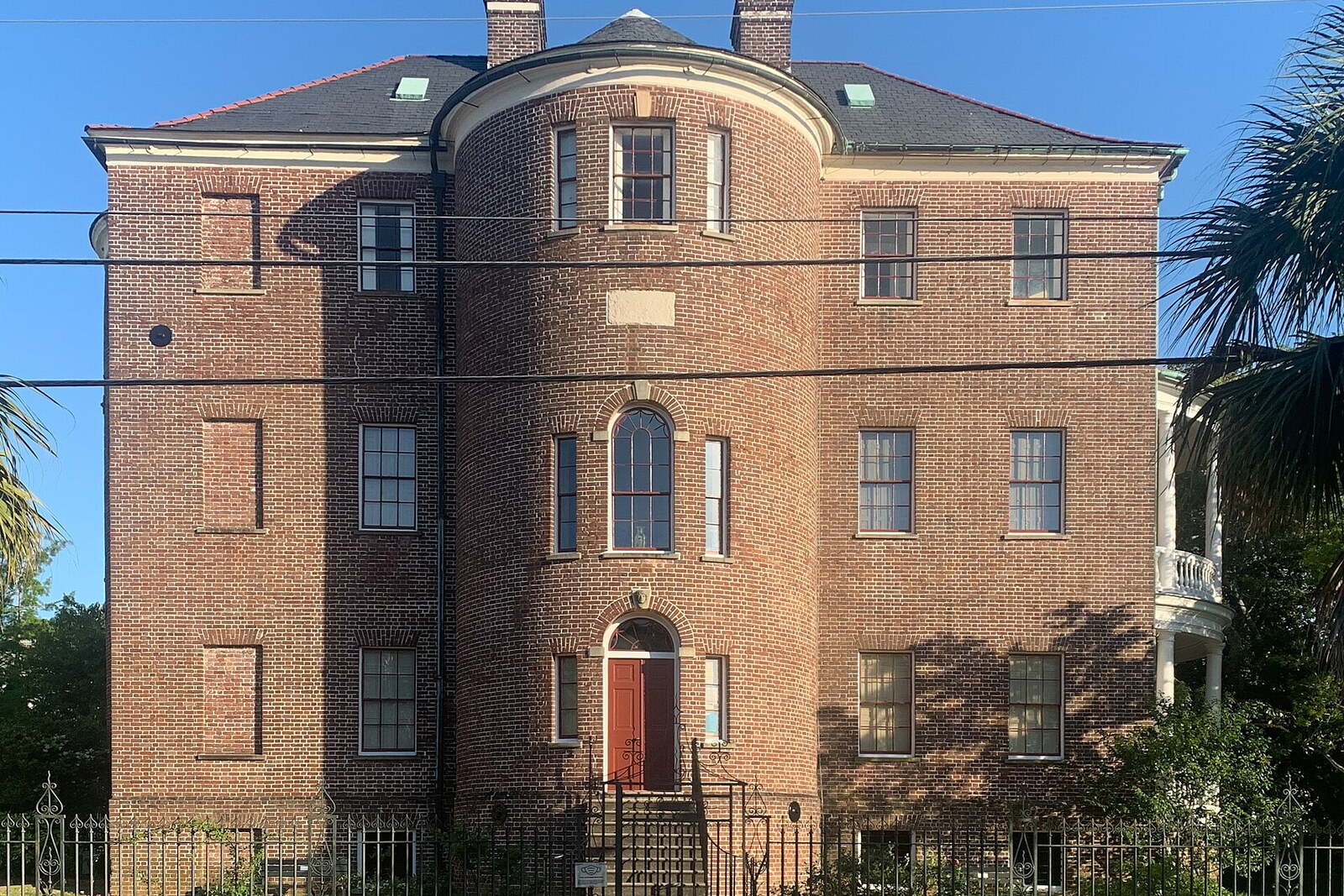
Look around first
What to notice
- Main house
- Round summer pavilion
- Plaques at the sites of lost buildings
- Commemorative plaque on the Ashmead Place side
The story of the place
The house is named for Joseph Manigault: in eighteen oh three, this rice planter and merchant settled here with his family. He commissioned the design from his brother Gabriel Manigault, a self-taught architect. Several plantations provided the funds for the town estate; Joseph inherited more than two hundred enslaved people along with them. Some of the household slaves lived on this property and served the family. The kitchen, their quarters, stable, and privy stood separately from the main house in the courtyard; these buildings have been lost, and their sites are now marked with museum plaques.
The Manigault family left the house in eighteen fifty-two. The property was subdivided, the building deteriorated, and it became a multi-unit rental house. In nineteen twenty, the Charleston Automobile Company bought it, intending to demolish the old mansion and build commercial premises.
The real-estate agent Susan Pringle Frost wanted to stop the demolition. Together with Nell McColl Pringle and thirty other townspeople, she founded the Society for the Preservation of Old Dwellings—the first public organization of its kind in the country. Nell contributed five thousand dollars in cash, and the women bought the house from the automobile company.
Buying it proved easier than maintaining it. To pay taxes and mortgage interest, Nell opened a boarding house here for Black tenants. Later, the rooms were opened for tours, and tea was sold to visitors for a quarter a cup. The money was still not enough. Nell had to sell some of her family's bank shares, then give Standard Oil the rear garden.
The oil company built an Esso gas station there. A round summer pavilion dating from the Manigault era remained on the sold property. Nell sent Rockefeller a letter and a telegram, then called him, seeking at least to preserve this building. The pavilion was not demolished, but it was converted into a privy and tire-storage room.
In nineteen thirty-two, the creditors demanded repayment of the loan, and the society's members lost the main house. A year later, The Charleston Museum acquired it with the help of Henrietta Pollitzer Hartford: she donated three thousand one dollars in memory of her mother. A plaque on the Ashmead Place side commemorates this gift. The museum restored the rooms and opened an exhibition in them about the Manigault family and the enslaved people who lived on the property.
In nineteen thirty-six, Standard Oil demolished the gas station and gave the garden and pavilion to the museum. The round building at the back of the property is that very summerhouse, where tires were stored while the gas station was operating.
Useful on site
Mon–Sat 10:00–17:00, Sun 12:00–17:00; last guided tour 16:30.
Checked: June 28, 2026. Check the official source before visiting.The interior is visited separately; outside, take time to look not only at the façade but also at the empty spaces where the lost service buildings once stood.