 Guide On Map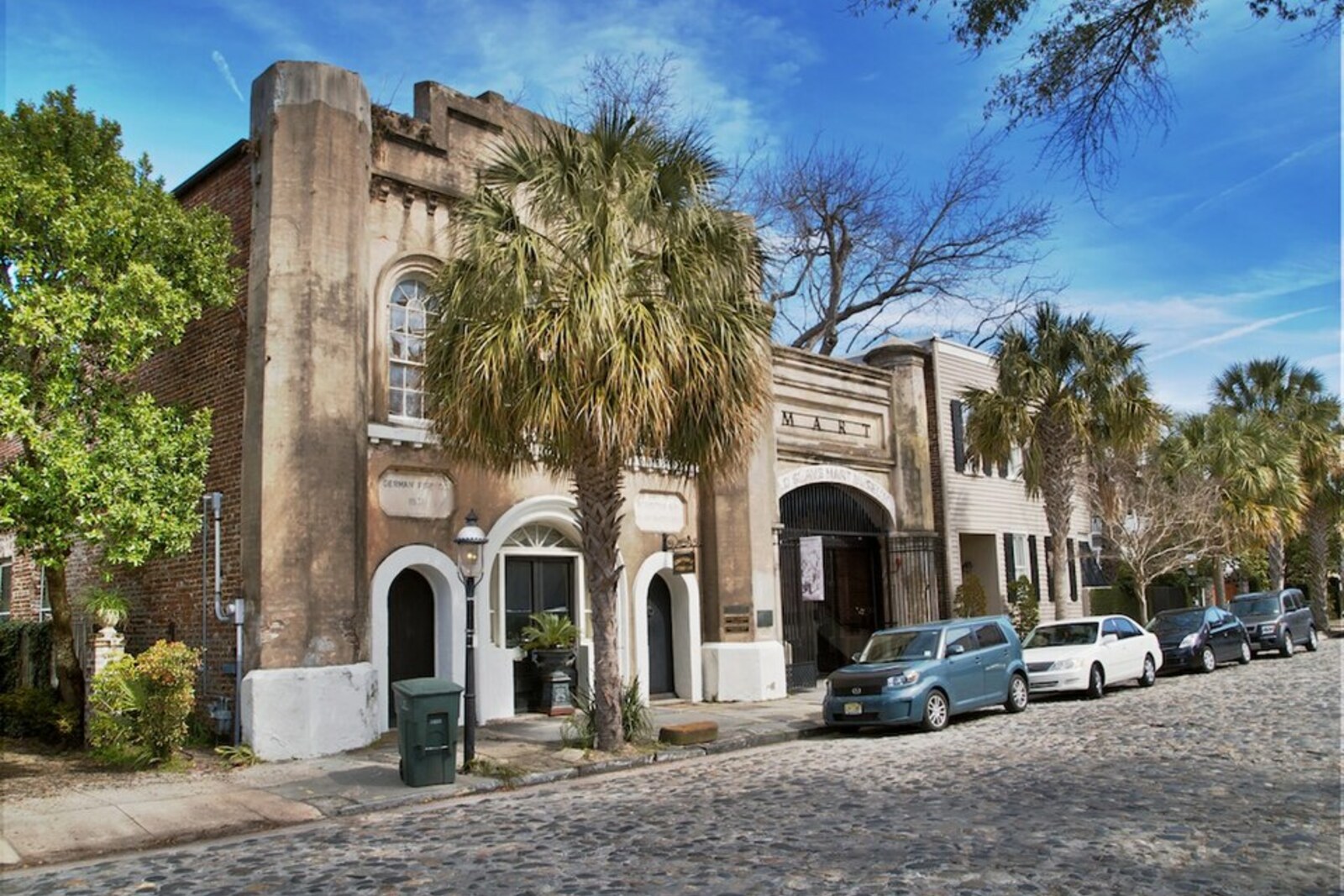
Look around first
What to notice
- High street arch
- Iron gates
- Covered auction hall
- Added second story
The story of the place
The high arch with iron gates leads into the covered hall, the last surviving fragment of a trading complex that occupied almost an entire block between Chalmers Street and Queen Street. The hall was built beneath rafters fastened to the wall of the neighboring German Fire Company building, and a long table was placed inside, onto which enslaved people were brought while buyers walked around it and named a price. Behind the rear wall stood a pen, a jail, a kitchen, and a room for the sick: people were held there and prepared for inspection before sale. These structures were demolished, and a second story was later added above the hall; the surviving space became a museum.
On July first, eighteen fifty-six, Thomas Ryan opened a private auction yard on this site. Ryan was a former sheriff, a city council member—such council members were then called aldermen—and an intermediary in the sale of enslaved people. He placed advertisements, arranged for the transport and housing of people before the auctions, collected money from buyers, and received a percentage from every transaction. That day, an ordinance was coming into force that could deprive him of his usual place of business.
Before that, auctions were usually held near the Custom House and Exchange building. The city council banned the sale there of people, horses, carriages, and other property. The ban applied to the streets and lots around the Custom House, while preserving the trade in people itself. While the ordinance was being prepared, Ryan adapted private property between Chalmers Street and Queen Street for it. The auctions moved from a crowded intersection behind walls, and on the day the ban took effect, Ryan was already receiving sellers and buyers here.
In the old name, the word “mart” meant a trading yard. Ryan's complex occupied nearly the entire block. Behind the entrance from Chalmers Street was a pen enclosed by brick walls. Next to it stood a kitchen, a room for the sick, a small building later called the morgue, and a four-story jail. Enslaved men, women, and children were held there before sale, prepared for inspection, and led out to buyers. By the cautious estimate of the staff of the present museum, more than ten thousand people passed through Ryan's auctions over seven years.
In February eighteen fifty-nine, Ziba B. Oakes, a trader who worked here, bought the complex. He roofed over the passage from Chalmers Street and turned it into a permanent auction hall. The rafters were attached to the wall of the neighboring German Fire Company building, and a high arch with iron gates was built on the street side. Inside, they placed a table about one meter high and three meters long. Enslaved people stood on it while buyers walked along it, inspected them, and named a price. This is the hall now called the Old Slave Mart.
In the fall of eighteen sixty-three, daily artillery bombardments of Charleston forced the traders to close the mart and leave the lower part of the city. Private sales continued in other blocks for almost another year and a half. On February twentieth, eighteen sixty-five, after federal troops had already entered, the journalist and abolitionist James Redpath found hundreds of business letters in Oakes's abandoned office.
In them, intermediaries asked for people of a certain age and profession to be bought, discussed prices, sent bills of sale, demanded that runaways be sought, and decided whether members of one family could be sold separately. Redpath wanted to preserve these papers as evidence of how the trade was organized. In April, he handed them over to the abolitionist publisher William Lloyd Garrison, and the Garrison family later gave the collection to the Boston Public Library. Thus Oakes's office disappeared, but his correspondence with instructions, sums, and names remained.
Of the complex's four buildings, only Oakes's covered auction hall has survived to the present day. The jail, kitchen, pen, and morgue were demolished; a second story above the hall was added when the premises were converted into a rental building. In nineteen thirty-eight, Miriam B. Wilson opened a museum here, and in two thousand seven, the city reopened it after restoration. Behind the high arch is the former auction hall; the space where people were held before being brought out to this table began behind its rear wall and no longer exists.
Useful on site
Monday—Saturday 9:00—17:00; Sunday closed. Tickets are sold on site.
Checked: July 1, 2026. Check the official source before visiting.Plan the interior exhibition as a separate visit; if entry is unavailable, listen from outside and do not block the passage.