 Guide On Map
African American Charleston: From Gadsden's Wharf to Mother Emanuel AME Church
From the Cooper River waterfront through Chalmers Street and Charleston City Market to Mother Emanuel AME Church
Guide On Map on your phone
Open the walk like a regular app
It takes about 10 seconds to install. No app store needed.
The whole path
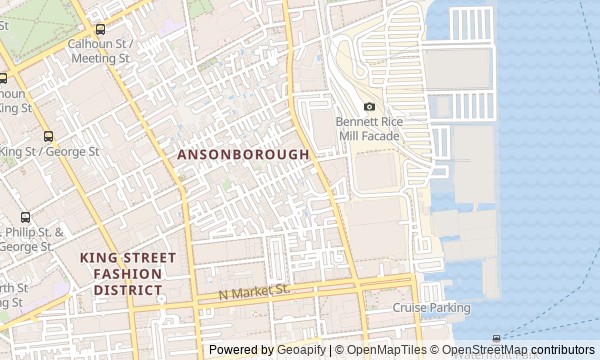
Route map
About the walk
You will begin beside the Cooper River, on the ground where a vanished wharf once stood, then move inland through the old city—along Chalmers Street and the market rows to Mother Emanuel AME Church.
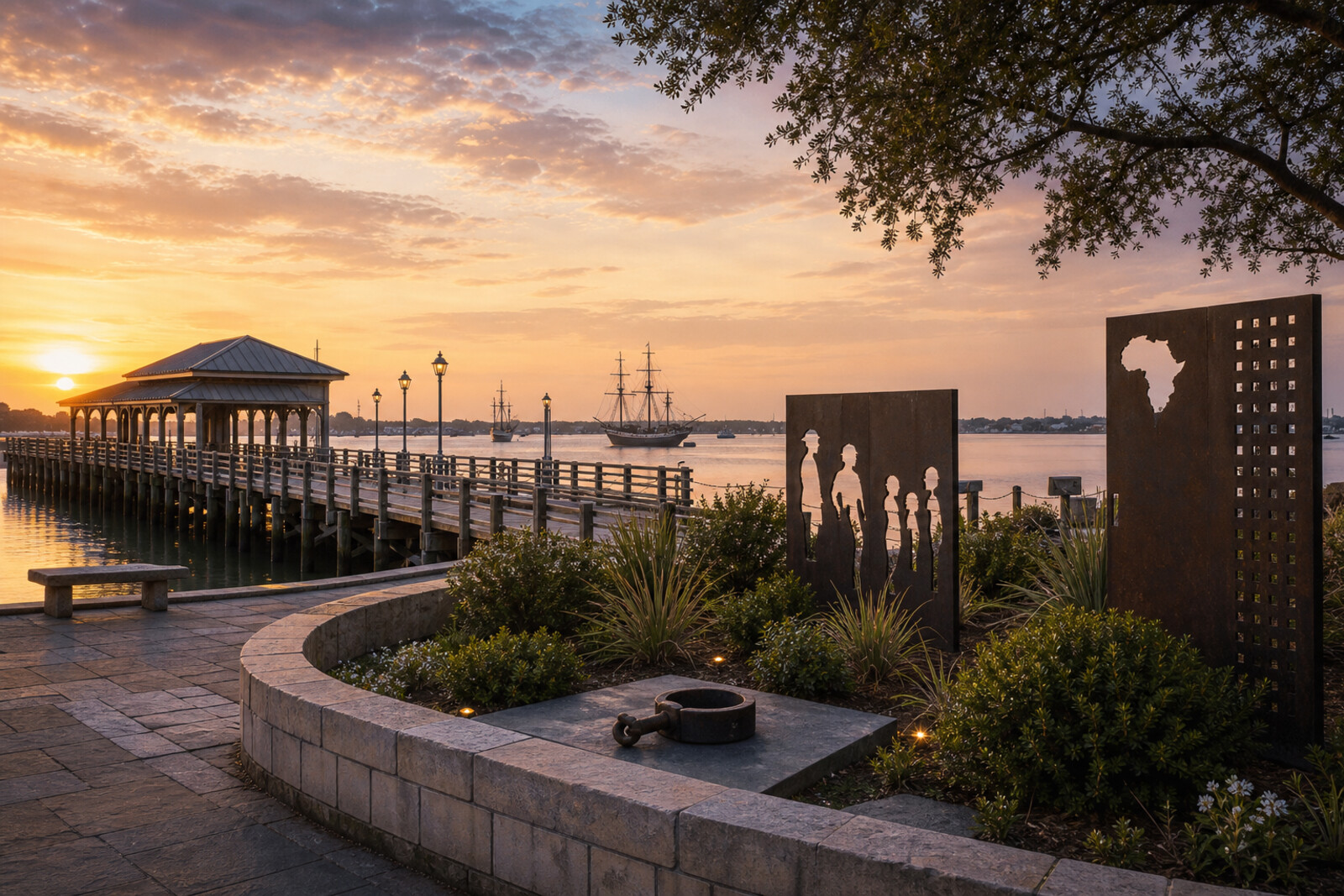
At first, the route stays close to the harbor. Beneath the raised museum building lie open ground, a shallow pool, and human figures that the water will hide, then reveal again. Farther on, the shoreline gives way to a brick alley and a public pier. Then the walk enters narrow streets, where pink stone, a tall auction arch, and sweetgrass baskets stand close together.
The stories will be calm and precise. They separate the record from city legend and do not cover difficult history with ceremonial language. You will learn why the museum does not touch the ground, and how an ordinary Saturday market changed the fate of one craft—but the answers come once you are there.
By the end, you will be able to connect a vanished wharf, a blacksmith's forge on Chalmers Street, Gullah baskets, and the doors of Mother Emanuel AME Church into one history of African American Charleston.
Why this order
The route begins at the museum, then immediately goes down beneath its galleries: African Ancestors Memorial Garden gives human scale to what the museum explains through documents. From the figures at the restored shoreline, the next step leads to Gadsden's Wharf itself—the place without which the composition would remain an abstract memorial. The route then heads south along the same water to a public park: after a private wharf where people were forcibly brought ashore, a pier left open to city residents without boats becomes especially striking. From the waterfront, the walk turns onto Chalmers Street, moving from a civic decision about shared access to the personal path of an enslaved blacksmith toward freedom and property. Nearby, Old Slave Mart explains the system in which that path was an exception. Charleston City Market then distinguishes two places that are easy to confuse by name, continuing the story of African American labor through craft and authorship. The final walk to Mother Emanuel AME Church leads from family-passed skills to a community that preserved itself through bans, violence, and a return to worship.
Those who want to understand African American Charleston through specific places Those who value documents, archaeology, and human lives without ceremonial rhetoric Those ready for difficult material and a calm conversation about it
Those looking for a light walk among mansions and gardens Those who prefer an overview of major sights without difficult stories Those for whom it would be hard right now to hear about slavery and racist violence
Before you go
Choose comfortable shoes: the uneven stones on Chalmers Street need attention, and part of the route follows open water. Bring water and sun or rain protection—the garden and waterfront depend heavily on the weather. Plan museum-gallery visits separately, and check current rules on the official websites in advance. Mother Emanuel AME Church is a living church, not an open-access exhibit: do not count on entry or a tour without confirmation, and do not disturb services or private events. At the market, ask permission before photographing vendors and their work.
When to go
Set aside 3–4 hours for the route. Visiting the exhibitions at the International African American Museum and Old Slave Mart will add significant time, so allow half a day for a full visit. Morning is more comfortable for the outdoor sections, and do not rush the first three stops: they are close together, but each has a different purpose.
Backup plan
If the International African American Museum is closed, keep the opening of the route outdoors: the raised building, the open ground beneath it, the garden, and the site of the former wharf already form a meaningful sequence. If Old Slave Mart is closed, view the surviving gallery from the street and continue along Chalmers Street, without treating the exterior as the complex's full history. In heat or when short on time, shorten the pause in the park and the walk through Charleston City Market, but keep Gadsden's Wharf, Old Slave Mart, and Mother Emanuel AME Church—without them, the route loses its passage from arrival and sale to the resistance of a living community.
Route conditions
Surface. Paved — 3.6 km
Stairs. Flights: 1, 3 m in total
Access. Wheelchair — no; stroller — limited (stairs)
Facilities. Toilets — 12; drinking water — 3
Elevation. Ascent — 18 m; descent — 16 m
OpenStreetMap extract of June 18, 2026: database data, not a check on the ground. Data © OpenStreetMap contributors, ODbL licence
Walk plan
Open in maps ↗- 1
International African American Museum
It will explain why the story of the route begins not in the galleries, but on the ground beneath them. - 2
African Ancestors Memorial Garden
It will translate port statistics into human scale through water, tabby, and life-size figures. - 3
Gadsden's Wharf
It returns the memorial composition to the exact place where port regulations turned a private wharf into a monopolized point of entry. - 4
Joe Riley Waterfront Park
It will show how access to the shore became a matter of a city decision rather than a privilege for boat owners. - 5
Chalmers Street and The Pink House
Lets you see the path to freedom and property ownership on a street where the exact location of the blacksmith shop has not survived. - 6
Old Slave Mart
It will show how the trade in people moved from a public intersection into a purpose-built private complex. - 7
Charleston City Market and Sweetgrass Baskets
It separates the food market from the place where people were sold and continues the route with the story of a craft that became an individual art form. - 8
Mother Emanuel AME Church
It will connect the long history of Charleston’s Black church with the ordeal faced by its present-day congregation.
Route features
Everything you need stays in the browser
Progress, saves and your trip plan are stored on this device.
Add Guide On Map to your home screen so the walk opens outside the browser.
How we handle sources, maps and corrections: our editorial standards