 Guide On Map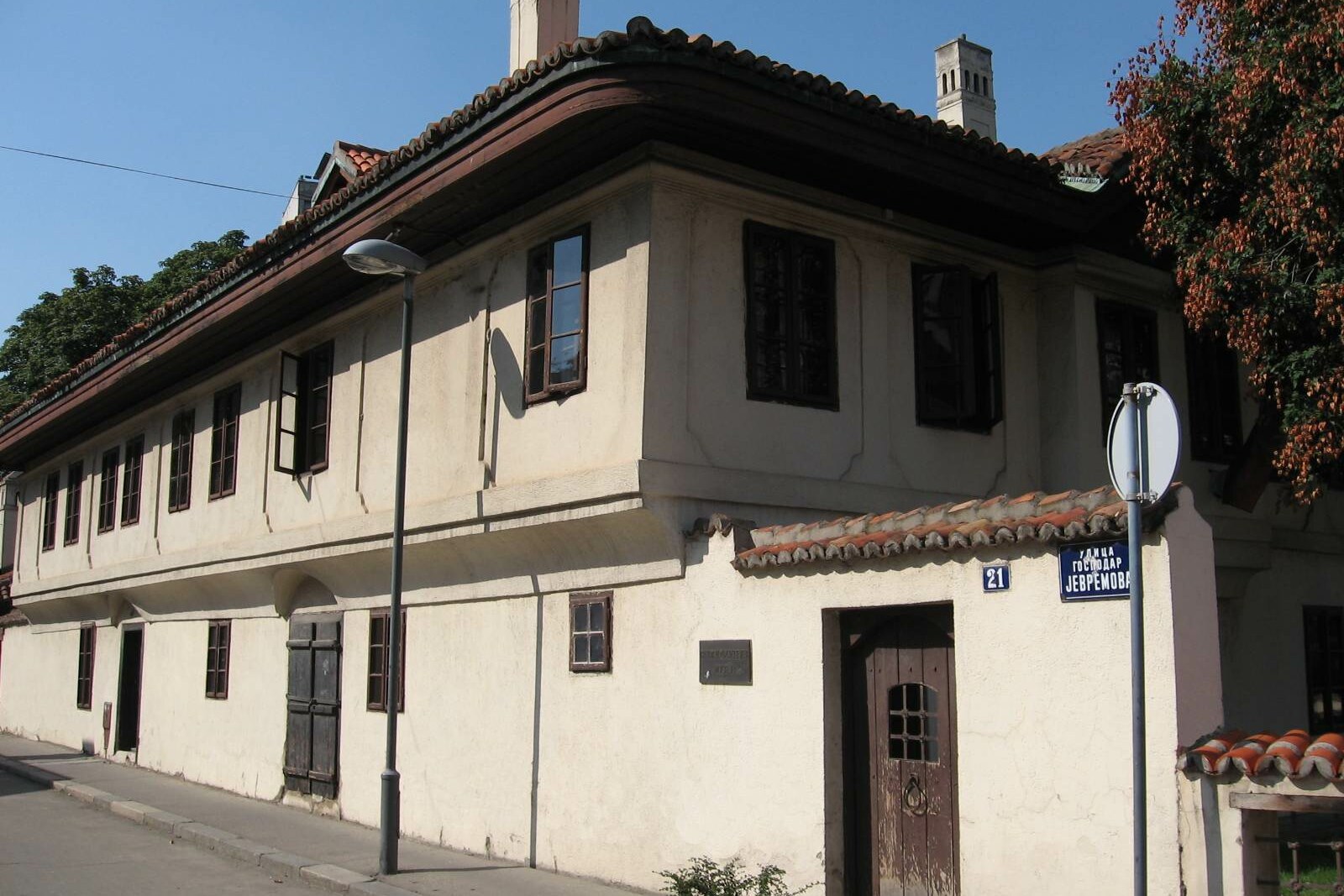
Look around first
What to notice
- Facade of the old residential house
- Protruding windows of the upper floor
- Museum sign
The story of the place
Vuk Karadžić and Dositej Obradović are named side by side on the museum sign, although they never lived together in this house. The residential home of a wealthy Ottoman family was adapted for a school: the ground floor was assigned to younger students, while the Great School with its advanced courses was placed upstairs. Surveying and law were studied there, and notebooks containing lectures replaced ready-made textbooks. The windows of this floor still protrude above the facade; after restoration, the house was transferred to the museum in memory of the school.
In the winter of eighteen oh nine, Lazar Arsenijević, the future historian known as Batalaka, enrolled in Belgrade's Great School. Lazar's father died when the boy was four. His mother brought him to Belgrade, and relatives tried to have him learn one trade and then another, but he did not become a craftsman. The school offered a different path: its graduates were prepared for civil service.
A few months later, the students moved into this house. The first premises, on the opposite side of Gospodar Jevremova Street, had become too cramped. In the former home of a wealthy Ottoman family, the ground floor was assigned to a primary school and the upper floor to the Great School. It was called Great in contrast to the small, meaning primary, schools. In its structure, it combined the upper grades of a gymnasium with the training of future officials.
This school was created by Ivan Jugović—a lawyer, former teacher at the Gymnasium of Karlovci, and secretary of the insurgent government. Rebel Serbia had enough people who knew how to fight; Jugović worked to ensure that there would be people able to conduct correspondence, interpret laws, judge cases, and run institutions. The leaders of the uprising approved his idea and sent, among others, their own sons here. The government provided poor students with lodging and financial assistance.
The school had no ready-made textbooks. Teachers translated and retold foreign manuals, while students wrote down lectures and then studied from their own notebooks. At first they took history, geography, arithmetic, German, and practical surveying. In the final class, they studied state, international, and criminal law, as well as the procedure for court proceedings. What happened on the upper floor of this residential house was preparation for the country's first civil servants, at a time when its future was still being decided by war.
Lazar Arsenijević Batalaka finished school in July eighteen thirteen. In the autumn, the uprising was defeated, Ottoman troops returned to Belgrade, and the school closed. Batalaka fled first to Austria and then lived in Russia. Later he returned and became a state councillor, minister of education, and minister of justice. He also recorded the school's structure, its list of subjects, and the teachers' names—without his recollections of classes in this house, much less would be known.
The two names on the museum sign are there because of this school. Dositej Obradović, an Enlightenment figure and Serbia's first minister of education, took part in creating it and gave a speech at its opening; the ceremony itself was held in the original premises across the street. Vuk Karadžić, the future reformer of the Serbian literary language and collector of folk songs, was part of the first intake of students and later left accounts of the school. This building was not a shared home for Vuk and Dositej: their roles in the history of education converged here.
In nineteen forty-nine, the restored house was transferred to the memorial Museum of Vuk and Dositej specifically because of the Great School. Its charter and textbooks have not survived. The upper floor itself has survived, with its protruding windows—the one where students copied lectures by hand.
Useful on site
Officially: Tuesday, Wednesday, Friday and Sunday 10:00–18:00; Thursday and Saturday 12:00–20:00; Monday closed. An individual museum ticket is listed as 200 dinars.
Opening hours by day
The exterior retains the meaning of the stop even when the museum is closed; plan a visit to the exhibition separately according to the current schedule.