 Guide On Map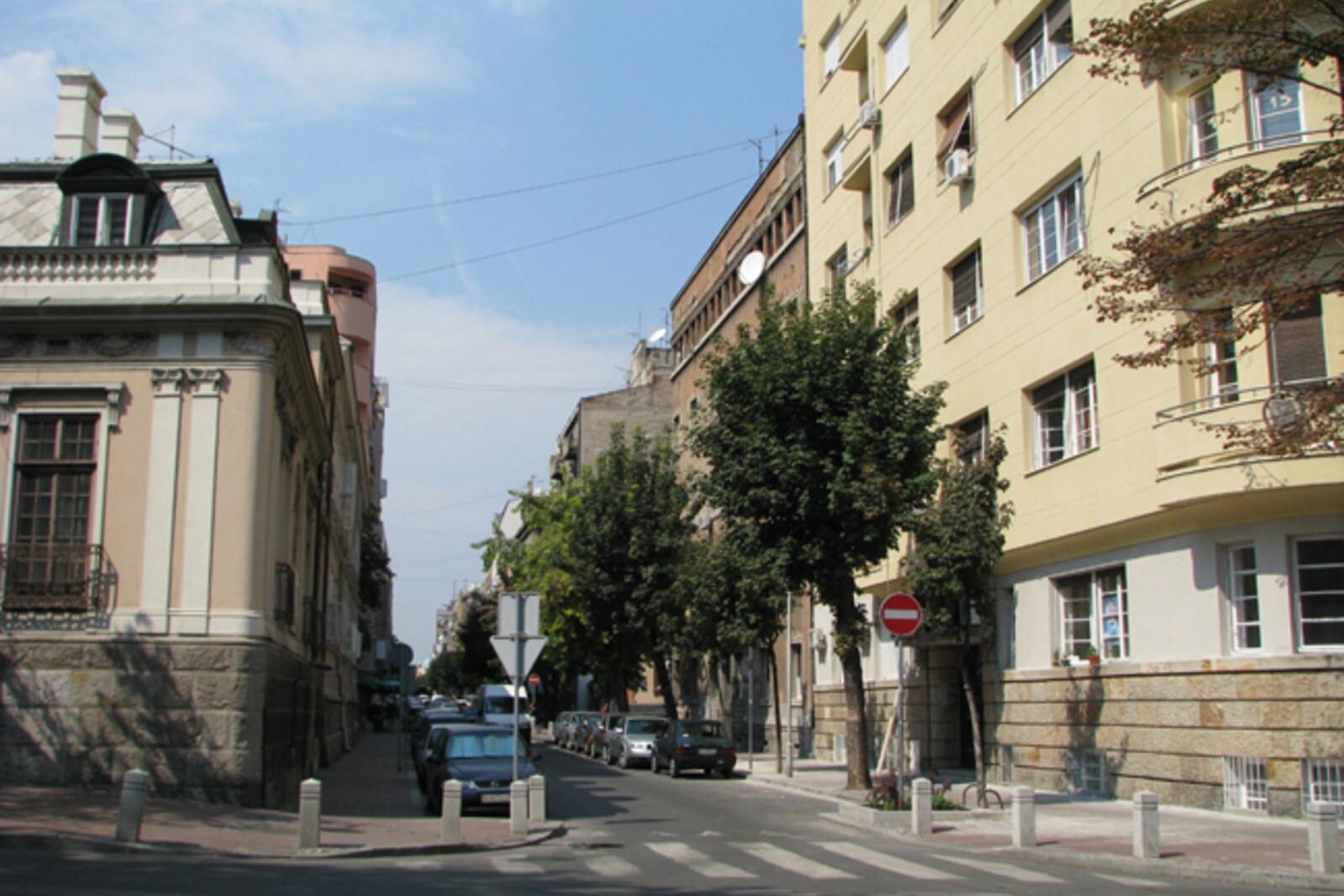
Look around first
What to notice
- Dome
- Minaret
- Circular platform of the minaret
- “Gospodar Jevremova” street sign
The story of the place
At house number eleven on Gospodar Jevremova Street stands Bajrakli Mosque—a functioning mosque with a dome and minaret. Its name means “mosque with a flag.” At the turn of the eighteenth and nineteenth centuries, the flag here served as a city signal.
At the main mosque, a muvakit worked—a person responsible for the calendar and precise time. He determined sacred days, monitored the clock mechanism, and calculated the start of prayer. At the appointed moment, the muvakit raised the bajrak on the minaret. The attendants of Belgrade’s other mosques saw it and began prayer at the same time. The name Bajrakli became established through this work. The street now called Gospodar Jevremova Street was formerly known as Bajrak Sokak—the Street of the Flag.
After the Ottoman garrison left Belgrade in eighteen sixty-seven, the Muslim community shrank sharply. A year later, Prince Mihailo Obrenović, the ruler of Serbia, ordered that a functioning prayer hall be kept for Muslims living in the city and those arriving on business. The minister of education and church affairs was instructed to choose one of the surviving mosques and put it in order.
The officials chose Bajrakli Mosque. They repaired the building and the neighboring house for the attendant, and appointed an imam and a muezzin—a person who calls the faithful to prayer. The imam was to receive two hundred forty thalers a year, and the muezzin one hundred twenty. Thus, the prince’s decision had a quite tangible continuation: the community had premises, attendants, and money for their upkeep. Of the dozens of Belgrade mosques, Bajrakli Mosque alone remained functioning.
The street’s present name is connected with another branch of the same family. In eighteen seventy-two, city officials named it Jevremova after Jevrem Obrenović—Prince Mihailo’s uncle and the governor of Belgrade from eighteen thirty-one to eighteen forty-two. “Gospodar” is an old honorary title for a high-ranking official. It was a commemorative name: Jevrem’s Belgrade house stood near Terazije, not here.
At house number eleven, the circular platform of the minaret, from which the bajrak was raised, has survived. Jevrem’s name remains on the street sign, while beyond the wall the mosque that his nephew ordered opened for the faithful continues to serve.
Useful on site
Open city street; the mosque, museum, courtyards, and neighboring institutions have separate access arrangements.
Checked: July 1, 2026. Check the official source before visiting.Look at both sides of the street and cross only at permitted places; the mosque remains an active place of prayer.