 Guide On Map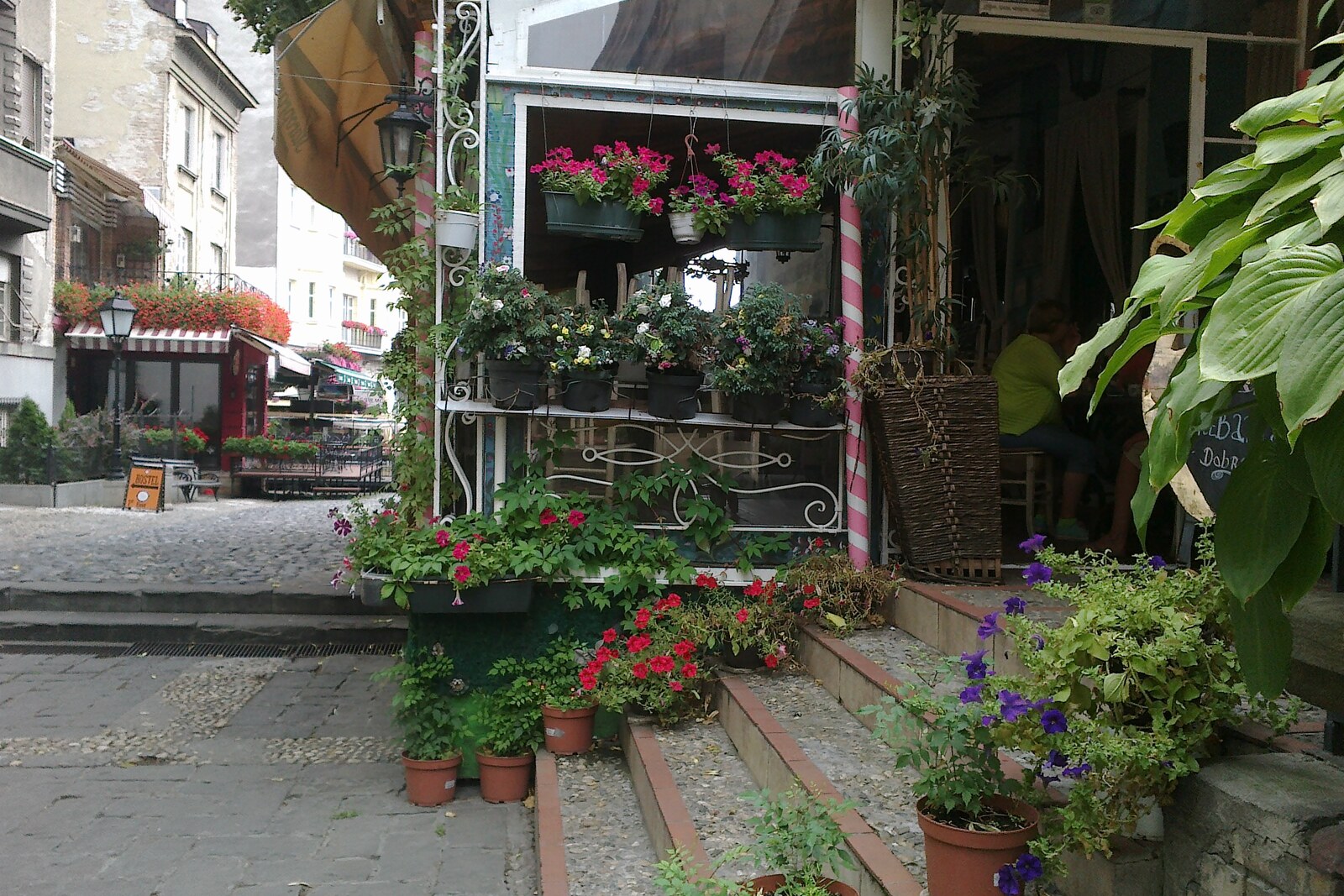
Look around first
What to notice
- Stone kaldrma
- Low houses
- Streetlights and candelabras
- Signs of old kafanas
The story of the place
The cobbled kaldrma beneath your feet looks as old as the houses, but the present layout of Skadarska Street was devised in the mid-twentieth century. In nineteen sixty-eight, the former paving was replaced with stone brought from Pašino Brdo, another outlying part of Belgrade. At the same time, traffic was removed from here, streetlights and candelabras were installed, and the old kafana-restaurants were enlarged. The historic appearance required an entirely modern project.
By the nineteen fifties, the low houses were receiving almost no care. A resolution adopted as early as nineteen thirty-five prohibited their unauthorized alteration, but provided no money for maintenance. Skadarska Street was deteriorating, while new multistory buildings were appearing around it.
Uglješa Bogunović fought to save the street. He was an architect who made his living designing modern Belgrade. He took part in creating the building of the newspaper Politika and Avala Tower. Now Bogunović was putting his professional reputation behind several uneven blocks of one-story houses and kafanas.
In nineteen fifty-seven, he published an article in Politika about restoring Skadarlija. It was followed by rather routine work: artists, journalists, and regular visitors gathered information about who had lived in these houses and what had been written at the tables of local establishments. These lists were attached to petitions, proving to city officials that this concerned specific addresses, not a vague legend of old Belgrade.
The legend, however, arose from a real relocation. In nineteen oh one, the Dardaneli kafana opposite the National Theatre in Belgrade was demolished to build the Mortgage Bank, the building now occupied by the National Museum of Serbia. Actors, writers, singers, and newspaper people had met there for more than thirty years. Having lost their usual table, they chose the already operating establishments on Skadarska Street—above all Tri šešira and Dva jelena. Here they could rent an inexpensive room, eat, arrange work, discuss a manuscript or a theatrical role. Thus, a street of craftspeople and small proprietors acquired regular visitors who lived on literary fees, newspapers, and the stage.
It was this connection that Bogunović had to prove half a century later. In nineteen sixty-six, city officials finally brought him and the artists who supported the project together for a meeting. Bogunović was assigned to draw up a plan. The following year, Skadarlija was recognized as a protected cultural and historical ensemble, and then reconstruction began: the house of the poet and painter Đura Jakšić was repaired, the old kafanas were renovated, their interiors were remade, the street fountain basin was restored, and the street used by traffic was turned into a pedestrian street. The restaurants here were deliberately preserved and even strengthened: Bogunović wanted the old houses to continue generating income, rather than stand as locked-up scenery.
The name came before the bohemian fame. In the spring of eighteen seventy-two, the Belgrade city authorities named the street Skadarska Street after the Balkan city of Scutari, now Shkodër in Albania. The name of the whole district—Skadarlija—was formed from the street’s name. Scutari itself lies far from here; the pedestrian kaldrma, streetlights, and chain of restaurants mark the project through which Bogunović, almost ninety years later, secured this name for the preserved street.
Useful on site
Open city street; venues, music, and terraces operate on their own schedules.
Checked: July 1, 2026. Check the official source before visiting.The kafanas can be viewed from the street; a table, food, or musical program is not needed to understand this stop.