 Guide On Map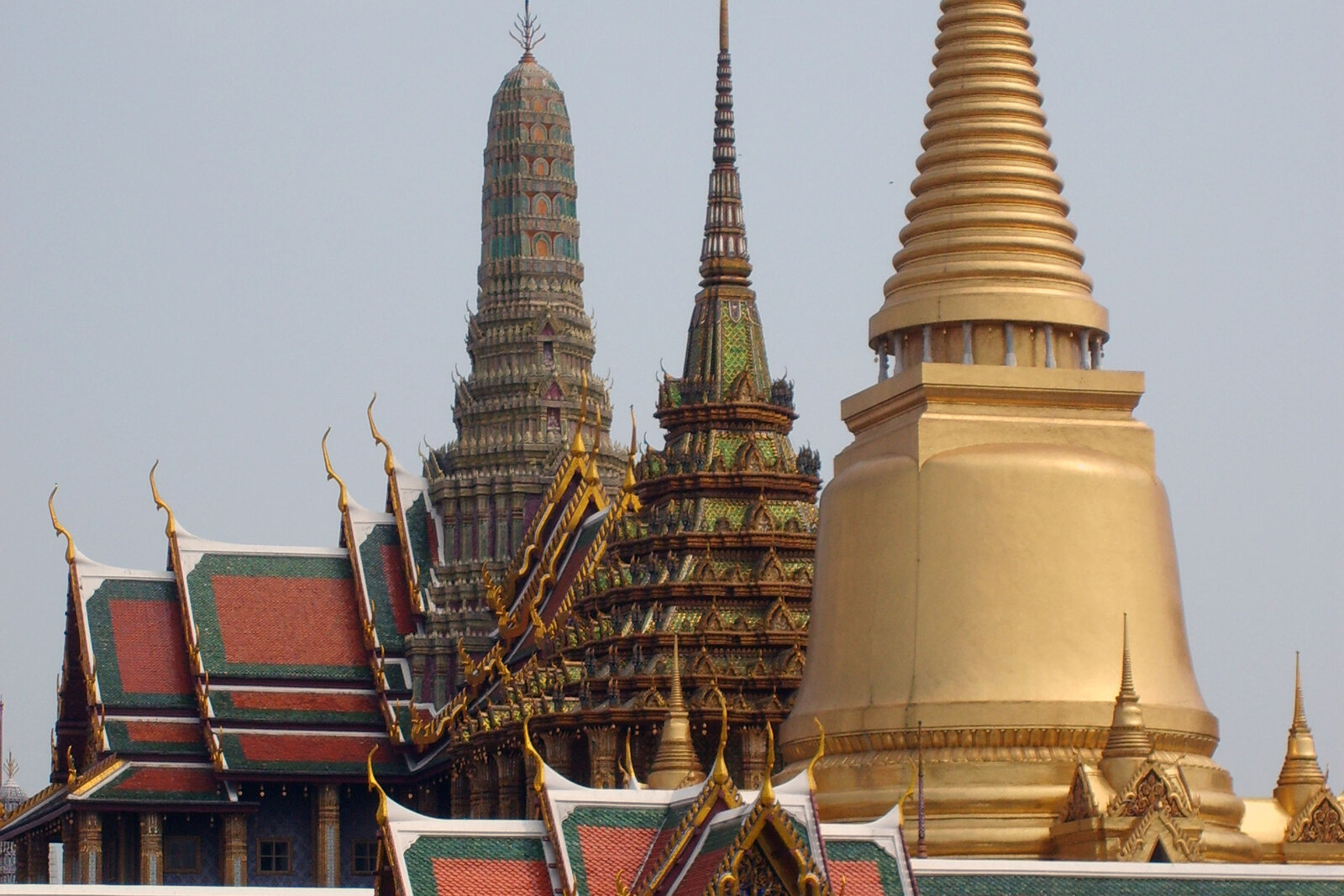
Look around first
What to notice
- Small green Buddha figure
- High gilded base
- Seasonal golden garment
- Palace wall around the temple
The story of the place
Behind the palace wall are gathered the ruler's quarters, throne halls, state offices, and a temple for court ceremonies. There are no permanent monks here: no residential cells were built for them, so they come from their monasteries only for ceremonies. The palace has long ceased to serve as the monarch's everyday home, but coronations and other court rites are still held here. Deep inside the main hall, a gilded base almost conceals the size of the green figure seated on it: it is only sixty-six centimeters high.
The future King Rama I entered this story as Chao Phraya Chakri, King Taksin's chief military commander. King Taksin ruled from Thonburi, the capital on the western bank of the Chao Phraya River, and sent his commander to bring back under Siamese control lands that had broken away after the wars. Chakri's position depended on the outcome of such campaigns. During the campaign against Vientiane, his troops captured the city and carried away two revered sacred objects. One was a small green figure of a seated Buddha.
The image was believed to be able to protect the state and its ruler. A legend preserves the early part of its history: supposedly, the statue was made in India in ancient times. It appears in documents only in the fifteenth century, in the north of present-day Thailand, and then passes from one ruler to another. Chakri did not bring it for his own chapel. King Taksin placed the sacred object beside his palace, on the grounds of what is now Wat Arun.
In seventeen eighty-two, King Taksin was overthrown and executed. Chakri returned from another campaign and ascended the throne as King Rama I, founder of the Chakri dynasty. His first coronation had to be conducted with an abbreviated rite: the situation remained insecure, and the new ruler did not yet have a permanent residence.
King Rama I moved the capital to the eastern bank of the Chao Phraya River. Here, the river and canals could serve as lines of defense. He ordered the construction of the Grand Palace, which was to house his quarters, throne halls, and state offices. Inside the same wall, the king set aside a site for his own Buddhist sacred object. The royal temple of ruined Ayutthaya served as the model.
No monastic cells were built here. Monks came to perform rites and then returned to their monasteries. Wat Phra Kaew was intended for ceremonies of the ruler and court, which is why the temple stood inside the palace and remains without a permanent monastic community.
In seventeen eighty-four, King Rama I ordered the green Buddha brought from Thonburi across the river and installed in the new temple. A year later, when the palace complex was ready, the king underwent a full coronation according to the restored court rite. King Taksin's former commander sat on the throne in his own residence; the sacred object he had once brought for the former ruler became the principal image of his new capital.
The colloquial name Wat Phra Kaew means the Temple of the Precious, or Emerald, Buddha. The Emerald Buddha is called emerald because of its green color: it is carved from a single piece of green stone, now identified as jade. The statue is only sixty-six centimeters high. The scale of the surrounding altar easily conceals how small it is.
King Rama I commissioned two golden garments for it, for the hot season and the rainy season, and performed the changing rite himself. King Nangklao later added a third garment for the cool season. The rite has survived: three times a year, the king, or when necessary an appointed member of the royal family, changes the statue's seasonal clothing.
The Grand Palace long ago ceased to be the monarch's everyday home, yet coronations and other court ceremonies are still held here. The temple still has no monastic cells. Deep inside the main hall, on a high gilded base, remains that same green figure for which King Rama I brought the sacred object across the Chao Phraya River and made a place inside his palace.
Useful on site
Officially: daily 08:30–16:30; tickets are sold 08:30–15:30, 500 baht; the schedule may change for events.
Checked: June 28, 2026. Check the official source before visiting.Entry requires appropriate clothing and a separate ticket; from outside, the walls, gates, and upper silhouette of the complex are accessible, but not its main details.