 Guide On Map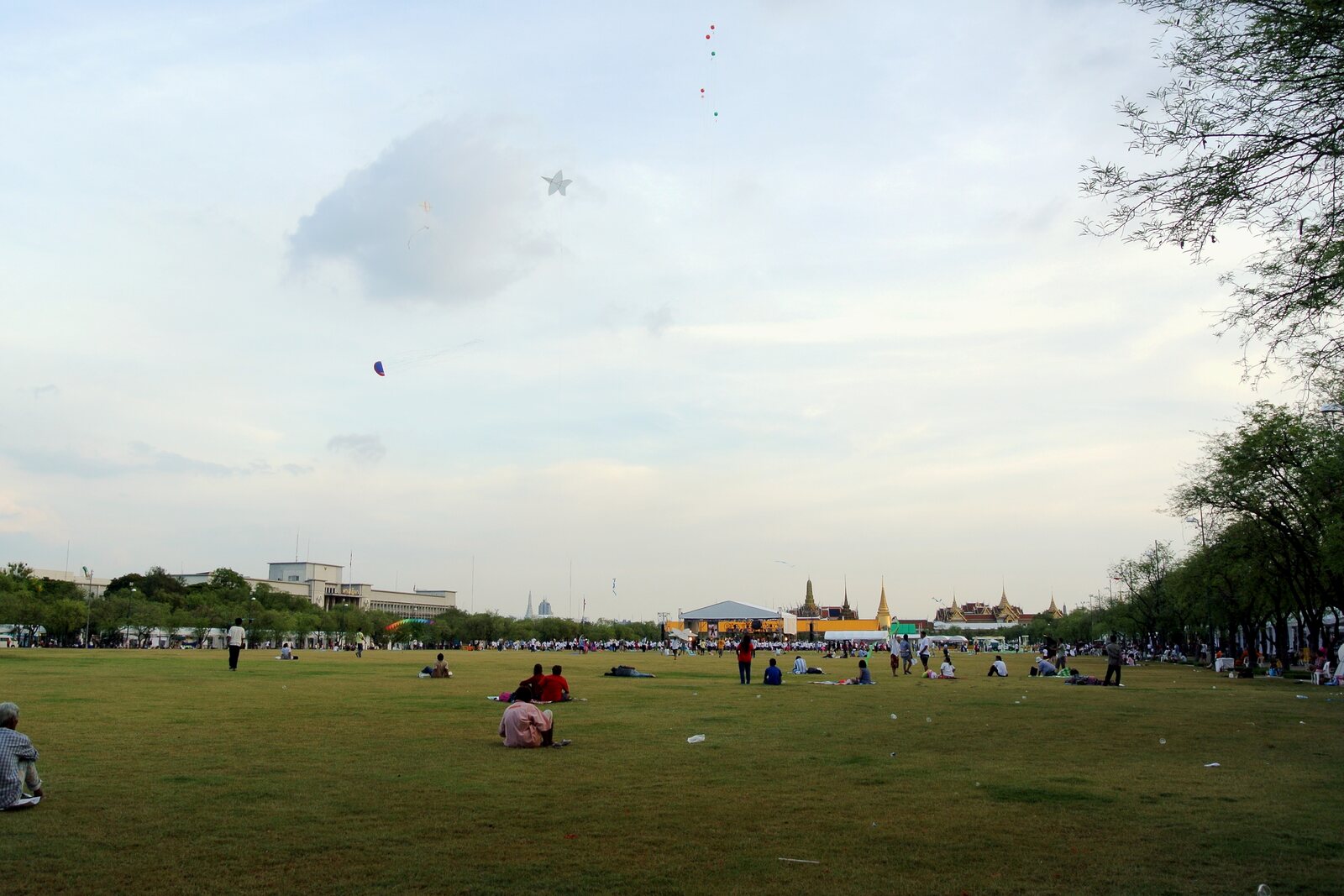
Look around first
What to notice
- Open field
- Grand Palace at the edge of the square
The story of the place
Most of the time, the center of Sanam Luang remains open. At the beginning of the rainy season, the First Ploughing Ceremony is held here: oxen pull a plow, an official scatters rice, and after the ritual people collect the grains. For royal funerals, an entire complex of pavilions is erected on the field. The builders then dismantle it, and the ground is cleared again.
Before eighteen fifty-five, the field was called Thung Phra Men—the Field of the Royal Crematorium. King Mongkut considered such an everyday name a bad omen: cremations happened rarely, but the word for them was spoken constantly. He ordered the place to be called Thung Sanam Luang—the Royal Field. Over time, the first word dropped away, but funeral ceremonies continued.
One of them changed the fate of the boards from which a temporary crematorium was built. In eighteen eighty-seven, eighteen-month-old Prince Siriraj, son of King Chulalongkorn, died of dysentery. A plan for a state hospital already existed, but construction was moving slowly. Later, the king wrote that his child had been surrounded by the best care and still suffered greatly; therefore, poor children must have suffered even more severely from illness. After his son's death, he decided to see the project through.
In February eighteen eighty-eight, a nine-tiered funeral pavilion and wooden buildings for the ceremony's participants were built in the middle of Sanam Luang. Such a structure represented Mount Meru—the dwelling place of the gods in Buddhist and Hindu cosmology; the actual cremation furnace took up much less space inside. Here, King Chulalongkorn bid farewell to his son.
After the cremation, the king ordered the pavilions dismantled. The beams, posts, and boards were sent to the opposite bank of the Chao Phraya River, to the hospital under construction in the Wang Lang area. King Chulalongkorn added personal funds, and the boy's mother, Queen Saovabha, transferred her deceased son's property for the treatment of the sick. In the spring of that same year, the hospital admitted its first patients. It was named Siriraj.
Nothing remains at Sanam Luang of the prince's crematorium. The wooden structures disappeared from here by order of his father, while Siriraj Hospital on the other bank still bears the name of the child who lived for eighteen months.
Useful on site
Greener Bangkok: daily 05:00–22:00, free entry; access to areas may change because of ceremonies and state events.
Checked: June 28, 2026. Check the official source before visiting.There is little shade here: it is more comfortable to listen at the edge of the field, without entering areas closed off or prepared for ceremonies.