 Guide On Map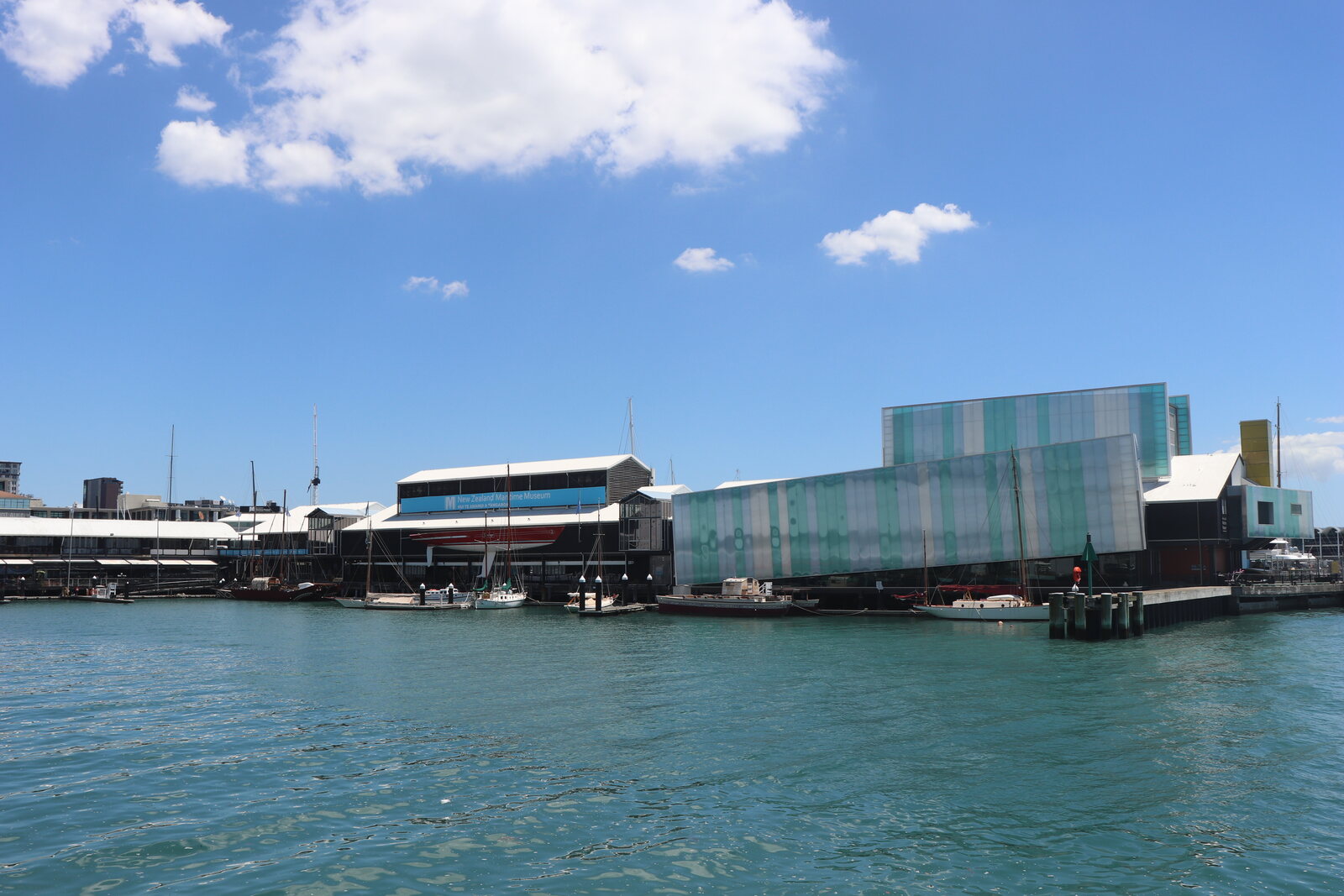
Look around first
What to notice
- Museum wharf
- Marina
- Floating boatshed
- The Ted Ashby scow
The story of the place
In nineteen eighty-nine, Rodney Wilson became director of a museum with no building, collection, staff, or money. Before that, he had run an art gallery; now he was paid for a very measurable result: to find a site and funding, assemble exhibits, and open the first museum to tell the whole maritime history of New Zealand.
Wilson secured Hobson Wharf for the museum. The choice was fundamental: vessels needed water, and craftspeople needed workrooms. Galleries, piers, a marina, and a floating boatshed were built on the wharf. In eight workshops, shipbuilders, sailmakers, and riggers practiced their crafts in front of visitors. More than twenty boatbuilders restored old launches and yachts.
The museum council decided to add a scow—a flat-bottomed cargo sailing vessel with a shallow draft. Such vessels came close to beaches and entered shallow river mouths; on their open decks, they carried logs, sand, livestock, and passengers. No ready-made vessel could be found for the collection, so a new one was commissioned.
Shipbuilder Max Carter undertook to revive the nearly vanished design. In neighboring Mechanics Bay, museum staff and volunteers assembled the hull in the traditional way—upside down, on a turning cradle. The work took eleven thousand volunteer hours. Several dozen boatbuilders learned old techniques that otherwise they would no longer have had anywhere to use. The result was the first authentic commercial scow built in New Zealand in seventy years.
The vessel was named The Ted Ashby. Sailor Ted Ashby had sailed on scows for half a century from nineteen twenty-three, then recorded the history of Auckland’s vessels and their crews. His name went to a ship created from the very knowledge he had preserved.
The Ted Ashby was launched for the museum’s opening in August nineteen ninety-three, although there had not yet been time to install the full sailing rig. Its first real voyage took place in December. The museum itself opened on time and cost less than the approved estimate; Wilson became its first director.
Now The Ted Ashby is moored at the museum wharf, and volunteers maintain the vessel, sail it out into Waitematā Harbour, and take passengers aboard. The museum’s full Māori name is Hui Te Ananui a Tangaroa, “the dwelling of Tangaroa,” the deity of the sea. This dwelling has an exhibit that still leaves it under sail.
Useful on site
Daily 10:00-17:00, last entry 16:00; closed Christmas Day.
Checked: June 28, 2026. Check the official source before visiting.The port environment is accessible from outside; the collections and trips on vessels require a separate visit.