 Guide On Map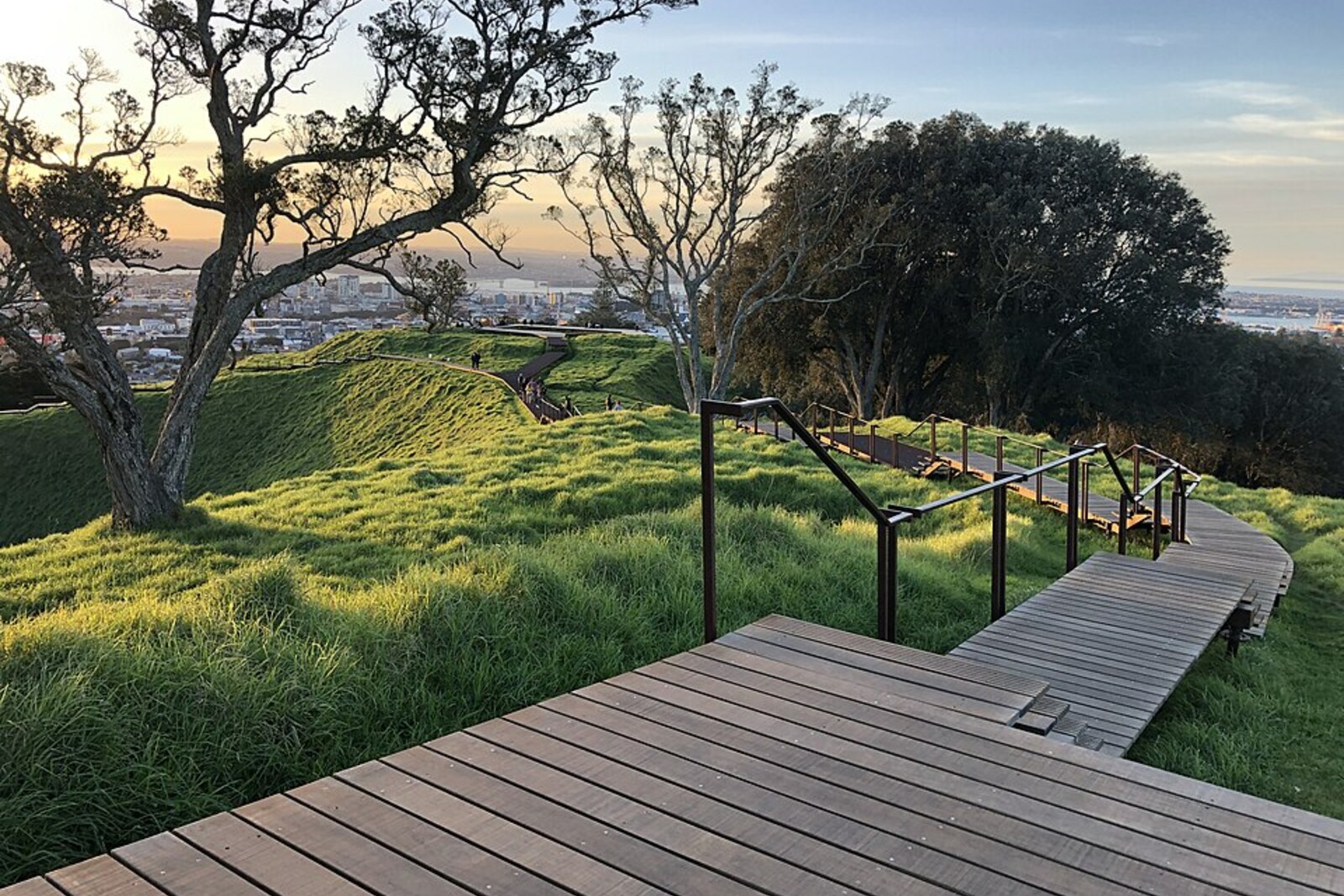
Look around first
What to notice
- Wooden platforms
- Steel mesh of the boardwalk
- Terraces of the former pā
- Rua storage pits
The story of the place
The wooden platforms and steel mesh were deliberately raised above the summit. Beneath the boardwalk lies the upper tier of a vast pā—a fortified settlement that generations of Māori carved into the slopes of Maungawhau / Mt Eden. Houses stood on the flat terraces, plants were grown nearby, and the harvest was kept in covered pits—rua. Whether the residents survived the time between harvests depended on these stores being preserved.
In the ancestral tradition of Marutūāhu, the settlement's fate was changed by a decision made by its inhabitants. Kahurautao, the senior chief of Ngāti Maru, and his son Kiwi were returning home with a dismantled carved storehouse and two greenstone objects. Te Waiohua had given them these valuables as compensation for the death of Ureia, Marutūāhu's water guardian, whom tradition calls a taniwha.
On the way, Kahurautao and Kiwi stopped at the pā on Maungawhau / Mt Eden. Their hosts were related to people whom Marutūāhu had previously defeated in Hauraki, and they wanted revenge. They did not kill their guests inside the settlement: they secretly sent warriors onto the path to the Tamaki River, so that the attack would take place only after the farewell. Near what is now St Johns, Kahurautao and Kiwi were ambushed. Both were killed, and the greenstone objects were taken.
Rautao, Kahurautao's son and Kiwi's brother, sought retribution. When a lamenting song reminded him that the killing of his relatives had gone unanswered, he gathered warriors from four related groups of Marutūāhu. They successively captured pā around the gulf and on the Auckland isthmus, then came to Maungawhau / Mt Eden. The summit's residents were considered the chief culprits in the ambush, so here Rautao ordered that no prisoners be taken. According to Marutūāhu tradition, the houses and fortifications were burned, and the former community broke apart.
The ancestral history of Ngāti Paoa preserves what happened next: some of the victors remained near Maungawhau / Mt Eden. Their chief, Te Hehenga, established his settlement and fields on the northwestern slope. After the attack, the mountain was considered tapu, yet people still lived and grew food here.
Centuries later, visitors' footwear began to destroy the terraces and rua. The old gravel surface washed toward the crater, people made detour paths, and more than a million people climbed to the summit each year. Commissioned by the Tūpuna Maunga Authority, designers, archaeologists, and builders installed the present boardwalk. Workers carried the parts by hand, and screwed in the supports with hand tools without excavation; if necessary, the entire structure can be removed.
Beneath the gridded sections, the house platforms and covered harvest pits still remain—the ground of the settlement whose residents once received guests, set an ambush, and awaited Rautao's return.
Useful on site
Access follows Maungawhau / Mt Eden gate opening hours; use only the boardwalk and open viewpoints.
Checked: June 28, 2026. Check the official source before visiting.Stay on the boardwalk and do not step over the barriers, even for a clearer view.