 Guide On Map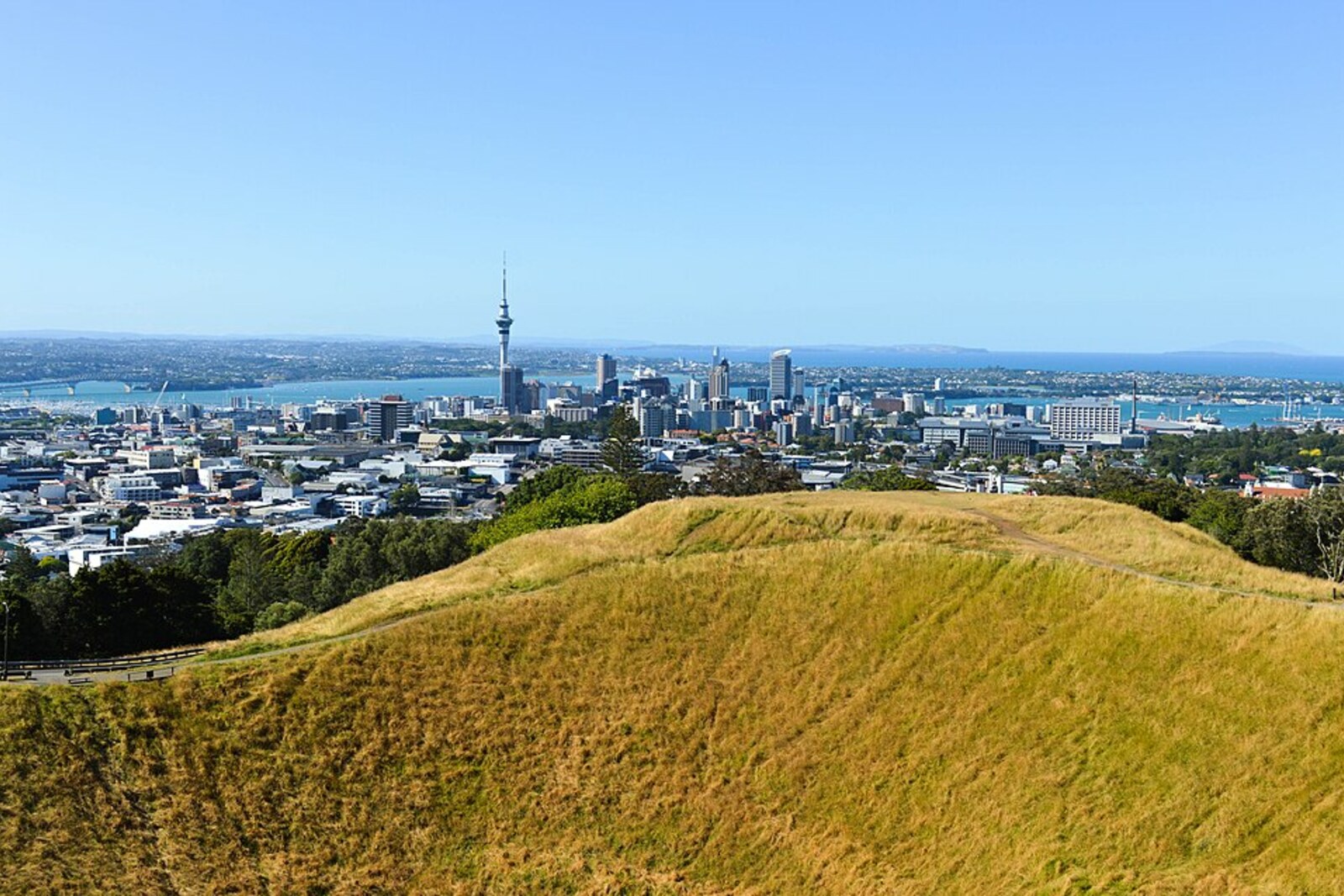
Look around first
What to notice
- The steep cut of the old quarry
- The western slope of Maungawhau / Mt Eden
- Morningside's streets and houses
- The line of the volcanic cone
The story of the place
On the western slope of Maungawhau / Mt Eden, the line of the volcanic cone is interrupted by an almost sheer escarpment left by stone extraction. For decades, basalt was taken away from here: blocks and crushed stone went to city building projects, street surfacing, and land reclamation along the shore. The slope preserves the trace of work that turned part of the mountain into material for growing Auckland.
West of the summit, the lava flow is almost impossible to recognize: Morningside's streets and houses cover it. Around twenty-eight thousand years ago, molten rock emerged at the base of Maungawhau / Mt Eden and spread across old lowlands. The early flow reached what is now Gribblehirst Park. Later portions of lava were colder and thicker; they stopped closer to the cone and formed a steep basalt base around it.
In the nineteenth century, people began to dismantle this base. William Winstone came to New Zealand at sixteen with thirty shillings and earned money through casual work and hauling goods. By eighteen sixty-four, he had saved enough for a horse and cart, became a carter, and then leased a quarry on Maungawhau / Mt Eden: the city bought crushed stone and stone blocks for streets and construction.
In February eighteen seventy, Winstone and a worker were placing a charge in a hole drilled into the basalt. They had managed to pour in about a quarter of a pound of gunpowder and had begun tamping the charge when it ignited prematurely. The blast threw both men down the slope. They survived, but Winstone was badly injured and was left half blind. For someone who made a living through hauling and quarry work, this meant losing the ability to carry on his former work himself.
His younger brother George took over management. George had arrived in Auckland a year earlier to become his partner. The brothers continued quarrying and hauling. Stone from Maungawhau / Mt Eden went into street surfacing, urban construction, and land reclamation along the shore; the family firm grew from one cart into a major supplier of building materials. Quarries operated on the mountain from eighteen fifty-eight until the nineteen forties and permanently changed its shape.
The far edge of the western flow lies beneath Gribblehirst Park. On the southwestern slope, the steep cut of the old quarry still interrupts the line of the cone, and stone taken from here remains beneath Auckland's asphalt and in its walls.
Useful on site
Access follows Maungawhau / Mt Eden gate opening hours; open viewing platform, remain on the boardwalk and open paths.
Checked: June 28, 2026. Check the official source before visiting.For orientation, compare distant areas with a map; the boundaries of ancient flows are not always visible in modern development.