 Guide On Map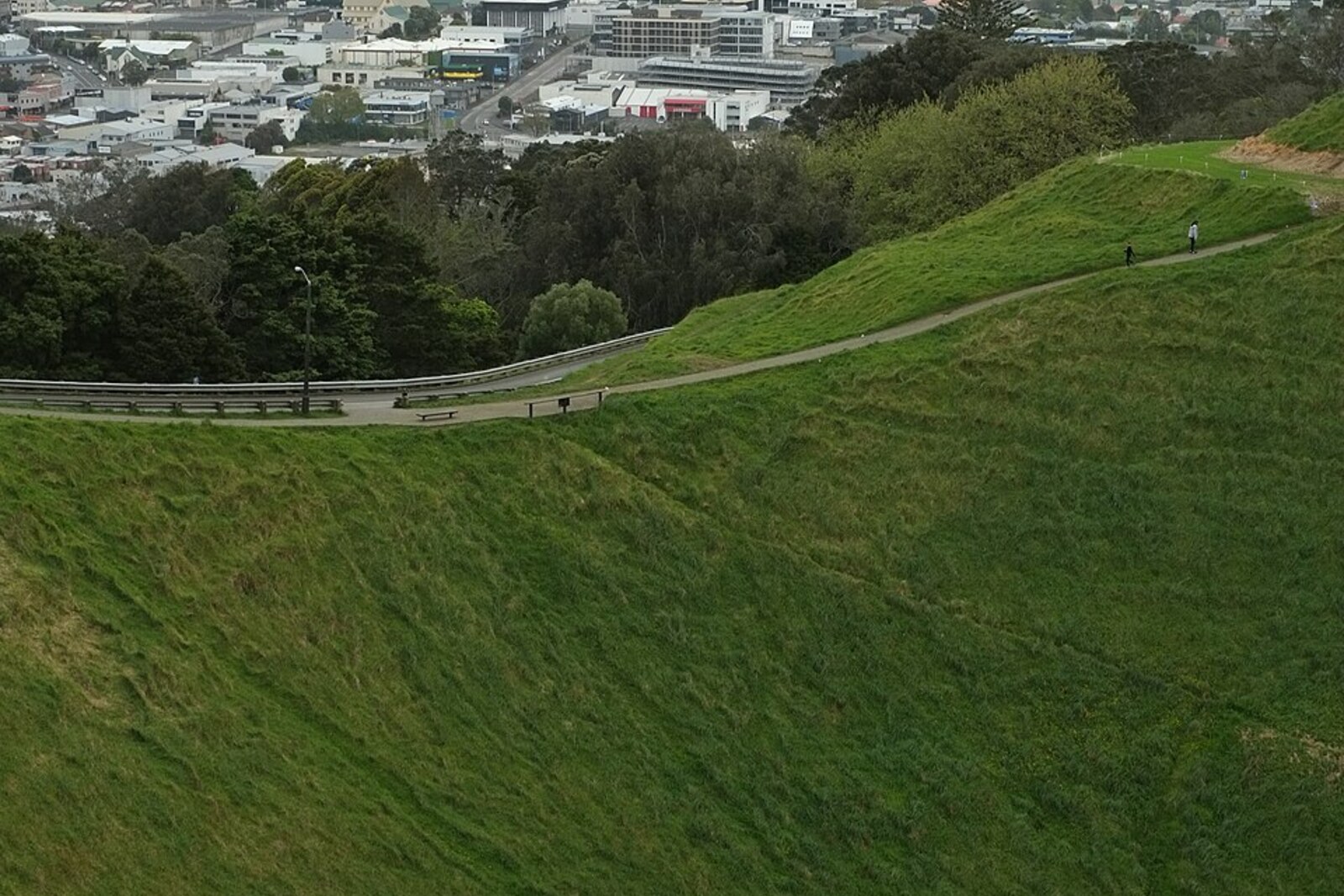
Look around first
What to notice
- The southern crater bowl
- The crater rim
- The boardwalk along the rim
- Terraces of the former pā
The story of the place
Before us is the southern crater of Maungawhau / Mt Eden. It was left by the second of two closely spaced eruptions around twenty-eight thousand years ago: ejected scoria buried the older northern crater, while here a bowl about one hundred eighty meters across and fifty meters deep has remained.
Much later, the Te Waiohua people built a fortified settlement on the slopes, designed for thousands of residents. Families grew kūmara in the fertile volcanic soil, made terraces for houses, and dug covered pits for their crops right at the crater's edge. They assigned a different role to the central bowl.
They called it Te Kapua Kai a Mataaho—“Mataaho's food bowl.” Mataaho was a deity of volcanic forces and an ancestor of Te Waiohua. According to one tradition, he lived in this very crater. When he became cold, Mahuika, the goddess of fire, was called upon to warm him, and her fire created the volcanoes of Tāmaki Makaurau. This is a tradition, not a geological explanation for the origin of Maungawhau / Mt Eden.
The Māori of Tāmaki held ceremonies in the crater and brought food to Mataaho. They sought to appease the one to whom they attributed the ability to release fire from the earth again. The stakes were entirely earthly: around his bowl stood houses, lay garden plots, and was stored the harvest on which the settlement's residents depended. This crater was chosen for the ritual because Mataaho's dwelling was located here.
Sources have not preserved the names of those who took part or the details of the ceremonies. What has remained is the distinction they established: people lived and kept supplies at the rim, while the bowl itself became tapu—a place under sacred prohibition. Today, the boardwalk follows the rim, entry into the crater is forbidden, and Mataaho's food bowl remains free of visitors.
Useful on site
Access follows the opening hours of the Maungawhau gates; stay on the boardwalk and paths, and check for temporary closures.
Checked: June 28, 2026. Check the official source before visiting.Do not descend into the bowl or cross the grassy platforms: observe the landforms from the path.