 Guide On Map
The Ghats of Varanasi: a city on the steps of the Ganges
Along the Ganges from Assi to Panchganga
Guide On Map on your phone
Open the walk like a regular app
It takes about 10 seconds to install. No app store needed.
The whole path
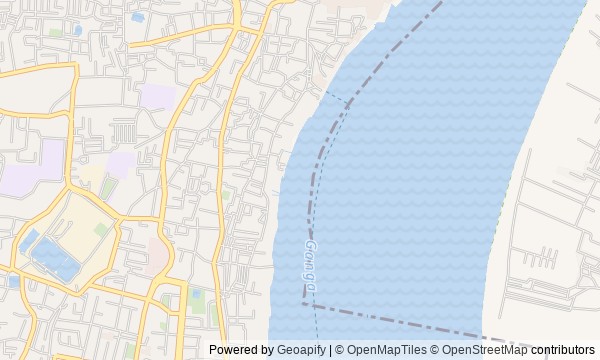
Route map
About the walk
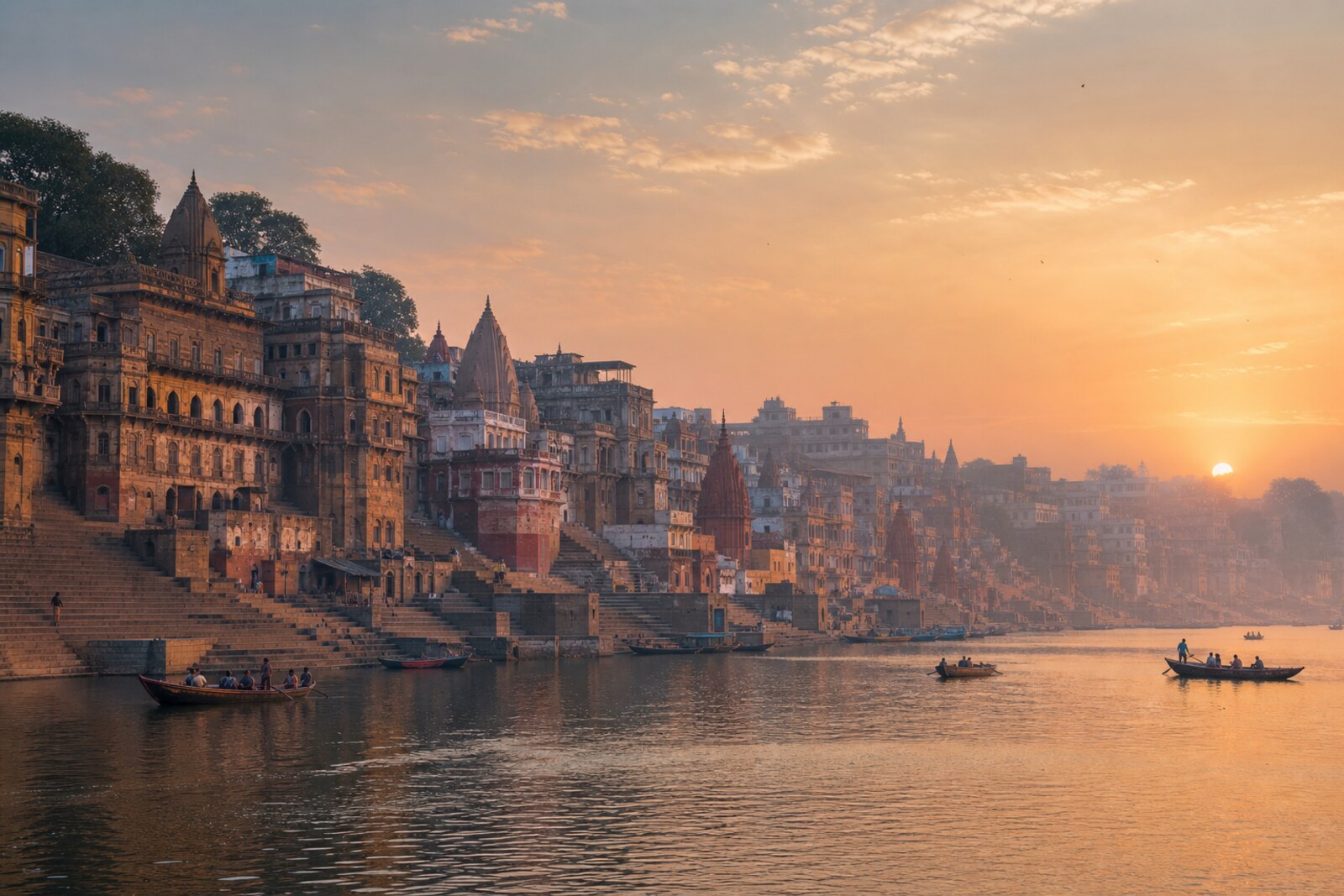
You will walk along the Ganges from the broad steps of Assi to Panchganga Ghat. The river will stay on your right almost the whole way. At first, the riverfront will feel like an open city hall: tea stalls, students, morning hymns. Then palaces, ceremonial platforms, and the stone instruments of an observatory will rise above the stairs.
This is not a walk through “eternal Varanasi,” but along a riverfront that people divided, rebuilt, and explained again and again. Why did an English lesson require running between a tree and a step? How did an early manuscript vanish behind a locked door? Why did an astronomer turn angles and scales into stone walls? The story will separate documents from family memory and religious tradition.
By the end, you will read the ghats through their owners, steps, and rights—and understand why every step on the Ganges acquired its own name.
Why this order
The riverfront itself sets the order: you will head north from the southern entrance at Assi, never straying far from the Ganges. After the open space at Assi, family-run Tulsi will show how a public place can sit beside closed preservation. The red walls of Chet Singh will continue the story of ownership, now through arrest and the loss of land. At Munshi and Darbhanga, the river facade becomes a ceremonial entrance; that is why Dashashwamedh comes next, where a private riverfront gives way to a shared ceremony. Nearby Man Mandir adds precise measurements of the sun and sky to ritual time. Then Manikarnika shifts the conversation from time that can be calculated to a hereditary right to fire. The final walk to Panchganga closes the route with another story of rights—not to a stretch of riverfront, but to the words of initiation. Neighboring ghats will keep changing the purpose of one staircase: entrance, ownership, stage, instrument, duty, and a teacher’s place.
Those who want to walk Varanasi’s riverfront Those who value human stories over a list of shrines Those ready to distinguish documents, family memory, and tradition
Those not ready to pass beside an active cremation site Those looking for a route without religious traditions Those who prefer a short walk through a single neighborhood
Before you go
Choose sturdy shoes that are easy to remove where a shrine visit requires it; after rain and during high water, the lower steps may be wet or hidden. Bring water and protect yourself from the sun: there is little shade on the open riverfront, and the uninterrupted route is long. The central ghats can be crowded, so do not expect to keep a fast pace. Bathing, prayer, and funeral rites are not a backdrop for photography: ask permission before taking portraits, do not point your camera at Manikarnika, and do not block passageways. Palace interiors, the hotel in a former palace, and the rooftop observatory at Man Mahal are not automatically included in a walk along the riverfront; ask on site or in advance at the relevant venue about separate visits.
When to go
It is best to start in the morning, when the southern ghats are already coming alive but the heat and crowds have not yet set the pace of the walk. In the evening, Dashashwamedh becomes especially crowded because of aarti, so the whole route will demand more energy and attention.
Backup plan
If heat, water on the lower steps, or crowds make it hard to walk right along the river, move up to an accessible upper level and return to the riverfront where the way is clear again. If you are tired, end the shorter version at Dashashwamedh: by then, the shift from the open south to the ceremonial center has already become clear. A quieter continuation can end at Man Mandir. Do not add Manikarnika and Panchganga by force: this stretch requires time, steady attention, and a willingness to pass through a cremation ghat without photography or stops made out of curiosity.
Route conditions
Surface. Paved — 2.6 km (data covers 54% of the route)
Stairs. Flights: 4, 61 m in total
Access. Wheelchair — no; stroller — limited (stairs)
Facilities. Toilets — 1; drinking water — 2
Elevation. Ascent — 47 m; descent — 39 m
OpenStreetMap extract of June 18, 2026: database data, not a check on the ground. Data © OpenStreetMap contributors, ODbL licence
Walk plan
Open in maps ↗- 1
Assi Ghat
The opening sets the walk’s central pattern: here, a ghat serves both as a sacred place and a city square. - 2
Tulsi Ghat
This stop will show how a revered text almost disappeared from public life after a theft. - 3
Chet Singh Ghat
The red walls will link the riverfront façade with an attempted escape and the final loss of power. - 4
Darbhanga and Munshi Ghats
Two neighboring names explain how the owners of the palace and its river entrance changed. - 5
Dashashwamedh Ghat
Here it will become clear how a recent initiative turned an old ritual into a citywide ceremony. - 6
Man Mandir Ghat
This stop takes the story from the water up to the roof, where astronomy was built in stone. - 7
Manikarnika Ghat
Here, a community legend explains why the right to the first fire became hereditary. - 8
Panchganga Ghat
The finale will show how a name heard by chance, according to legend, became an initiation.
Route features
Everything you need stays in the browser
Progress, saves and your trip plan are stored on this device.
Add Guide On Map to your home screen so the walk opens outside the browser.
How we handle sources, maps and corrections: our editorial standards