 Guide On Map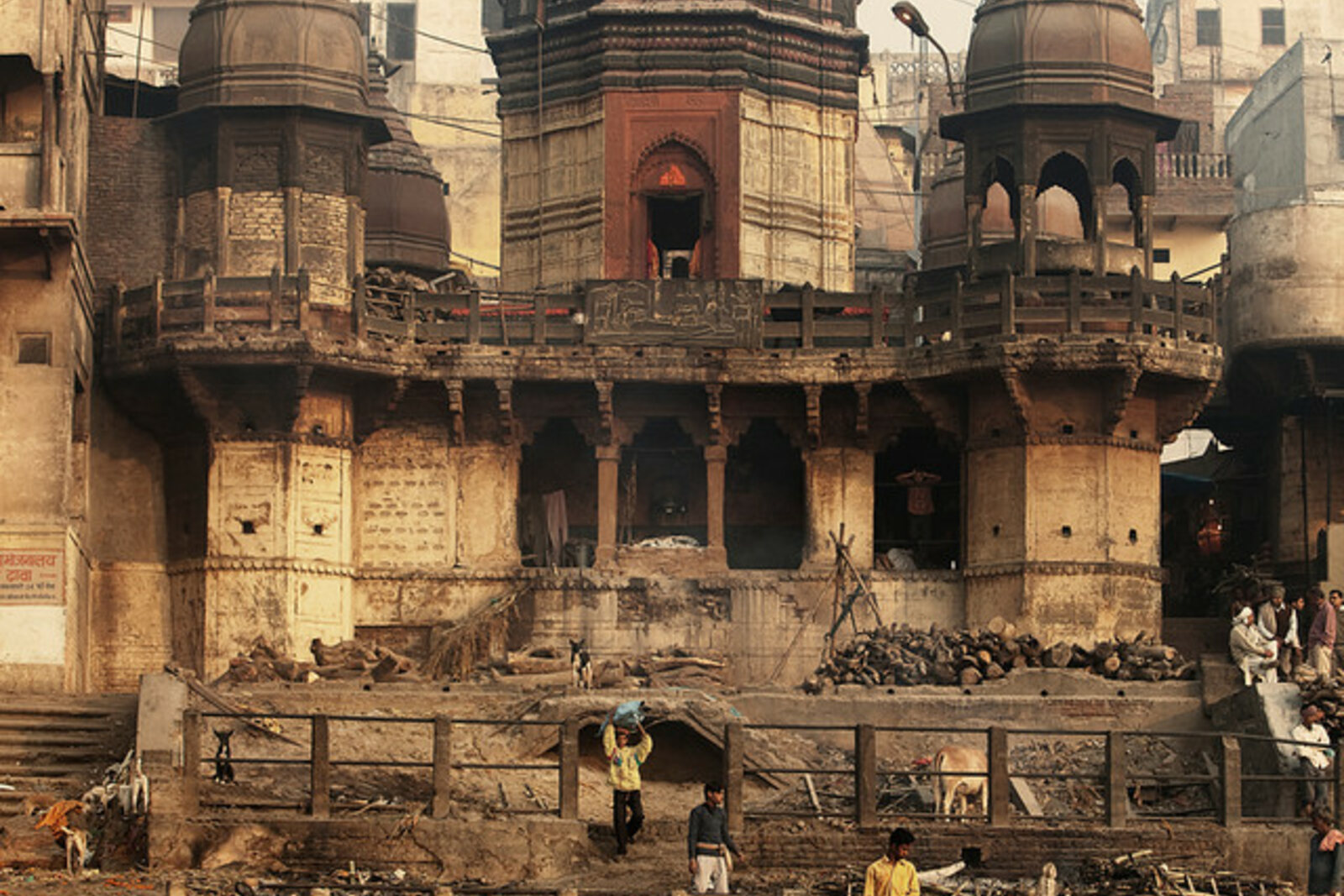
Look around first
What to notice
- Manikarnika Kund
- Cremation grounds
- Stacks of firewood
- Constantly burning hearth
The story of the place
A funeral pyre at Manikarnika Ghat is not lit with a match. After the body is washed in the Ganges, the main participant in the rite, usually the deceased's eldest son, receives a smoldering bundle of straw. The Doms—members of a hereditary community of cremators—bring out the fire. They stack the logs, tend the burning, and receive payment for their work; the right to control the fire belongs to their head, the Dom Raja.
For the family, the source of the flame matters. In Varanasi tradition, Shiva, the patron god of Varanasi, speaks the taraka mantra to the deceased—words that help them pass from death to liberation. Cremation here is performed in the hope of moksha: release from the cycle of births and deaths. That is why a family buys fire from the Doms even when its own pyre could be lit more easily.
The Doms explain their exclusive right through a legend about Kalu Dom. Kalu wanted to take for himself a precious earring of Parvati, Shiva's wife, lost in the pool here. Shiva demanded that the ornament be returned, and when the deception was exposed, he cursed Kalu and his descendants to deal with the bodies of the dead. Kalu gave back the earring and began to beg for mercy. Shiva did not revoke the punishment, but gave Kalu's lineage the cremation ghat and the fire that was to grant liberation to the dead. The Doms consider Kalu their ancestor; payment for the flame and for work at the pyres became the livelihood of his descendants.
This is specifically a community legend. Kalu does not appear in the sacred account of Varanasi, the “Kashi Khanda”: it tells of a precious ear ornament that fell into the pool. The name Manikarnika comes from it. The story of the theft was added by the oral tradition of the Doms—it explains why people whom centuries of contact with the dead classified as untouchables received a decisive role in the burial rite most desired by many Hindus.
The stone basin of Manikarnika Kund still stands beside the cremation grounds. The Dom community maintains a constantly burning hearth here; accounts of its uninterrupted continuity over many thousands of years belong to legend. The lost earring left its name to the pool, and a member of Kalu's lineage brings the first fire to every new stack of logs.
Useful on site
The cremation area operates around the clock; passageways and viewing points change because of rituals, improvement work, firewood storage, and overall crowding. This is a place to pass through respectfully, not to stop for long.
Checked: June 17, 2026. Check the official source before visiting.Do not take photographs or videos, do not approach the pyres, and do not question those who are grieving. Pass through calmly, keeping the stairs and work areas clear.