 Guide On Map
Kremlin and Zarechye: Samovars, Churches, Weapons
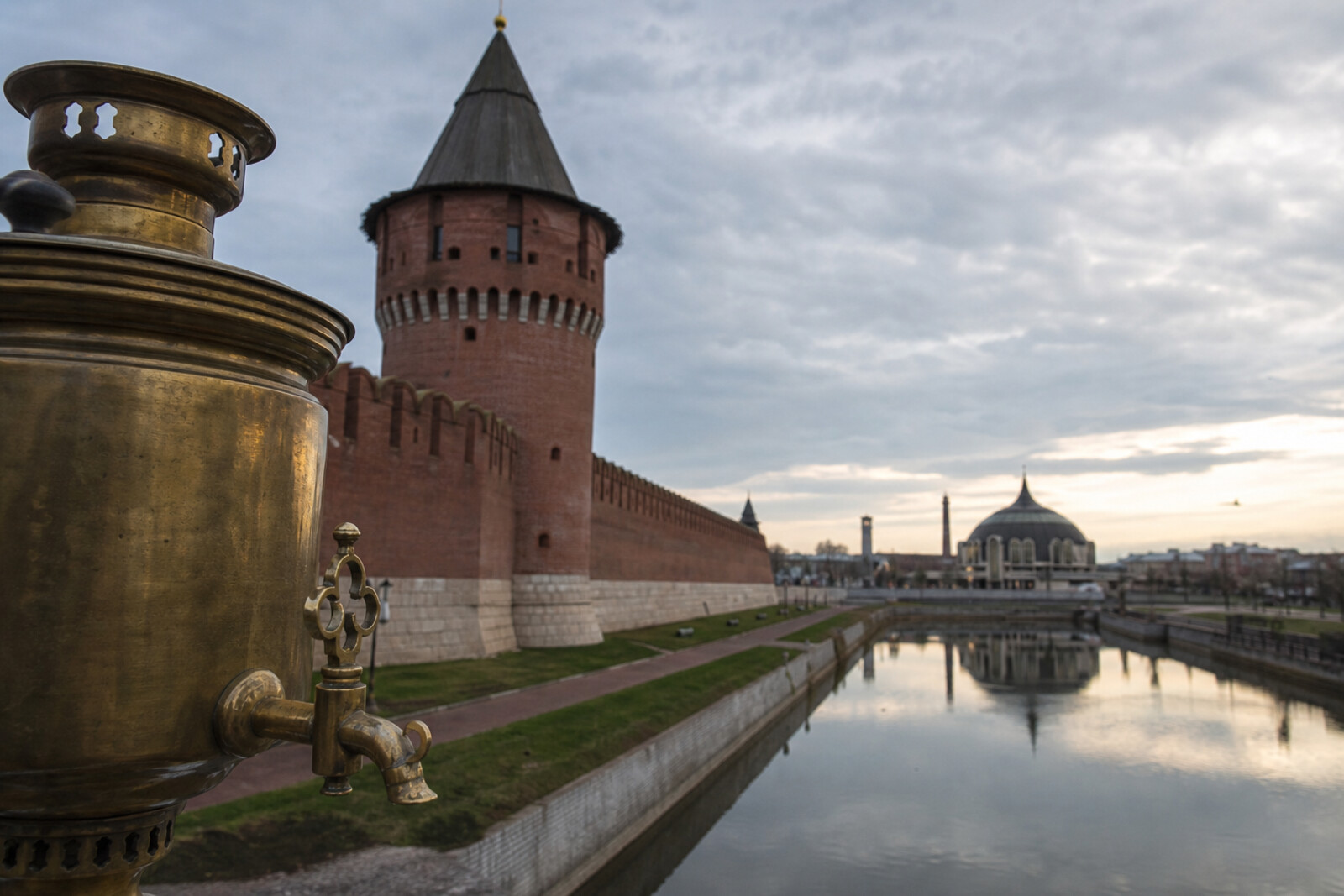
From the Tula Samovar Museum through the Kremlin and Metallistov Street to the helmet-shaped building
Guide On Map on your phone
Open the walk like a regular app
It takes about 10 seconds to install. No app store needed.
The whole path
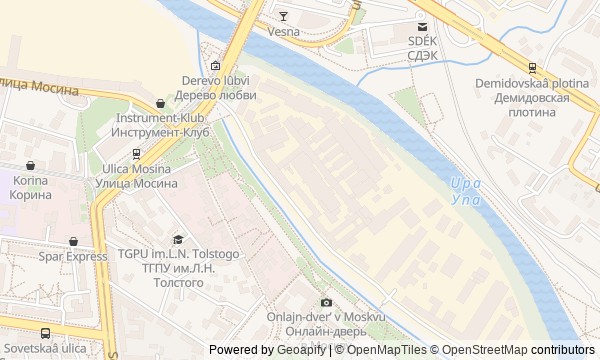
Route map
About the walk
You will begin at the Tula Samovar Museum, pass through Odoev Gate, and cross the Kremlin from two cathedrals to the bank of the Upa. Then the road will take you to a merchants' street, across the river into the old Oruzheynaya Sloboda, and on to the helmet-shaped building.
Along the way, you will piece Tula together through the decisions that changed its buildings and their purpose. Why will a finished collection be left without the home promised to it? What will save a fortress already marked for dismantling? How will a cathedral gain an entrance in what was once its altar wall, and a bell tower end up with a lane between it and the church?
The story moves through documents, abandoned plans, and personal responsibility: calmly, without the ceremonial legend of a city of master craftsmen. By the end, you will have your own map of Tula trades, from the samovar by the Kremlin gate to the mill house and the Tula State Museum of Weapons beneath its helmet-shaped dome.
Why this order
The Tula Samovar Museum sets the theme of a city craft gathered and preserved, while nearby Odoev Gate immediately shifts it from a museum collection to the fate of an entire fortress. Beyond the gate, Assumption Cathedral shows that saving the Kremlin did not automatically mean saving its churches. The neighboring Epiphany Cathedral continues the thread in reverse: first rebuilding after failure, then adaptation as a museum. From the former museum building, the route reaches Kazan Embankment, where the urban space has to be read through an absent church. Returning to Metallistov Street shifts the story from loss to the everyday economy of a merchants' house. Across the Upa, a family business gives way to the Demidovs' family burial place, and the final passage to the helmet-shaped building carries the weapons story from the old sloboda to a modern state museum.
Those getting to know Tula's main symbols for the first time Lovers of urban history where choices and consequences matter Those who want to connect the Kremlin, the merchants' center, and Zarechye in one walk
Those who want only the Kremlin, without going into Zarechye Those expecting a detailed survey of the weapons collection Those who prefer a light walk without details of the weapons and factory trades
Before you go
Decide in advance which interiors you really want to see: the Tula Samovar Museum, exhibition spaces in the Kremlin, the Tula Branch of the State Historical Museum, and the helmet-shaped building each require separate time. Access to churches and former church buildings may depend on restoration, services, or events, so check before setting out and treat an exterior visit as a full part of the route. For museum visits, bring as few bulky belongings as possible and be ready for standard entrance screening. Much of the route is outdoors, including the Kremlin, the embankment, and the crossing into Zarechye, so choose clothing and shoes for the weather.
When to go
Allow around 3 hours 20 minutes for the story, walks between stops, and an exterior visit to all eight points. The Tula Samovar Museum adds up to 35 minutes, the weapons exhibition in the Kremlin up to 30 minutes, the Tula Branch of the State Historical Museum at least 45 minutes, and the helmet-shaped building roughly 75–100 minutes. If you want to enter several museums, start in the first half of the day and leave time to rest: the full version can easily take almost the entire day.
Backup plan
If interiors are closed, the route still makes sense from outside: compare the Tula Samovar Museum with the Kremlin wall, take in the cathedral volumes, read the relationship between the embankment and the plant, and in Zarechye gather the wider view of church, river, and helmet-shaped building. The stories of murals, collections, and the necropolis will remain in the audio, though their details will be unavailable. If the embankment passage is closed for an event or works, do not try to cross the barriers: continue to Metallistov Street along open city streets and rejoin the main sequence at the next stop.
Route conditions
Surface. Paved — 1.6 km (data covers 71% of the route)
Stairs. Flights: 2, 32 m in total
Access. Wheelchair — no; stroller — limited (stairs)
Facilities. Toilets — 2
Elevation. Ascent — 8 m; descent — 11 m
OpenStreetMap extract of July 4, 2026: database data, not a check on the ground. Data © OpenStreetMap contributors, ODbL licence
Walk plan
Open in maps ↗- 1
Tula Samovar Museum
Shows how a temporary exhibition acquired a permanent home after the original museum plan fell through. - 2
Odoev Gate of the Tula Kremlin
It will explain why the southern tower has retained a top that the other Kremlin towers do not have. - 3
Assumption Cathedral
Links the history of the cathedral’s closure with the original murals, damaged during its use as a warehouse. - 4
Epiphany Cathedral
It shows how the second fundraising effort finally gave Tula a winter church and what was later done to the building's volume. - 5
Kazan Embankment
It will restore a vanished church to the embankment and examine the case after which it was never reopened. - 6
Metallistov Street and Belolipetskys' House
It will distinguish the history of the flour-milling merchants from the gingerbread business of their relative, which stood at a different address. - 7
Nikolo-Zaretsky Church and the Demidov Necropolis
Explains the unusual separation between the church, the bell tower, and the family crypt of the first Demidovs. - 8
Tula State Museum of Weapons
It will conclude the route with the story of a building whose outlines the director lived to see, but not its completed exhibition.
Route features
Everything you need stays in the browser
Progress, saves and your trip plan are stored on this device.
Add Guide On Map to your home screen so the walk opens outside the browser.
How we handle sources, maps and corrections: our editorial standards