 Guide On Map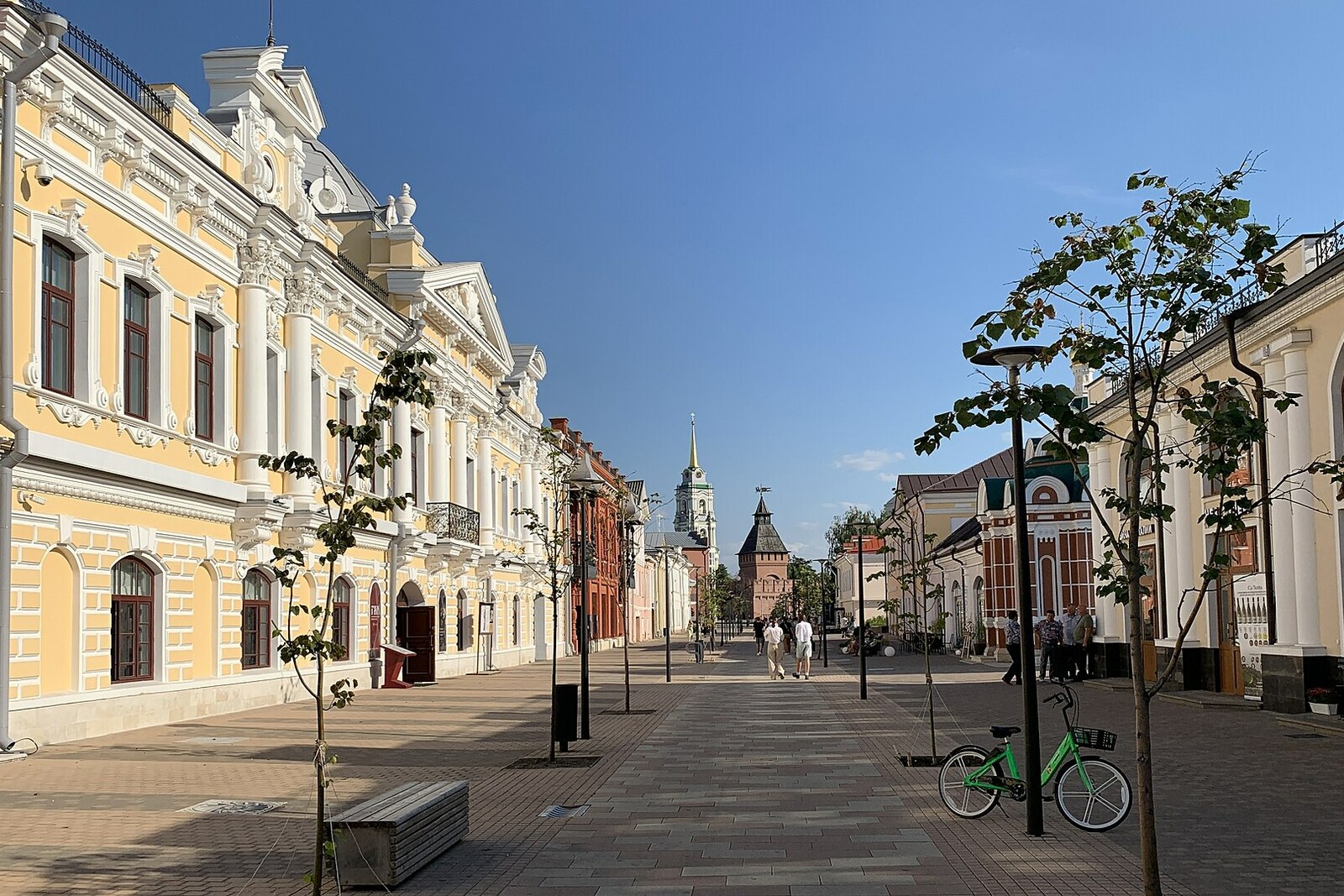
Look around first
What to notice
- Building № 5
- Ceremonial facade of building № 10
- Stone blocks of the property
The story of the place
A stone property stretches along the street, where a merchant business brought together shops, an office, the owners' living quarters, a mill, and merchandise warehouses. The ornate unified facade of building number ten brought into one line blocks that had previously stood separately; they were erected after neighboring yards had been cleared of old buildings. Grain was processed and everyday goods were traded here, so a shop, warehouse, and production came together behind one wall. Later the building was transferred to a museum; the mill and warehouses disappeared, but the facade still holds together the outline of a large trading yard.
Here, metallists were workers engaged in metalworking. From nineteen twelve to nineteen sixteen, the board of their trade union was housed in building number five, and the union tea room operated nearby. In nineteen twenty-four, city leaders renamed Pyatnitskaya Street after this association—it had been called that after the Church of Paraskeva Pyatnitsa, which stood by the Tula Kremlin. Building number five has survived, and the name of the entire street refers specifically to its former visitors.
Building number ten explains a different Tula. The plural on the facade—Belolipetskys' House—stuck because two brothers established the business here. Ivan Mikhailovich Belolipetsky, a merchant from a family of former state peasants, wanted to combine trade with his own production. He supplied the Tula Arms Plant with wood oil and waste cotton yarn: these were used to wipe weapon parts, drills, and cutters. These orders brought in money, but they depended on major buyers, so Ivan expanded the business.
In eighteen seventy-five, he added neighboring plots to his property, demolished the old buildings, and began constructing stone blocks. An engine room, a flour mill, a rice-husking device, and warehouses appeared here. In eighteen ninety-one, his younger brother Aleksandr Mikhailovich invested his capital, and the relatives registered the Belolipetsky Brothers in Tula Trading House. The shop sold flour, groats, oil, soap, kerosene, candles, samovar polish, coffee, cocoa, and salted mushrooms. The firm's office, retail premises, apartments, mill, and warehouses all fit within one property.
Aleksandr Mikhailovich died in eighteen ninety-seven, and Ivan Mikhailovich in nineteen two. The sole successor was Aleksandr Aleksandrovich Belolipetsky, the younger brother's son. He inherited a profitable business and intended to make it even larger: he bought new plots and warehouses, added freight transportation, and continued supplies to the arms plant. By nineteen six, builders had joined the former blocks with a ceremonial facade, which has survived in its main features to this day.
Then Aleksandr Aleksandrovich's health deteriorated, and the firm's income began to fall. The merchant had to sell the real estate he had acquired and mortgage what he had inherited. So that the business would not depend on one ill owner, in nineteen thirteen he transformed the family firm into a share partnership and took on six co-founders. Two years later, Belolipetsky died. Management was taken over by his friend and business associate Vasily Deliev; the partnership continued trading until nineteen seventeen.
Tula gingerbread is associated with the Belolipetskys' surname, but it was not made in this house. The gingerbread establishment belonged to the brothers' cousin, Mikhail Grigoryevich Belolipetsky, and stood at the end of Pyatnitskaya Street, near Cast-Iron Bridge. It was a separate firm with different owners.
After restoration, building number ten was transferred to the Tula Branch of the State Historical Museum. Behind the preserved facade, there is no longer a mill or merchandise warehouses, but it was built specifically for the shop, office, and apartments of the Belolipetskys, flour-milling merchants. There was no gingerbread oven here.
Useful on site
The street is always accessible. The Tula Branch of the State Historical Museum in building 10 operates on a changing calendar; before entering, open the official schedule and events listing.
Checked: June 25, 2026. Check the official source before visiting.The facade is accessible from the pedestrian street, while visiting the Tula Branch of the State Historical Museum requires separate time. Do not look for gingerbread production here: it belonged to a different branch of the Belolipetskys.