 Guide On Map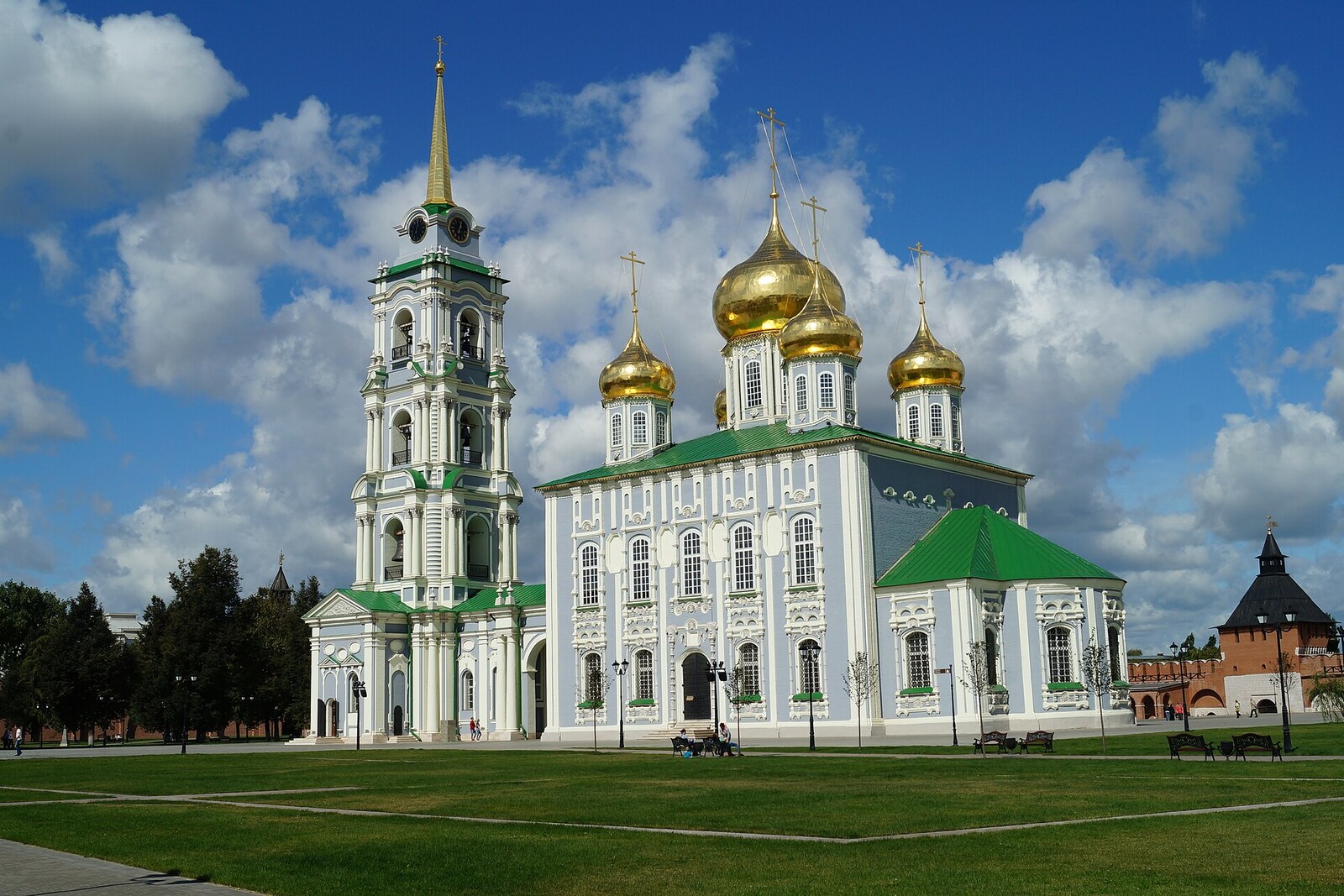
Look around first
What to notice
- North portal
- Inscription with the painters’ names
- Original mural fragments
- Restored lower images
The story of the place
On November twenty-third, nineteen twenty-nine, a meeting was held in the machine shop of the Tula Arms Plant. The workers were expected to support the decision to close four city churches, including the Assumption Cathedral in the Tula Kremlin. Sokolov and Alyoshin, members of the city council, refused to sign. The plant’s grassroots party organization immediately sent a memorandum to the city council faction naming both men. The personal disagreement of two people whose public positions they depended on became a record for investigation.
Several parishes gathered behind these doors at that time. After the Church of the Exaltation of the Cross and the Church of the Meeting of the Lord were closed, their parishioners came here. The venerated Kazan Icon of the Mother of God was brought from the Church of the Kazan Icon of the Mother of God on Kazan Embankment. Since seventeen ninety-nine, Assumption Cathedral had served as the principal church of the Tula Diocese: the seat of the local bishop was here.
The site had been chosen long before these events. As early as the sixteenth century, two wooden churches stood at the intersection of Bolshaya Kremlyovskaya Street and Malaya Kremlyovskaya Street. Tula merchants erected the present building on the site of a dilapidated stone cathedral between seventeen sixty-two and seventeen sixty-four. In Orthodox tradition, the Dormition is the end of the earthly life of Mary, the mother of Jesus Christ. Dedicated to this event, the cathedral was a summer church: it was not heated, so services were held from Easter to the Feast of the Intercession, while in winter they moved to the heated church beneath the bell tower.
A month after the plant meeting, nine members of the parish council sent the leaders of the Tula District a request to preserve the cathedral. They explained that they maintained the church, paid their taxes properly, and received parishioners from churches that had already been closed. Vitaly, the Metropolitan of Tula and head of the local diocese, joined the petition. The parishioners emphasized their loyalty and promised not to interfere in political life—they needed to retain at least the opportunity to pray here.
In February nineteen thirty, the executive committee terminated its agreement with the faithful. Its resolution cited twenty-six thousand signatures in favor of transferring Tula’s churches to cultural uses. Sokolov and Alyoshin did not save the cathedral, the parish council lost its church, and several congregations that had recently gathered in one place were once again left without one.
An anti-religious museum was to be established inside. A cost estimate was prepared, but installing the necessary utilities was deemed too expensive. The museum never opened, and the building was turned over for use as a warehouse. The seven-tier iconostasis was dismantled; museum staff preserved most of the icons separately. Warehouse shelving was placed directly against the walls, and murals in the lower sections were destroyed—murals painted in the eighteenth century by thirty-six Yaroslavl masters under the direction of Afanasy Shustov.
After many years of restoration, the cathedral was consecrated anew and a liturgy was celebrated there on June twenty-eighth, two thousand twenty-six. On the right side of the north portal, an inscription with the names of the Yaroslavl painters has survived. Above it, fragments of their original murals remain; near the floor, where the warehouse shelving stood, the lost images had to be recreated.
Useful on site
Exterior viewing is available during the hours when access to the Kremlin grounds is permitted. The cathedral’s consecration was announced for 28.06.2026; at the time of checking, the regular interior schedule after that date had not been published.
Checked: June 25, 2026. Check the official source before visiting.Plan primarily for an exterior visit, and check locally in advance whether it is possible to enter. Do not disrupt a service or restoration work for the sake of seeing the interior.