 Guide On Map
The Gates and Shrines of Asakusa by the Sumida River
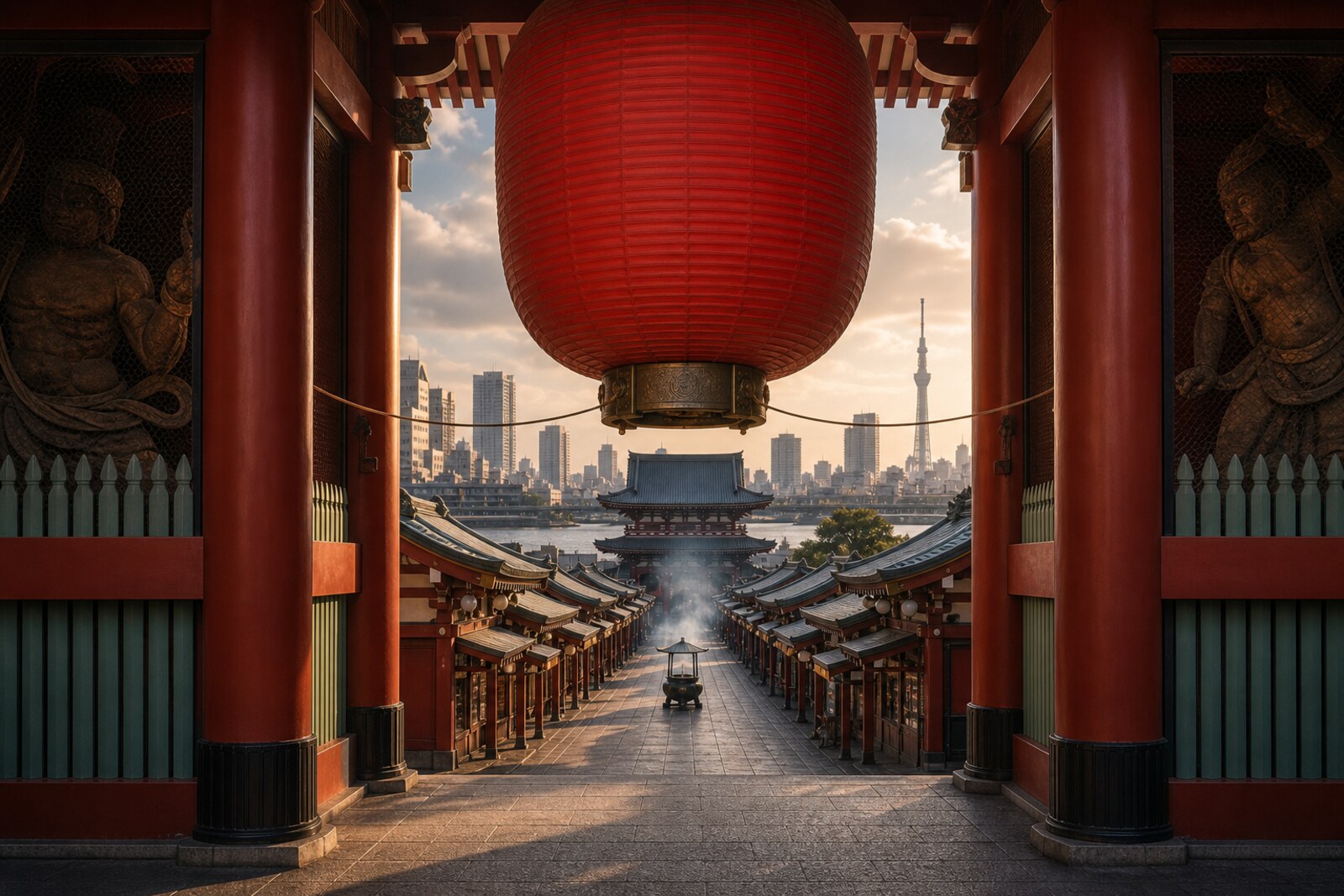
From Kaminarimon Gate through Sensoji Temple to Azumabashi Bridge
Guide On Map on your phone
Open the walk like a regular app
It takes about 10 seconds to install. No app store needed.
The whole path
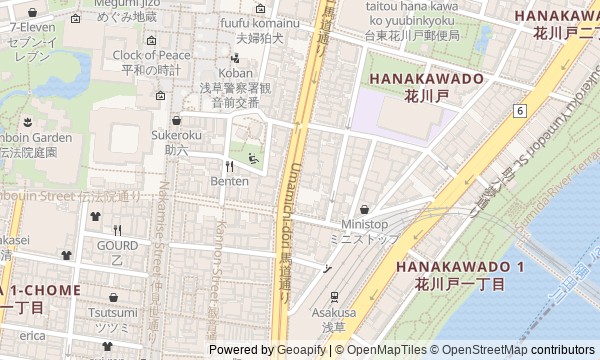
Route map
About the walk
You will enter Asakusa through Kaminarimon Gate and follow the straight temple road: between the shops of Nakamise-dori, through the inner gate, to the Main Hall and the neighboring shrine. Then you will turn toward the old eastern exit and finish by the Sumida River, near Azumabashi Bridge.
Along the way, you will pause over things with unexpected histories. Beneath an enormous lantern, you will find a small inscription. Above a passageway sits a collection of books invisible from below. One gate bears the names of guardians who are no longer there. And by the river, a question appears: why did city residents pay for a bridge themselves, and why did they lose control over it?
The story will be calm and precise. It will distinguish temple tradition, documented events, and what has genuinely survived in front of you.
By the end of the walk, you will see at the gates of Sensoji Temple, in the shopping rows, and by the Sumida River what remained in place and what returned after fire, prohibition, or loss.
Why this order
The order follows the main approach to Sensoji Temple: Kaminarimon Gate leads onto Nakamise-dori, and the shopping street runs straight into Hozomon Gate, so the changing rights to the shops become part of the story of the temple entrance. Just beyond the inner gate stands the Main Hall; after the story of the hidden Kannon, neighboring Asakusa Shrine belongs here because it turns a river discovery into the story of three venerated founders. From the shrine, the eastern side of the complex leads to Nitenmon Gate: along one short arc, you can see how guardians were moved and names changed after the separation of religions. Through the old eastern gate, the route leaves the temple grounds and heads toward the Sumida River. At Azumabashi Bridge, the river returns not as a place of tradition but as an urban barrier that residents chose to connect with a bridge.
Those visiting Asakusa for the first time Those who value specific stories of objects over an overview of an era Those who want to connect Sensoji Temple with the Sumida River waterfront
Those looking for a walk through modern districts and skyscrapers Those who want a route without temple traditions Those who prefer long crossings between neighborhoods
Before you go
Wear shoes that are comfortable for slow walking and long stops: the distance is short, but nearly every stop calls for looking from several angles. On the shopping street, do not stop in the middle of the flow, and remember that open displays and lowered painted shutters reveal two different versions of Nakamise-dori. In temple and Shinto spaces, follow the local rhythm, do not block the way for worshippers, and check photography restrictions where they are posted. You cannot see the hidden Kannon—that is the point of the sanctuary, not a missed door. Festivals and major pilgrimage days can completely change the atmosphere and pace of the walk.
When to go
Allow about two hours for an unhurried walk without shopping. If you want to study the facades, ceiling paintings, both faces of the gates, and sit by the river a little longer, allow up to two and a half hours. For a clearer view of the architecture, choose a time before the main flow of visitors fills Nakamise-dori.
Backup plan
If Nakamise-dori is crowded, do not force your way to every display: keep to the edge of the flow and preserve a direct view toward Hozomon Gate. If the Main Hall interior is unavailable, focus on the steps, roof, incense burner, and layout of the courtyard—the theme of the hidden sanctuary remains. In rain or strong wind, shorten your pause in Sumida Park, but still reach the river view at Azumabashi Bridge: without it, the route loses its resolution. If time is very short, you can finish at Nitenmon Gate, knowing that the river chapter will remain unread.
Route conditions
Surface. Paved — 575 m (data covers 48% of the route)
Stairs. Flights: 2, 3 m in total
Access. Wheelchair — no; stroller — limited (stairs)
Facilities. Toilets — 9; drinking water — 3
Elevation. Ascent — 4 m; descent — 4 m
OpenStreetMap extract of June 18, 2026: database data, not a check on the ground. Data © OpenStreetMap contributors, ODbL licence
Walk plan
Open in maps ↗- 1
Kaminarimon Gate
This is where the story begins of who restored Asakusa’s lost buildings, and why. - 2
Nakamise-dori
This point explains why trade became part of the route to the sacred site, rather than a later tourist addition. - 3
Hozomon Gate
Here, the lower passageways and the closed storehouse above them connect the movement of pilgrims with the story of rescued books. - 4
Sensoji Temple Main Hall
Here, the route separates the fate of the burned building from the fate of the hidden sacred image. - 5
Asakusa Shrine
Here, the river find will continue in the veneration of three founders beside a Buddhist temple. - 6
Nitenmon Gate
This stop shows how moving temple figures changed the gate's name, but not the gate itself. - 7
Sumida Park and Azumabashi Bridge
The finale returns the route to the Sumida River and shows how city residents secured a permanent connection between the two banks.
Route features
Everything you need stays in the browser
Progress, saves and your trip plan are stored on this device.
Add Guide On Map to your home screen so the walk opens outside the browser.
How we handle sources, maps and corrections: our editorial standards