 Guide On Map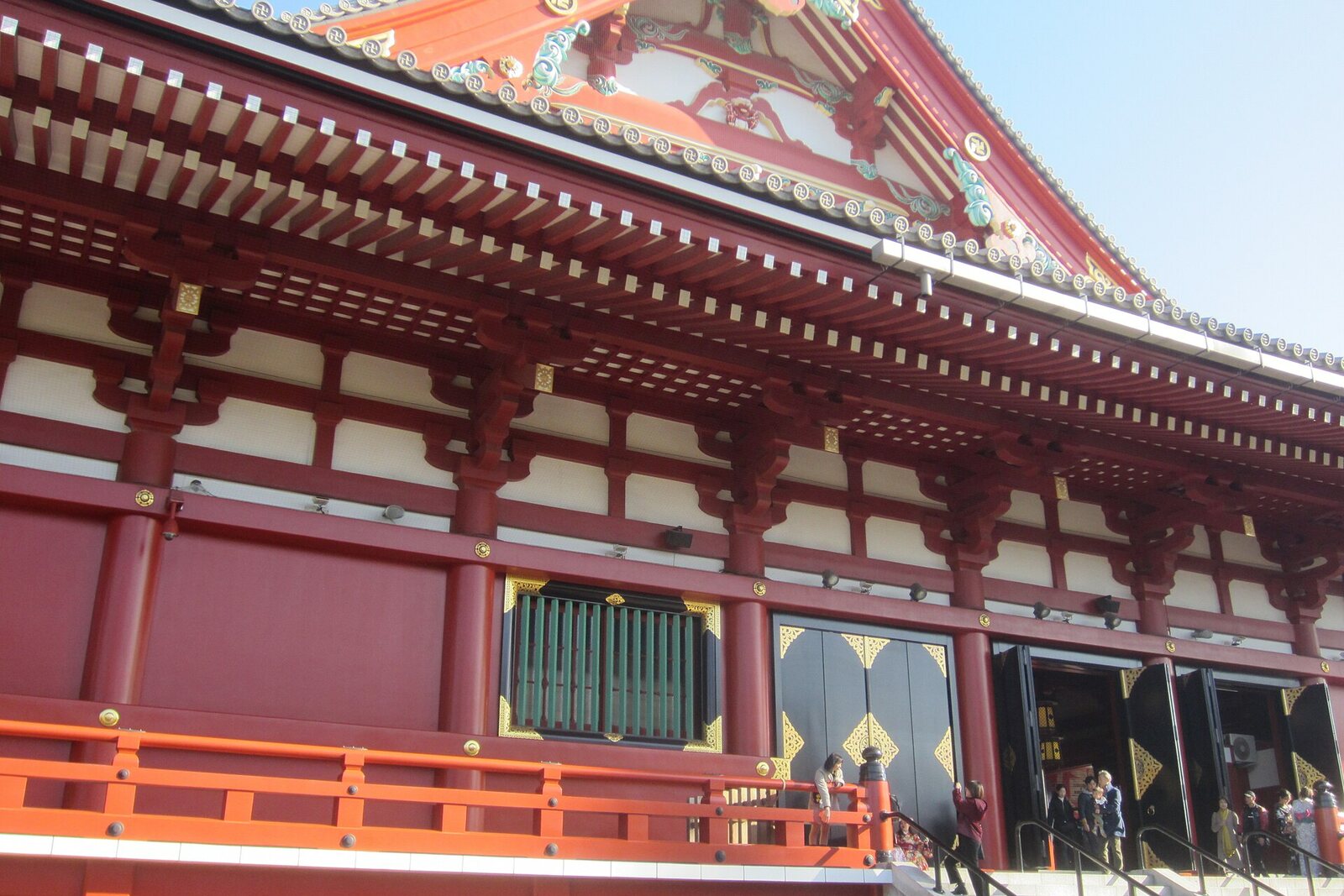
Look around first
What to notice
- Broad staircase
- Roof of the Main Hall
- Inner altar pavilion
The story of the place
On March tenth, nineteen forty-five, the former Sensoji Temple Main Hall burned down during the Tokyo air raid. It had stood for nearly three centuries, was considered a national treasure, and had been built by order of Shogun Tokugawa Iemitsu. But the object for which the entire hall existed lay three meters underground that night.
The attendants of Sensoji Temple had buried a large bronze rainwater bowl beneath the building in advance and placed the temple's principal image inside it: Kannon, the bodhisattva of compassion, whom people ask to free them from suffering. During earlier city fires, the sacred image had been carried away in a special palanquin under the protection of temple attendants. Before the air raids, they decided to leave it in place but hide it in the ground. The building burned out, but the image beneath it survived.
The attendants were saving a statue that they themselves were forbidden to see. According to temple tradition, this prohibition was established in six hundred forty-five by the monk Shokai, who was restoring the Kannon Hall here. It was believed that it contained the very image that, two decades earlier, the fishermen Hamanari Hinokuma and Takenari Hinokuma had pulled from the river in their net. They lived by their catch and threw the strange find back several times, because instead of fish, the statue kept ending up in their net again. The local leader Haji no Nakatomo recognized Kannon in it, turned his house into a place of worship, and devoted the rest of his life to her. This is how temple tradition explains why the Main Hall was built around one small image.
According to the same tradition, Kannon appeared to Shokai in a dream and told him to hide the statue from outside view. The monk locked it in an altar casket. In eight hundred fifty-seven, another monk, Ennin, carved an omaedachi—a statue placed in front of the hidden original. It can be displayed during ceremonies without opening the principal sacred image. According to Sensoji Temple, the casket with several locks has not been opened since, not even by the abbots.
After the war ended, in November nineteen forty-five, a temporary hall was erected on the ashes, and the saved image was returned from underground. Then worshippers from across Japan raised money for a permanent building. The present reinforced-concrete hall was completed in nineteen fifty-eight.
In the upper chamber of its inner altar pavilion stands the sealed casket containing Kannon; below it is Ennin's replacement statue. The bronze bowl in which the principal sacred image survived the destruction of the former hall has been preserved beside Awashimado Hall on the grounds of Sensoji Temple.
Useful on site
The Main Hall is open 6:00–17:00; from October to March, from 6:30 to 17:00. The other halls and ritual services must be checked separately. Verified against the official Sensoji Temple pages 2026-06-29.
Checked: June 29, 2026. Check the official source before visiting.Do not look for a way to see the hidden image: its casket is not opened for ordinary visits. Inside, give worshippers space; if access is restricted, the architecture and the layout of the approach can be clearly understood from outside.