 Guide On Map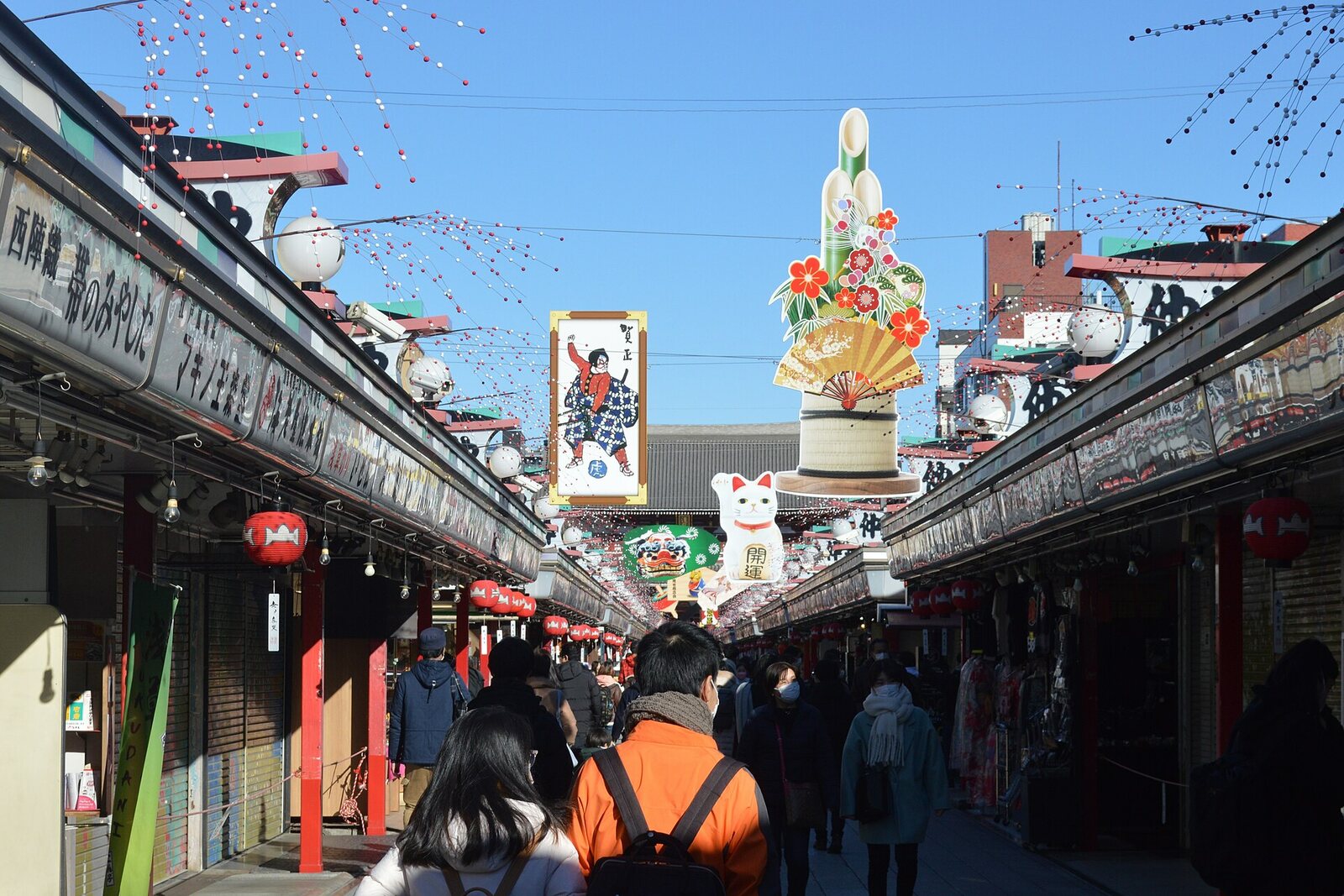
Look around first
What to notice
- Two rows of narrow shops
- Red shop facades
- The red gate at the end of the street
The story of the place
To the left and right run two rows of narrow shops with red facades, and at the end of the straight path stand the red gates of Sensoji Temple. The road to the temple passes here between sweets, toys, and small gifts. The current reinforced-concrete buildings appeared after an earthquake destroyed the uniform two-story shops of red brick. Their wooden predecessors disappeared long ago, but trade on the route to the sacred site remained.
Around sixteen eighty-five, the administrators of Sensoji Temple made a practical arrangement with their neighbors. Residents around the temple were assigned the duty of cleaning its grounds. In return, they were allowed to set up temporary stalls along the main approach. The temple received a clean courtyard, and the people earned money from those for whom that courtyard had to be kept clean.
The stream of visitors followed a single road from Kaminarimon Gate to the sacred site, so a place at a counter determined income. Toys, sweets, and things that could be carried away after a visit to the temple were sold here. This is how souvenir trade appeared on Nakamise: not as a later tourist addition, but as payment for a specific job.
The name is explained by the location of these stalls. They stood between the shops at Asakusa Hirokoji—today's Kaminarimon-dori—and the rows in front of Kannon Hall. “Nakamise” meant “middle shops.” This is only one version of the name's origin, but it accurately conveys the layout of the street: merchants occupied the middle of the route to the temple.
For nearly two centuries, this arrangement rested on a right granted by Sensoji Temple. After the Meiji Restoration, the government confiscated temple lands and transferred the grounds to Tokyo Prefecture for the creation of a public park. Along with the land, the merchants lost their old privilege. In May eighteen eighty-five, officials ordered all the Nakamise stalls removed. The merchants had to leave; the right to earn money here in exchange for cleaning was no longer in force.
However, the officials retained the commercial corridor itself. By December, they had built uniform two-story shops of red brick in place of the wooden stalls. The sale of toys, sweets, and gifts returned, but now the premises were created and controlled by the city, the owner of the land.
Those brick rows are not before us now. The earthquake of nineteen twenty-three destroyed them, and two years later the shops were rebuilt in reinforced concrete and painted red. In nineteen forty-five, their interiors burned out behind the outer walls. After the war, Asakusa's merchants fitted out the stalls again inside the surviving buildings.
Nothing physical remains of the first wooden counters or of the old right to trade in exchange for cleaning. Their place remains: two rows of narrow shops within the temple road, along which customers still walk from Kaminarimon Gate to Sensoji Temple.
Useful on site
The street is open to pass through, but the hours and days off of individual shops vary; this is stated directly in Taito Ward's official tourist information. Checked 2026-06-29.
Checked: June 29, 2026. Check the official source before visiting.Keep to the edge if you want to stop at a shop or look closely at a facade. Do not try to take in the entire selection: it is more important to sense how trade directs the common flow toward the temple.