 Guide On Map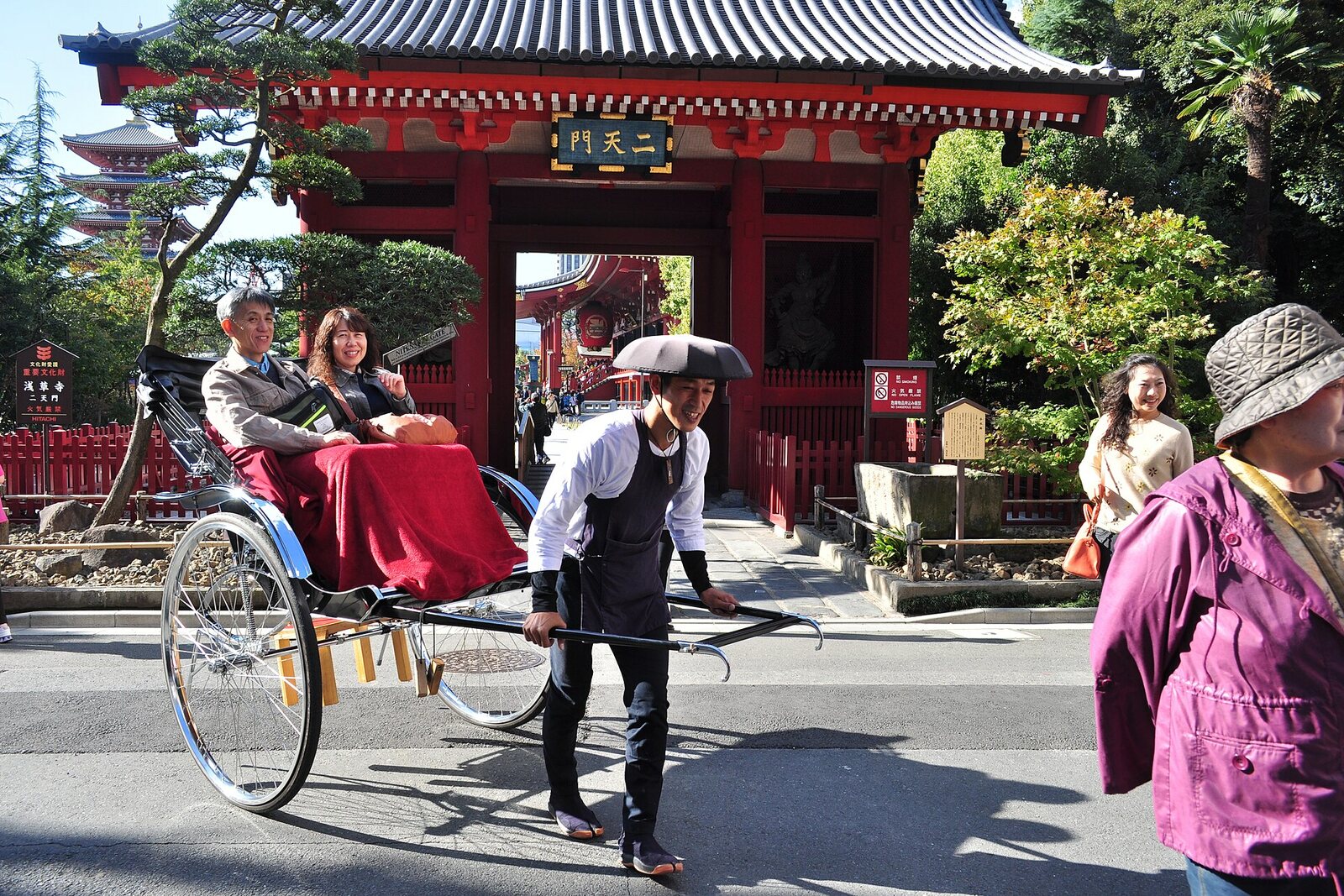
Look around first
What to notice
- Wooden gate doors
- Two armored figures
- Red posts and beams
The story of the place
Nitenmon Gate means “Gate of the Two Heavenly Kings.” Jikokuten, guardian of the east, stands on the right, and Zochoten, guardian of the south, stands on the left. Both are depicted in armor. Yet the gate was named after other statues, which perished far from here.
At the beginning of the seventeenth century, this gate led to Toshogu Shrine. Tokugawa Hidetada, the second shogun, wanted to honor his deceased father, Tokugawa Ieyasu, the founder of the Tokugawa shogunate. Ieyasu had earlier made Sensoji Temple his family’s temple of prayer, so in sixteen eighteen Hidetada established his father’s shrine on this very site.
Toshogu Shrine burned down twice. The sacred image of Ieyasu was moved to Edo Castle, and the shrine here was not rebuilt. The present wooden gate was erected around sixteen forty-nine, already as the eastern entrance to Sensoji Temple. It was called Zuishinmon Gate, the Gate of the Guardians: two Shinto deities stood on either side of the passage, guarding the entrance.
In eighteen eighty-four, carrying out a state order to separate Buddhism and Shinto, the attendants moved these guardians to the neighboring Asakusa Shrine. Buddhist guardians Komokuten and Jikokuten were brought here from Tsurugaoka Hachimangu Shrine in Kamakura. Because of this pair, Zuishinmon Gate was renamed Nitenmon Gate.
Before the air raid of March tenth, nineteen forty-five, both statues were outside the gate: they had been sent out for repairs. The place where the work was being done burned down with them. The gate itself survived the bombing, although the main hall and most of Sensoji Temple were destroyed. For nearly twelve years, the niches remained empty.
In nineteen fifty-six, restorers at Kaneiji Temple in Ueno were working on the gates of the mausoleum of the fourth shogun of the Tokugawa family. They determined that the side additions had appeared later and decided to remove them. Jikokuten and Zochoten, which stood there, had to find a new home. The attendants of Sensoji Temple were just then restoring the temple complex, and in nineteen fifty-seven they received the newly available figures.
So the guardians now standing on the right and left come from Ueno. But Nitenmon Gate was named after Komokuten and Jikokuten from Kamakura—the two that left here for repairs and never returned.
Useful on site
This stop is entirely outdoors: the gate can be viewed from outside, and no interior visit is required for the route. Checked against the official Sensoji Temple page 2026-06-29.
Checked: June 29, 2026. Check the official source before visiting.Here it is usually easier to step aside and take your time looking at the guardians. The gate matters precisely as a passageway whose history has changed, so compare its quiet scale with the ceremonial entrances on the route.