 Guide On Map
Rostov: From the Market Square through the Kremlin to Lake Nero
From the Trading Rows and Cathedral Square to Spaso-Yakovlevsky Dimitriev Monastery
Guide On Map on your phone
Open the walk like a regular app
It takes about 10 seconds to install. No app store needed.
The whole path
Route map
About the walk
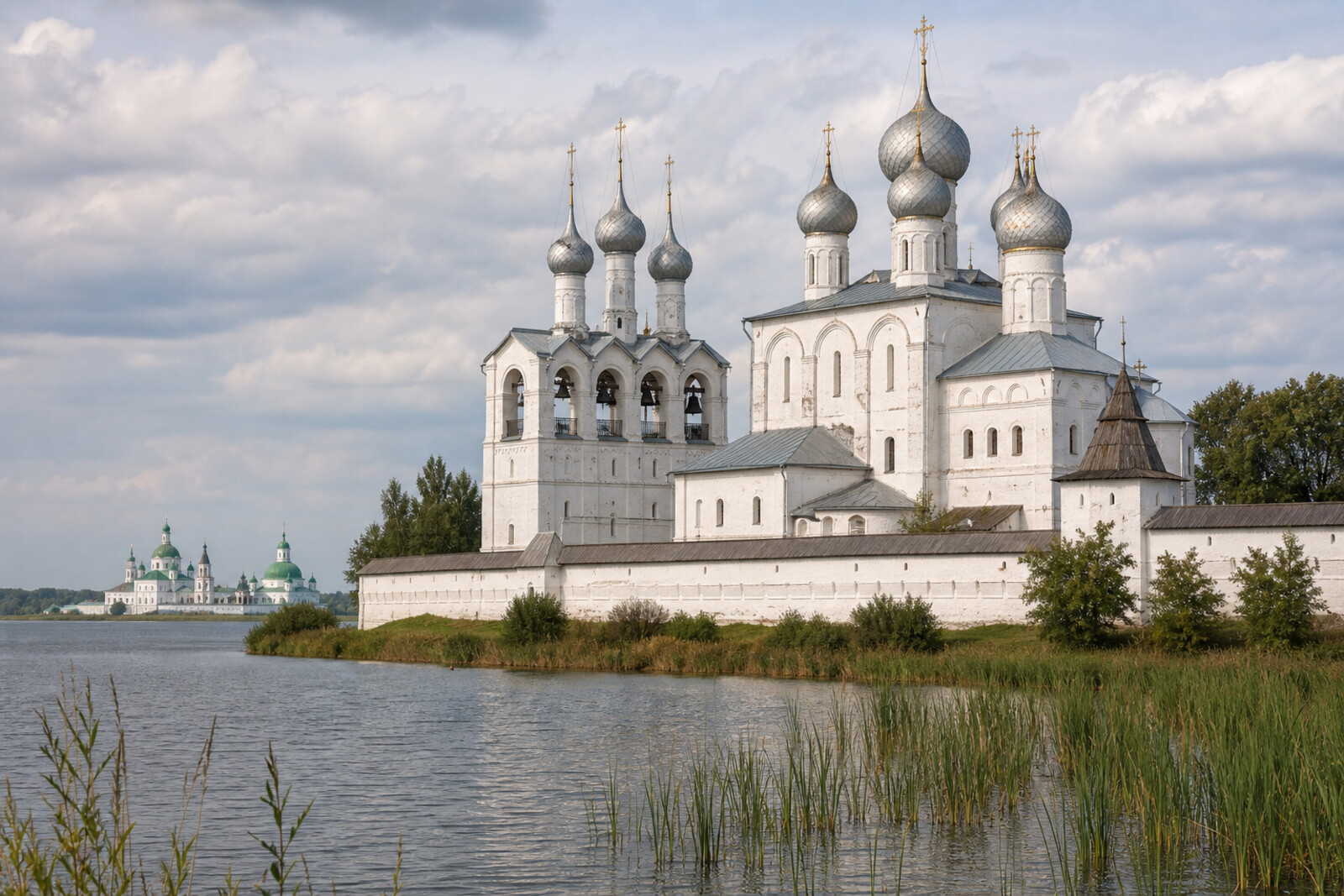
You will begin on Market Square, where a church rises above white arcades, then head to the cathedral and its belfry. From Cathedral Square, the road will pass through gate churches, chambers, and wall galleries, descend into an orchard, reach Lake Nero, and end at the monastery on its shore.
You will hear why a painted wooden arch was set beneath a crack. How an accountant gathered bell-ringers who had not been called to the belfry in years. Where an iron steamboat disappeared.
The story will check the documents, handle legends with care, and hold on to things: a tile, a cross, a bell, a bench, a landing stage.
By the end, you will be able to tell seventeenth-century Rostov apart from the Rostov that townspeople, merchants, restorers, and pilgrims quite literally put back together.
Why this order
Market Square comes first because this is where the city’s everyday business pressed right up against church walls. Just beyond the rows, Dormition Cathedral shows the principal church of that same city, while the belfry beside it gives the city its voice. From there, the route crosses Cathedral Square to the Resurrection Gates—the former ceremonial passage from the cathedral into the bishops’ residence. Beyond the gates, the Church of the Saviour on the Seni and the White Chamber reveal life inside the court and the birth of the museum. Next, the western gates with the Church of Ioann the Theologian continue the theme of rescue along the galleries that once linked the whole complex. After the tight stone passageways, the route descends into the garden: here, restorers worked not on a building but on a lost layout. Then the road leaves the walls for Lake Nero, moving from the arranged shore to the site of a vanished crossing. The way along the water leads on to the monastery, whose transformation completes the conversation begun on Market Square about donations, memory, and places that were saved.
Those who want to see the Kremlin not only from the courtyard, but from its passageways Those interested in restoration, city self-government, and the fate of old things Those who like routes that continue beyond the main sight toward the water
Those looking for a short loop only inside the Kremlin Those who do not want a walking stretch along Lake Nero Those with no interest at all in church history
Before you go
On the day of your walk, check whether the church interiors, garden, and wall passageways are open: access to the walls depends on the season, weather, and condition of the complex. Do not count on bell ringing as part of a regular visit; climbing the belfry and any special programs, if available, are arranged separately. Dormition Cathedral and Spaso-Yakovlevsky Dimitriev Monastery remain active religious sites: during services, do not disturb worshippers, keep your voice down, and ask about photography rules on site. Non-slip shoes will help on the passageways. The shore of Lake Nero is damp and boggy in places, especially after rain, so do not try to cut across the grass right by the water.
When to go
It is best to start in the first half of the day, so you can take your time in the museum section and reach the monastery before access to its churches ends. Leave the most time for the belfry, passageways, and White Chamber if the interiors are open. After the garden, the route becomes more linear, but a substantial walk along the lake still lies ahead. With the interiors closed, the walk goes faster, though the story still makes sense through the exterior details.
Backup plan
If you cannot enter the churches, do not cancel the route: the cathedral’s age, the belfry’s design, the gates’ only apparent defensiveness, and the division between ceremonial and service spaces can all be read from outside. Replace closed wall passageways with a walk around the grounds, viewing the gate churches and western wall in sequence. In bad weather, skip the descent to the soft edge of Lake Nero and view the lake from the firm city approach. If you have no energy left for the long final stretch, finish by the water, comparing the Kremlin and monastery within a single landscape; you can reach the last stop separately by city transport or local taxi.
Route conditions
Surface. Unpaved — 1.8 km; paved — 367 m (data covers 53% of the route)
Stairs. Flights: 2, 8 m in total
Access. Wheelchair — no; stroller — limited (stairs)
Facilities. Toilets — 1; drinking water — 1
Elevation. Ascent — 21 m; descent — 32 m
OpenStreetMap extract of July 4, 2026: database data, not a check on the ground. Data © OpenStreetMap contributors, ODbL licence
Walk plan
Open in maps ↗- 1
Trading Rows and Church of the Saviour on the Market Square
Here you will see why trade became part not only of the church’s history, but of its very structure. - 2
Dormition Cathedral
The surviving cross will link the looting of the city’s main church with the return of a former captive. - 3
Cathedral Belfry
The story of one recording will show how a performance can be brought back after a break lasting several decades. - 4
Resurrection Gates
The ceremonial entrance will show how nineteenth-century restorers looked for models directly in the surviving masonry. - 5
Church of the Saviour on the Seni and the White Chamber
This stop explains how the restored connection between the rooms made it possible to open Rostov’s first museum. - 6
Church of Ioann the Theologian and Wall Passageways
Here, the story of preserving the church continues with the history of the galleries, whose full repair the city will twice lack the money for. - 7
Metropolitan Garden
After the stone restoration, the route will show a reconstruction in which researchers honestly leave room for a later pond. - 8
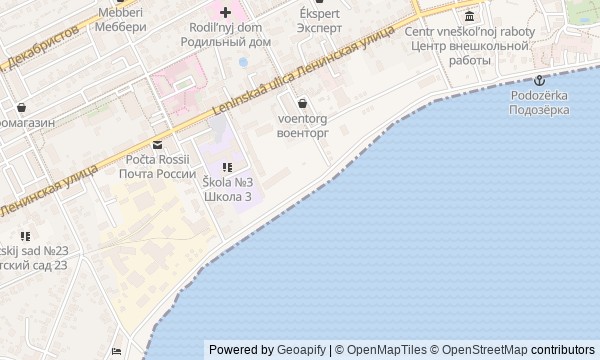
The shore of Lake Nero by Podozyorka
Here the route leaves the history of the Kremlin behind for the place from which the city was connected with lakeside villages. - 9
Spaso-Yakovlevsky Dimitriev Monastery
The finale will show how a fulfilled will changed the fate of an entire monastery.
Route features
Everything you need stays in the browser
Progress, saves and your trip plan are stored on this device.
Add Guide On Map to your home screen so the walk opens outside the browser.
How we handle sources, maps and corrections: our editorial standards