 Guide On Map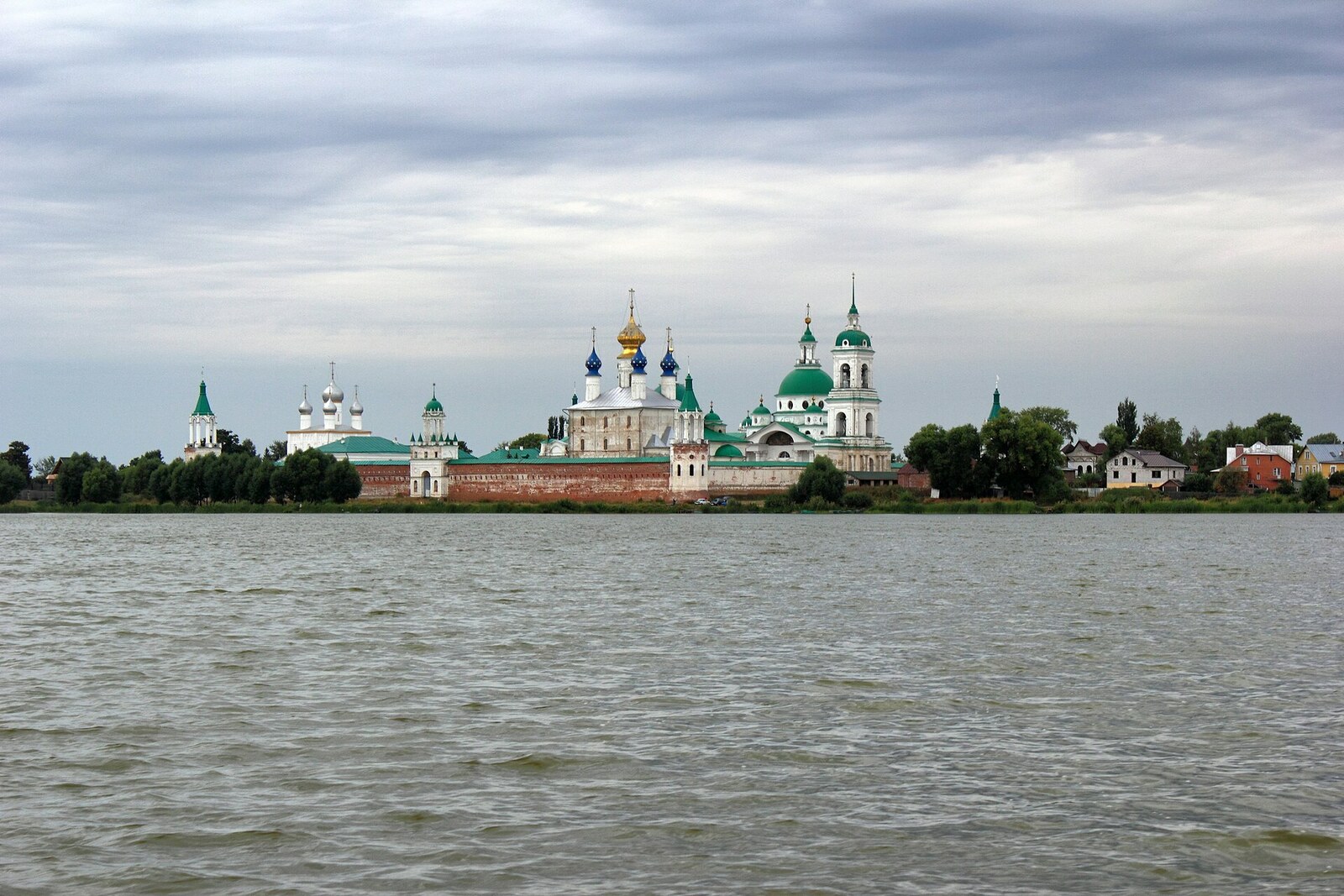
Look around first
What to notice
- Boat landing
- Shoreline
- Open water of Lake Nero
The story of the place
In the winter of nineteen eleven to nineteen twelve, on the Rostov shore by this landing, Trunov, a merchant from the lakeside village of Vorzha, was building an iron-hulled tug steamboat. From here, he was to operate two freight ferries across Lake Nero, carrying carts, horses, people, and goods for the Rostov market.
Such a crossing could not be opened freely. In seventeen oh nine, Tsar Pyotr I granted the residents of Ugodichi, on the opposite shore, the exclusive right to fish in Lake Nero and to transport people and cargo across the lake. The Ugodichi peasants charged for crossings and traveled to Rostov in large oared and sailing boats known as sominas. When the Rybinsk merchant Emelyanov put the first steamboat into service here, he had to pay the holders of that right.
Later, the Ugodichi merchant Mikhail Fafurin took over the crossing. His wooden tug, Nikolai I, towed two ferries, each of which could hold up to forty horse-drawn carts. On market days, it made four trips. There was especially much work in autumn, when peasants brought their harvest and manufactured goods to Rostov. Everyone aboard the steamboat came from Ugodichi, and at night the vessel returned to their shore. Rostov served as a market, but even the city landing remained one end of someone else's rural crossing.
The old tug moved slowly and often needed repairs. Trunov built a new iron-hulled vessel by the Rostov landing and named it Rostov Veliky Steamboat. With two loaded ferries, it crossed the lake in forty minutes instead of the previous hour or more. After that, Fafurin dismantled the wooden steamboat, the barges, and the ferries: he sold some of them, while the rest became firewood.
The iron-hulled Rostov Veliky Steamboat continued operating after the Revolution. It was first renamed Dawn of Freedom, then Udarnik. Besides the ferries, it towed enormous rafts of floated timber to the city so that Rostov residents could stock up on firewood. In nineteen fifty-eight, the vessel was converted from wood fuel to coal, but soon the new head of the Small Rivers Administration, carrying out a scrap-metal collection campaign, sent the entire steamboat for scrap.
There is still a boat landing on Podozyorka. The old pile jetties, the two freight ferries, and Rostov Veliky Steamboat itself are no longer here: all that remains of the crossing for which the vessel was built on this shore is the place where one reaches the water.
Useful on site
The public shore is accessible without museum restrictions; it is safer to come during daylight hours and not to count on a continuously landscaped embankment.
Checked: June 24, 2026. Check the official source before visiting.View the lake from a stable approach, and do not test the firmness of the shore with your feet. After rain, stay on the paving or a dry road; for a good view, there is no need to go down to the water itself.