 Guide On Map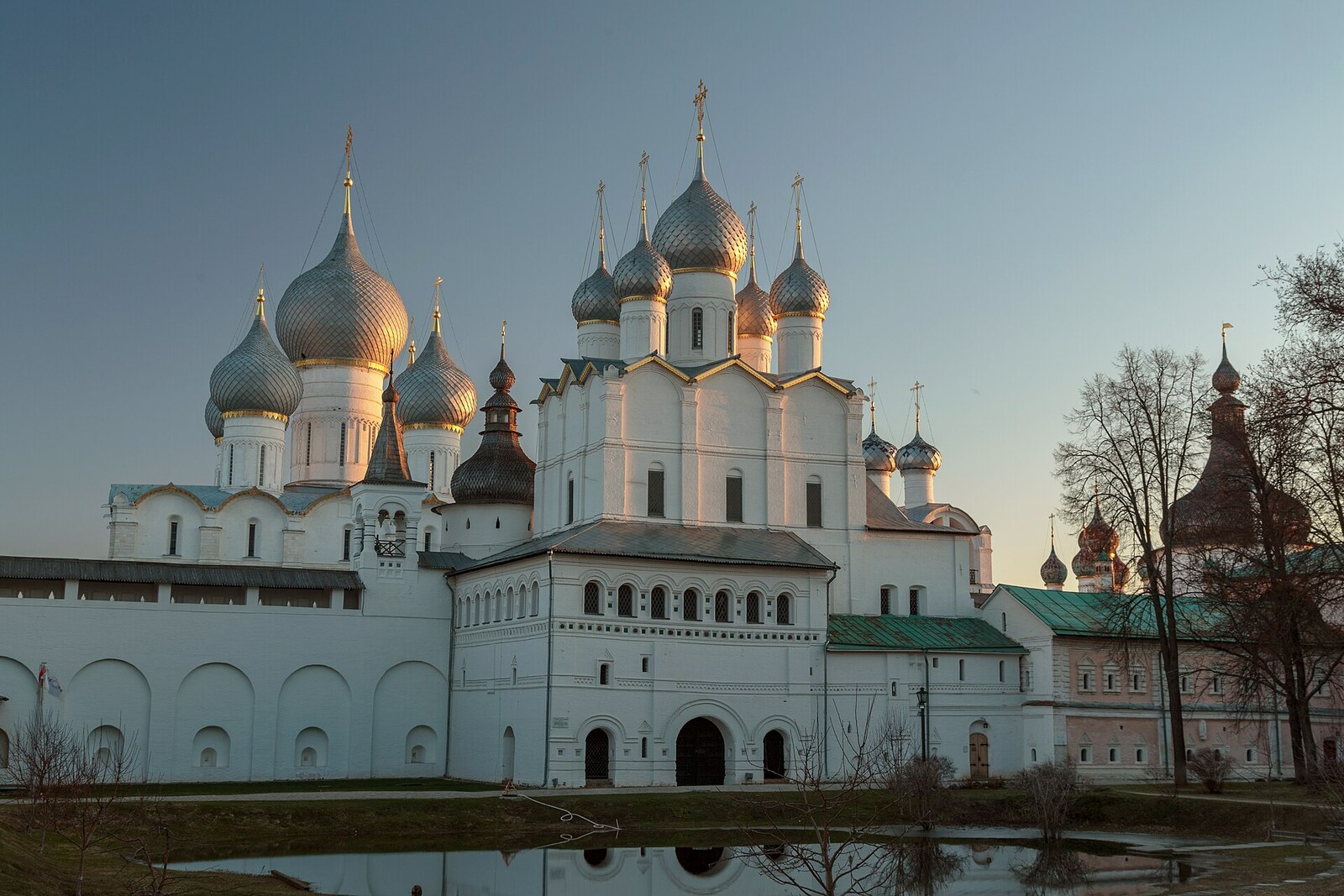
Look around first
What to notice
- Arched passageway
- Resurrection fresco on the facade
- Green tiles
- Restored door arches
The story of the place
Around sixteen seventy, Metropolitan Iona Sysoyevich, head of the Rostov and Yaroslavl Eparchy, established the ceremonial entrance to his residence here. The gates were placed opposite the southern porch of Dormition Cathedral: by this route, the metropolitan went from the Bishops’ Court to the eparchy’s principal church. Above the passageway, Iona built a church dedicated to the resurrection of Jesus Christ after the Crucifixion and burial. The gates took their name, Resurrection Gates, from it. On the facade fresco, the event is depicted in the manner customary in the seventeenth century: Christ descends into hell and leads people out of it.
In seventeen eighty-eight, the head of the eparchy was transferred from Rostov Veliky to Yaroslavl. Services in the Kremlin house churches ceased, the residence was abandoned, and the buildings began to deteriorate. By the beginning of the eighteen eighties, the Church of the Resurrection was close to collapse. The gate arch facing the cathedral had cracked from top to bottom as far as the gallery. During an earlier repair, a painted wooden arch had been placed beneath it. It concealed the crack but supported nothing.
The father-and-son Vakhromeyevs, Alexander and Ivan, undertook to save this entrance. The family owned mills and traded in flour; Ivan collected old manuscripts and served on the local restoration commission. In the spring of eighteen ninety, the Vakhromeyevs assumed all the expenses. Ivan Shlyakov, a member of the same commission, drew up the project, and the Moscow Archaeological Society approved it without changes. The work cost the family seven thousand two hundred rubles.
Masons rebuilt the collapsed vaults according to their surviving outlines, in places dismantled decayed walls down to the foundations, and raised the masonry again. Ice cellars were removed from the lower floor, and the rooms were dried out. Altered door arches were restored from surviving seventeenth-century fragments, and blocked-up windows were opened. Old tiles were cleaned, while copies of broken ones were ordered from factories in Rostov Veliky and Rybinsk—for fifty kopecks apiece.
By August, the work was complete. The Moscow Archaeological Society officially thanked the donors and the commission for the exact execution of the project. On today’s northern facade, ancient green tiles stand beside copies from eighteen ninety, while the outlines of the passageways repeat the models that the restorers found in the surviving masonry.
Useful on site
Summer schedule as of the verification date: grounds Sun—Thu 09:00—20:00, Fri—Sat 09:00—21:00; exhibitions 10:00—17:30. The church and wall passageways are open seasonally, from early May.
Checked: June 24, 2026. Check the official source before visiting.Compare the gates with a real defensive passageway without stopping in the middle of traffic. The paintings can be seen only when the gate church and passageways are accessible.