 Guide On Map
Merchant Rostov and Old Nakhichevan-on-Don
From Rostov City Duma through the Don River port to Surp Karapet Church
Guide On Map on your phone
Open the walk like a regular app
It takes about 10 seconds to install. No app store needed.
The whole path
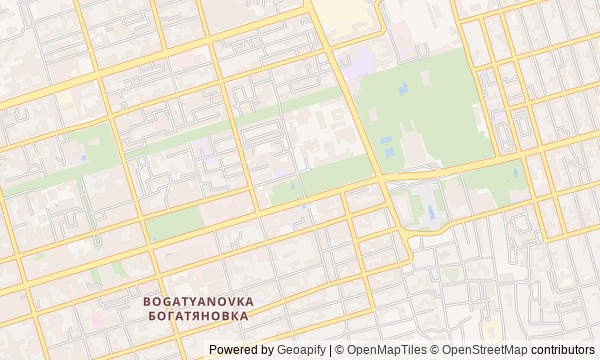
Route map
About the walk
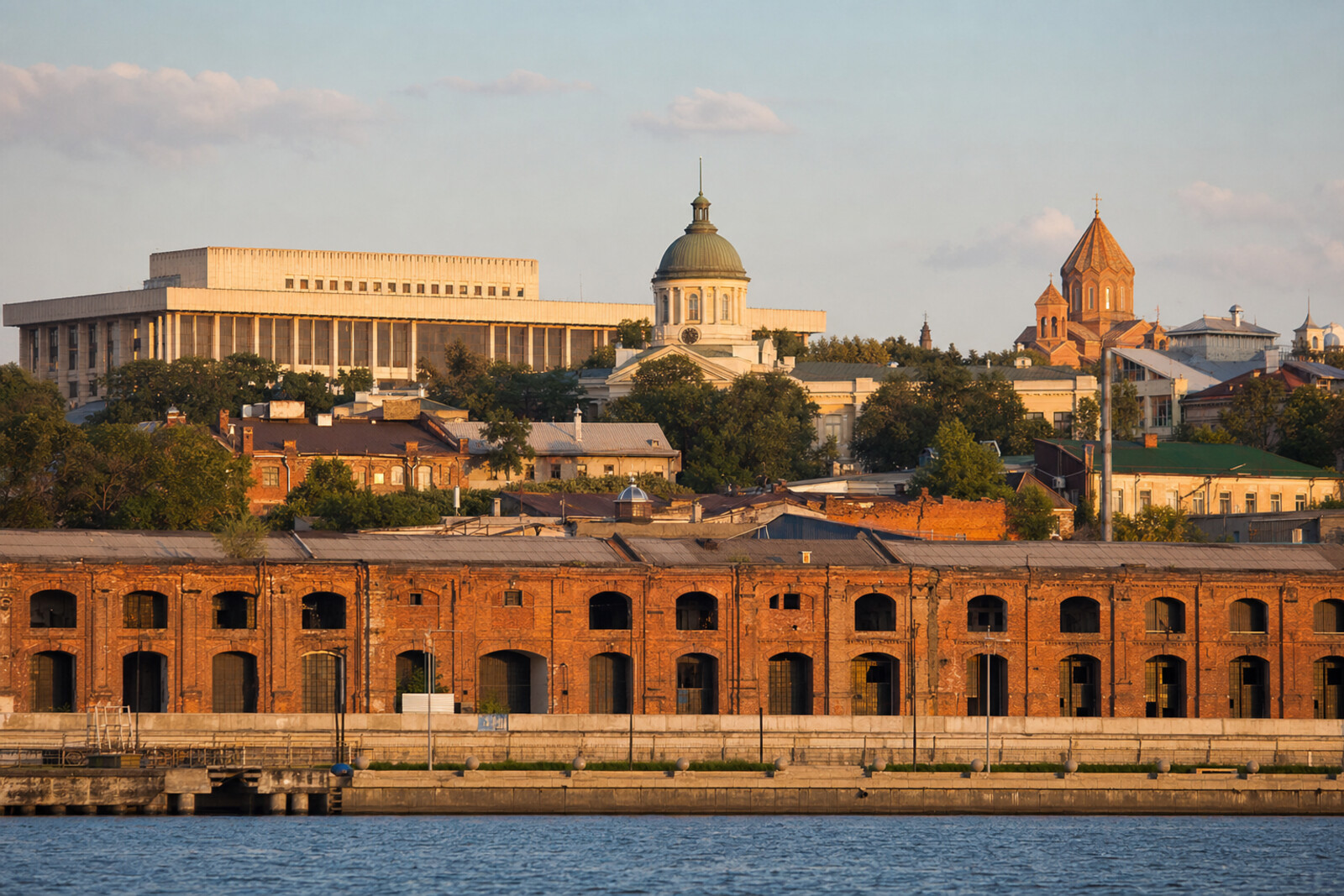
You will begin on Bolshaya Sadovaya Street, between a merchant apartment house and Rostov City Duma. At Sobornaya Square, you will see the former address of the city services, then head down to the Don River. Along the water, you will pass brick warehouses and an old spring, climb to a theater shaped like a tractor, and continue through former Nakhichevan-on-Don—past its theatre, museum, and Armenian Cemetery.
The questions will come from small details: a seahorse on a roof, round openings in a warehouse wall, a floor raised for a ball. You will take the city apart through estimates, leases, loans, and wills. A legend remains a legend if the documents do not confirm it.
By the end, you will be able to trace the vanished border between Rostov-on-Don and Nakhichevan-on-Don and explain why, on one side, the city grew from the bazaar toward the port, while on the other it grew around a theatre, a school, and the Armenian community.
Why this order
Rostov City Duma and Gench-Ogluev House will make up the first pair: the new municipal building will immediately raise the question of where city services had been housed before. The answer will come from Maximov House near Sobornaya Square. From the former bazaar, the route will descend to the Don River, because the port explains where the merchant money came from: grain warehouses appeared at the quay, and their springs will set up the story of Bogaty Kolodez and the city water supply. The climb from the water to the Maxim Gorky Drama Theatre will move the walk from merchant Rostov into the Soviet era. After its enormous stage, the pre-revolutionary Nakhichevan City Theatre will show another way of creating a city stage—through a lease, donations, and a loan. The museum on the same square will continue the story of a separate Armenian city through the fate of its school, church, and collection. The final walk to Surp Karapet Church will lead from the museum story to an active church, cemetery avenues, and a complex built under a will.
Those who want to understand Rostov-on-Don through trade, city money, and private decisions Those interested in the history of Rostov-on-Don and Nakhichevan-on-Don as neighbors Lovers of architecture, theatres, and industrial heritage Those who prefer documents to grand urban legends
Those looking for a short walk without long stretches between stops Those who want a route only through the grand central district Those not ready to end the walk on cemetery grounds
Before you go
Choose comfortable shoes and save some energy for the descent to the Don River and the climbs that follow. Paramonov Warehouses remain ruins: view them only from permitted public areas, do not go beyond the barriers, and do not look for a way inside. Plan a museum visit separately and check current opening hours in advance. Surp Karapet Church and the Cathedral of the Nativity of the Blessed Virgin Mary are active churches, so keep quiet inside and do not disturb services. Do not drink water from the historic spring without fresh official confirmation that it is safe.
When to go
Allow about four and a half hours: roughly three will go to the stories and an unhurried look around, and the rest to getting between stops. Start in the first half of the day so you do not have to rush at the museum and can reach the cemetery in daylight. If you plan to see a performance or explore the exhibition in detail, treat them as a separate part of the day.
Backup plan
If the museum is closed, look at Iskidarov House, the square, and the theatre opposite it: the link between the private house and the city stage is clear even without the exhibition. If access to Paramonov Warehouses is restricted, do not go around the barriers—save the story for the accessible view from the waterfront and continue to Bogaty Kolodez. During a service in either church, limit yourself to an exterior view or return later. If time is short, it is better to finish the walk at the Maxim Gorky Drama Theatre and visit the three Nakhichevan-on-Don stops as a separate block.
Route conditions
Surface. Paved — 4.6 km (data covers 58% of the route)
Stairs. Flights: 2, 32 m in total
Access. Wheelchair — no; stroller — limited (stairs)
Facilities. Toilets — 2
Elevation. Ascent — 94 m; descent — 56 m
OpenStreetMap extract of July 4, 2026: database data, not a check on the ground. Data © OpenStreetMap contributors, ODbL licence
Walk plan
Open in maps ↗- 1
Rostov City Duma and Gench-Ogluev House
Two buildings show how private rental income and the city budget gave one architect different commissions. - 2
Sobornaya Square and Maximov House
A private rental building explains where municipal services worked for almost thirty years. - 3
Paramonov Warehouses
The slope, springs, and loading openings will trace the grain’s route from the city street to a barge. - 4
Bogaty Kolodez
The old spring becomes the starting point for the story of Rostov's first permanent water supply system. - 5
Maxim Gorky Drama Theatre
An enormous Soviet stage will test the intimate company that arrived from Moscow. - 6
Rostov Academic Youth Theatre
The pre-revolutionary stage will show how Nakhichevan-on-Don assembled a public building from donations, rental income, and a loan. - 7
Museum of Russian-Armenian Friendship
The fate of the museum collection will link this house to a school of artists and a saved Armenian church. - 8
Surp Karapet Church and the Armenian Cemetery
The will explains the layout of the church, the cemetery avenues, and the neighboring charitable buildings.
Route features
Everything you need stays in the browser
Progress, saves and your trip plan are stored on this device.
Add Guide On Map to your home screen so the walk opens outside the browser.
How we handle sources, maps and corrections: our editorial standards