 Guide On Map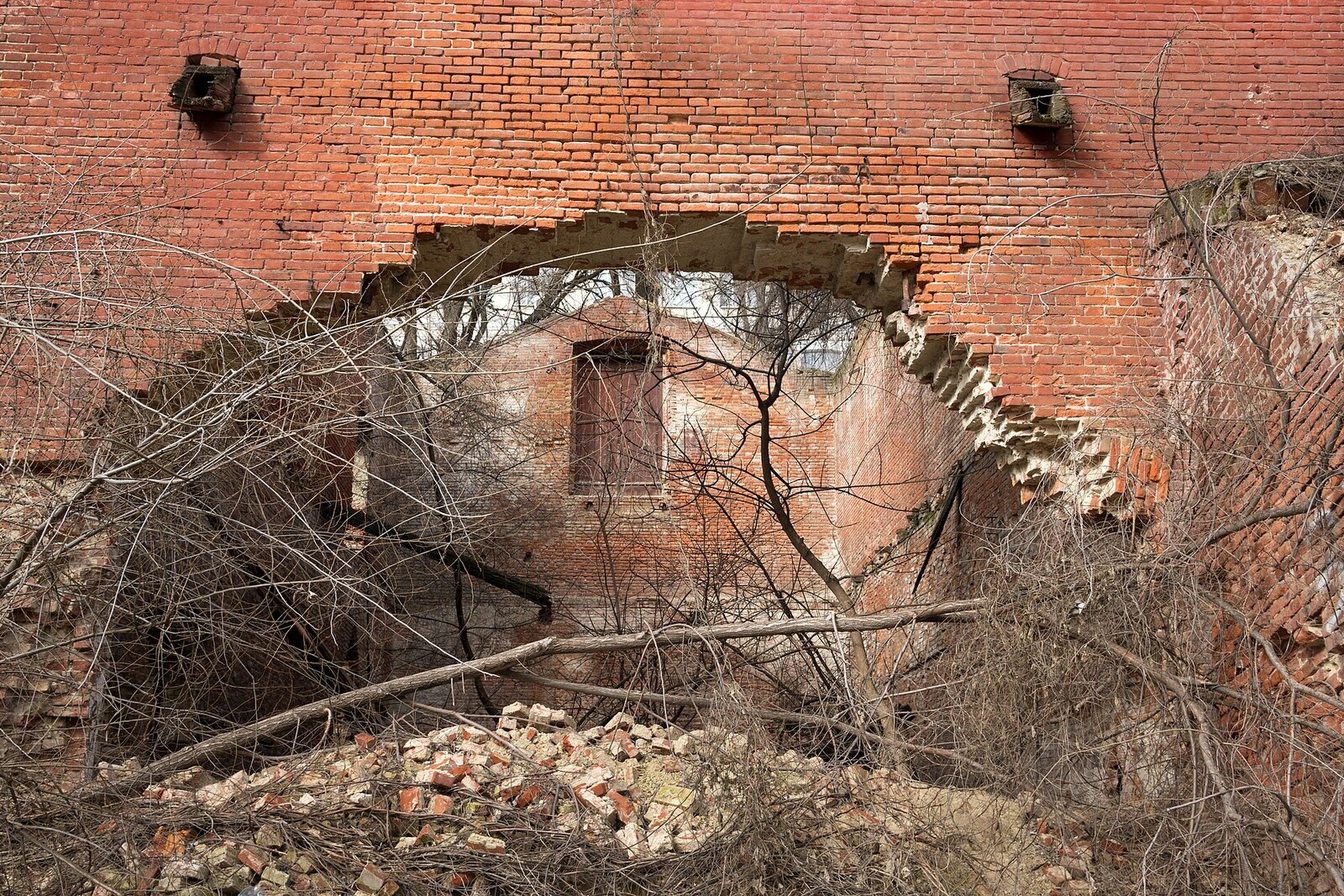
Look around first
What to notice
- Round openings in the lower façades
- Brick warehouse walls
- Spring water inside the ruins
The story of the place
This row of brick ruins is called the Paramonov Warehouses, though old city maps give it another name: “Maximov Granaries.”
In the early eighteen eighties, the brothers Peter and Vladimir Maximov, grain merchants, bought a plot here with two stone granaries and expanded the warehouse operation. Peter Maximov is already familiar from the house rented by municipal institutions; by the Don, he played another role. The brothers’ money was stored here in grain: until a vessel arrived, each consignment had to be kept safe from dampness.
The task looked risky. Powerful springs emerged from the slope, and the new building was to stand directly above them. City architect Viktor Yakunin had to keep the grain dry without blocking the water’s path to the Don. Before construction, drainage channels were laid along the slope, and a walk-through ventilation gallery was built by the upper wall. The journal of the City Duma recorded that a pipe around the “stores” created a strong draft and dried the walls well. At the time, “stores” meant storage rooms.
The spring water stayed at roughly nine degrees year-round. It cooled the air by the gallery, and that air passed along the walls. The damp slope ceased to hinder grain storage and became part of the granaries’ design.
The height of the riverbank also made loading easier. From the upper side, grain entered the second floor. Round openings were made in the lower façade: canvas sleeves were attached to them, and the grain poured down through them to the level of the embankment. From there, it was loaded onto barges and sent abroad. The merchants saved on carrying heavy cargo between the street above and the pier below: grain covered half that distance under its own weight.
Elpidifor Paramonov appeared among the owners later. He was a major grain industrialist and shipowner who steadily dispensed with intermediaries: he bought a mill, acquired his own vessels, and exported processed grain himself. After the Maximov brothers died, he bought one of the warehouses here. His family business kept grain and office space there until nineteen seventeen. Another building went to a different merchant, a third remained with the Maximov heirs, and the neighboring buildings belonged to trading and steamship companies.
City rumor credited the entire row to Rostov-on-Don’s most famous grain merchant. The Maximovs’ name remained on the maps, while Paramonov’s name remained in the one still used today.
The water now inside the ruins testifies instead to damage to the former system. In the early nineteen seventies, the slope collapsed nearby, water-bearing layers shifted, part of the ventilation gallery fell in, and the springs began flowing directly into the rooms. The round openings remain on the surviving brick façades. Once, the final stretch of the grain’s journey began here: through a canvas sleeve, down to a barge on the Don.
Useful on site
An unsafe complex with no tourist access; view it only from publicly accessible areas beyond the active barriers.
Checked: June 24, 2026. Check the official source before visiting.Do not enter the unsafe buildings or cross the barriers; view the complex only from open, safe areas.