 Guide On Map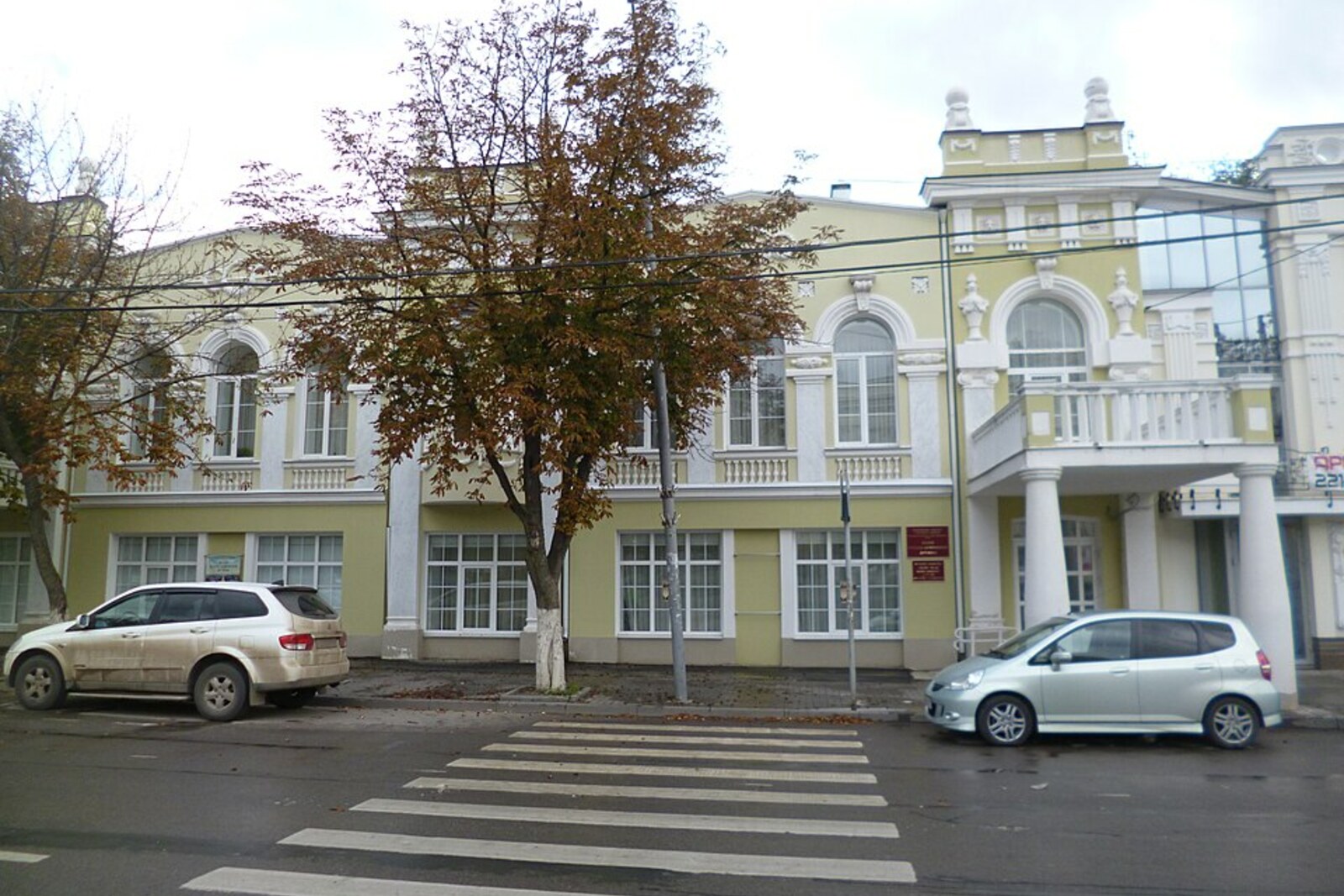
Look around first
What to notice
- Facade of Iskidarov House
- Second-floor windows
- Museum name on the facade
The story of the place
In the center of old Nakhichevan-on-Don stands the former house of entrepreneur Mark Iskidarov. Four museum rooms on the second floor contain objects from Armenian villages, urban Nakhichevan-on-Don, and evidence of the Armenians’ resettlement from Crimea to the Don River. The museum’s name remains on the facade, and the tall second-floor windows look out onto a street of the old Armenian city.
In the early nineteen twenties, on the second floor of this house, sisters Marietta and Magdalina Shaginyan opened the Mikhail Vrubel School of Art—the first Soviet state art school in southern Russia. Nakhichevan-on-Don was still a separate Armenian city beside Rostov-on-Don at the time. The sisters brought together local artists, and painting was taught here by Martiros Saryan, a native of Nakhichevan-on-Don. A year later, he left for Yerevan. Almost half a century later, his signature helped establish the museum that now occupies these same rooms.
In nineteen sixty-seven, the city executive committee decided to demolish the church of the former Surp Khach monastery: the Severny Residential District was being built nearby. Vardan Chinchyan took up the cause of preserving the church—an aeronautical engineer at the Rostov Helicopter Plant who, after retiring, devoted himself to the history of the Don Armenians. He assembled an initiative group, tracked down fellow countrymen in different cities, and appealed to Saryan. By then, the artist headed the Armenian Society for the Protection of Monuments and could lend his name in support of the request.
At Chinchyan's request, Saryan sent petitions to the Rostov City Party Committee and the state inspectorate for the protection of monuments. The demolition decision was not carried out. A year later, the executive committee placed the church under protection and ordered a branch of the Rostov Regional Museum of Local History to be housed inside it. The name “Museum of Russian-Armenian Friendship” arose at that very time: its subject became the history of neighboring Russian Rostov-on-Don and Armenian Nakhichevan-on-Don, united into one city in nineteen twenty-nine. Its secular museum function made it possible to preserve the closed church.
The staff had almost no ready-made collection. They went from house to house and traveled to Armenian villages, asking people to donate old clothing, photographs, books, and household utensils. One elderly villager took charokhi—Armenian leather footwear—off his feet and gave them to the museum workers, laughing that someone needed his old shoes. This was how objects of everyday life first found a place alongside documents and works by artists.
Martiros Saryan died in May nineteen seventy-two and did not see the opening. On November fourteenth, the museum welcomed its first visitors in the saved church. It remained there for thirty-five years.
In two thousand seven, the church was transferred to the Armenian community, and services resumed there. The museum staff dismantled the exhibition and moved the objects to the Rostov Regional Museum of Local History. New premises were found here, in the former house of entrepreneur Mark Iskidarov, in the center of old Nakhichevan-on-Don. After renovation, the museum opened on November twenty-fifth, two thousand eleven.
Now four rooms on the second floor tell the story of the Armenians’ resettlement from Crimea to the Don River in seventeen seventy-nine, Armenian villages, and urban life in Nakhichevan-on-Don. This is the very floor where Saryan once taught. The name first recorded in the decision that saved Surp Khach from demolition remains on the facade.
Useful on site
Tuesday–Sunday 10:00–18:00; Monday closed. Tickets are purchased at the ticket office or through the ticket platforms indicated by the museum.
Checked: June 24, 2026. Check the official source before visiting.The exhibition requires a separate visit; if the museum is unavailable, the history of its owner and the choice of address can be understood from an exterior viewing.