 Guide On Map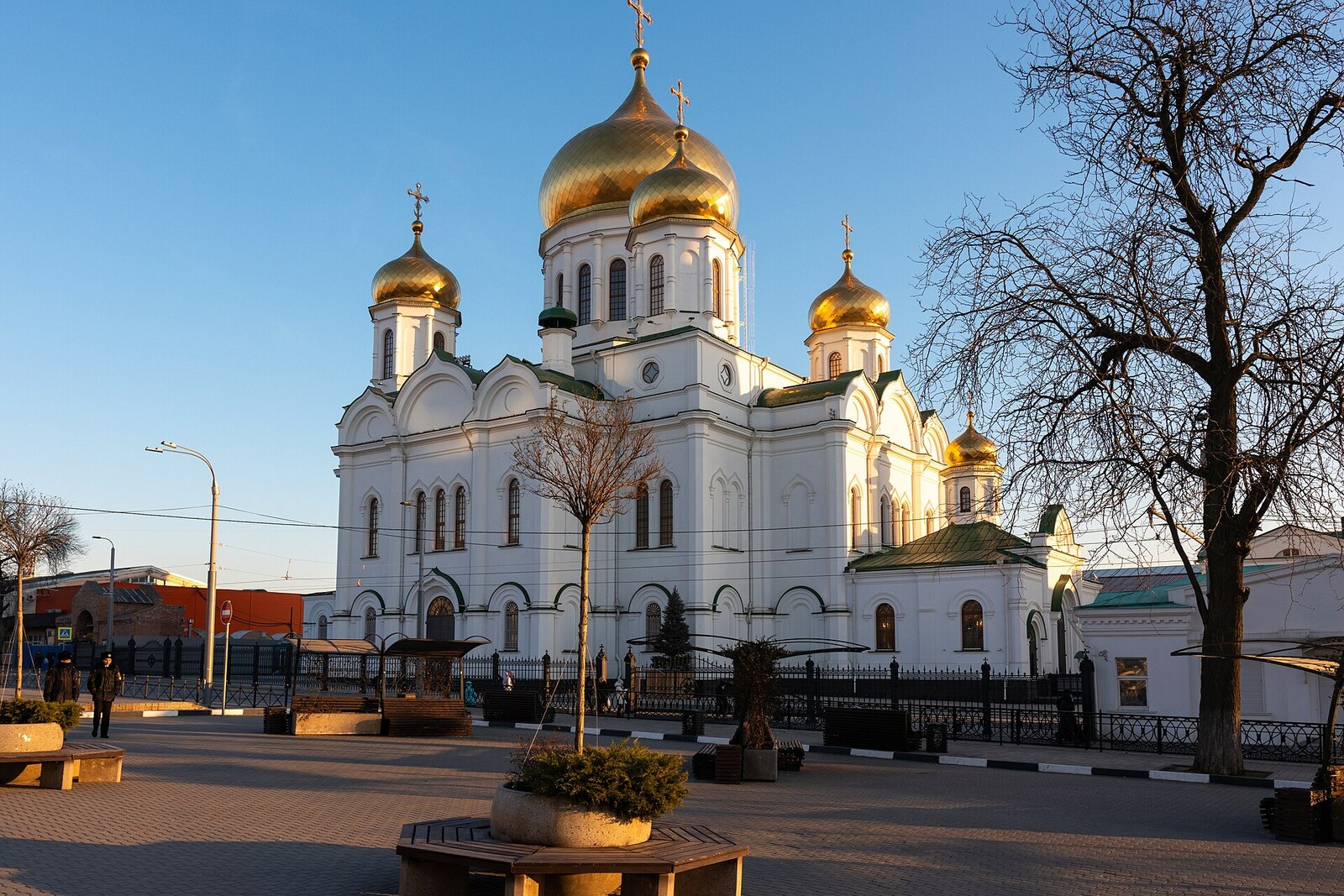
Look around first
What to notice
- Five triple-arched mezzanine windows
- Ground-floor arcades
- The cathedral facade opposite
The story of the place
On May twelfth, eighteen sixty-eight, the Aksay Icon was carried out of the Cathedral of the Nativity of the Blessed Virgin Mary. It was borne across the square to the house opposite. The elected members of the Rostov City Duma climbed with the icon to the large hall. After a prayer service, the city mayor, the police chief, and the building's owner, Pyotr Romanovich Maximov, went through the other rooms with it. The priest congratulated those gathered on their housewarming and wished for an end to the citizens' disputes, one of whose causes had been these premises.
Municipal institutions were moving into a privately owned rental building. Maximov, a merchant of the first guild, expected to receive rental income here: shops occupied the lower floor, while the upper floor suited offices and meetings. But the building he had constructed extended beyond the approved plot boundary by fifty-six square sazhens—more than two hundred fifty square meters of city land. Litigation began. The court ordered Maximov to pay the city three thousand rubles. For comparison, three years later the annual salary of the Rostov city mayor would be set at six thousand.
The fine did not get in the way of the lease. The house accommodated the Rostov City Duma, the city administration—the executive office attached to the Rostov City Duma—the merchant and burgher administrations, a court, a public bank, and a print shop. The location was practical. What is now Sobornaya Square was then part of Old Bazaar Square, Rostov's main market. A church service took place in front of the cathedral, goods were sold in the building's lower arches, and on the floor above, trading places were allotted, city expenses were considered, and building regulations were adopted.
In eighteen seventy-one, a new law gave the Rostov City Duma greater independence. Seventy-two elected members gathered in the hall here, took an oath, and elected the building's owner city mayor. Maximov began to preside over the institution that rented rooms from him and had shortly before collected money from him for the extra land. Under him, the Rostov City Duma resolved that only stone houses with iron roofs should be built around market squares and on the main streets. Maximov himself left office early at the end of eighteen seventy-three, while municipal services remained here almost until the end of the century.
This part of the former bazaar is called Sobornaya Square after the Cathedral of the Nativity of the Blessed Virgin Mary. The five triple-arched windows of Maximov House's mezzanine still face directly toward the cathedral. The city coat of arms above them has long been gone: the building is once again occupied by shops and offices. In June two thousand twenty-six, the owner put the former Rostov City Duma house up for sale for four hundred thirty million rubles.
Useful on site
The cathedral operates daily; service times vary and are published on the official website. The square and the facade of Maximov House are accessible from outside.
Checked: June 24, 2026. Check the official source before visiting.The square opens up from outside; when entering the cathedral, keep in mind that sightseeing must not interfere with worship.