 Guide On Map
Borgo and the Vatican: Papal Power in the City
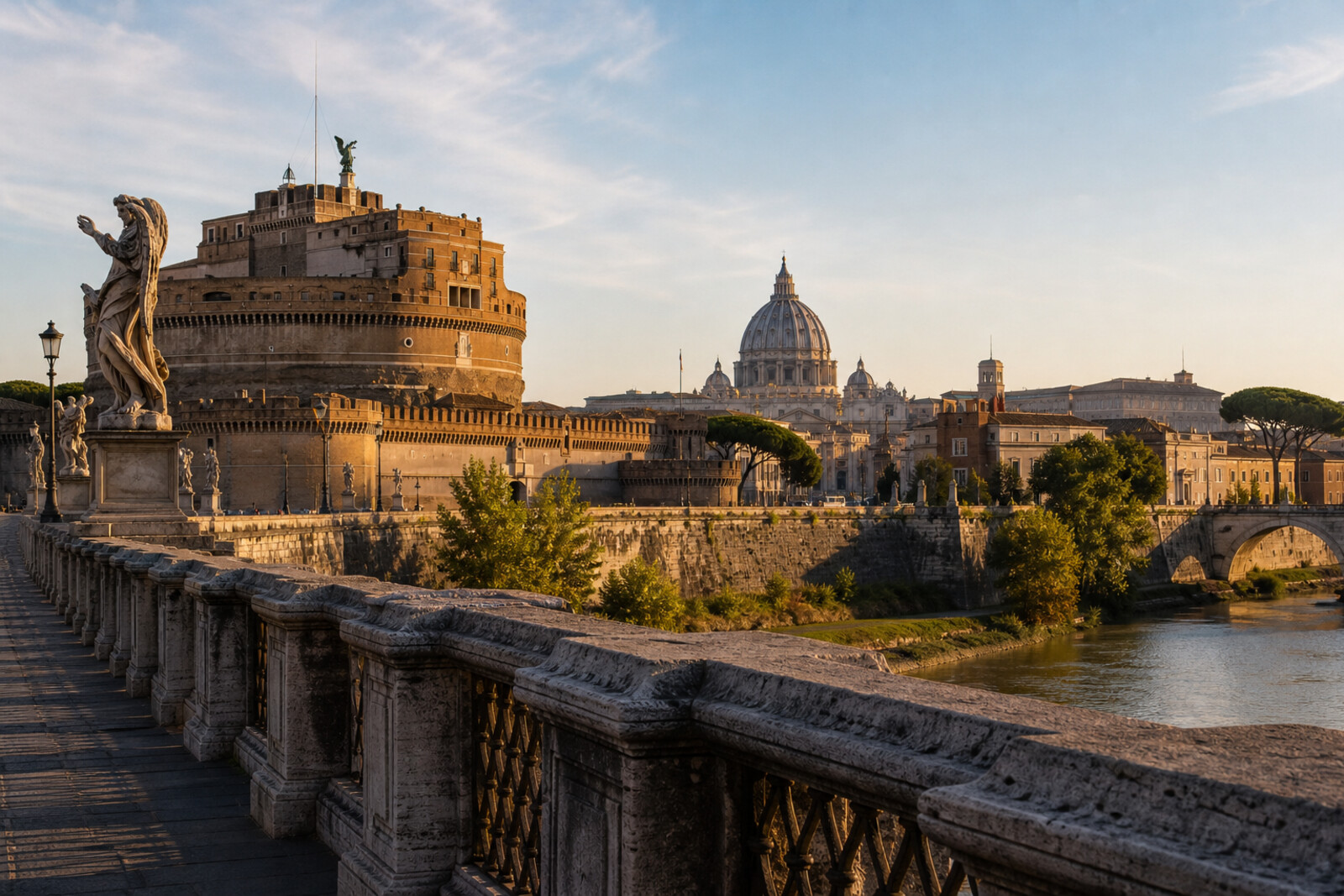
From Castel Sant'Angelo through Borgo to the basilica and the Vatican Museums
Guide On Map on your phone
Open the walk like a regular app
It takes about 10 seconds to install. No app store needed.
The whole path
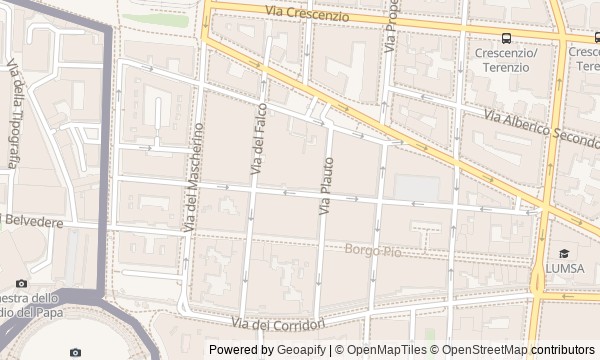
Route map
About the walk
You will begin at the fortress on the Tiber, cross the bridge, walk beside the secret papal corridor, and emerge from cramped Borgo onto a straight avenue leading to the square, the basilica, and the museum courtyards. On this walk, the Vatican will appear not as a separate state behind a wall, but as the end of a long urban road. A mausoleum and bastions, shops and papal houses, colonnades and a hall with an ancient statue will stand side by side along the way. You will learn why temporary coins were needed in the fortress, what led to the removal of chapels from the bridge, and which small plaque remains in the vast square. The avenue to the basilica will look ceremonial, but the story will not let you forget the people whose homes gave way to it. It follows documents, visible objects, and candid qualifications where tradition is not the same as proven fact. By the end, you will see Borgo not as the Vatican's threshold, but as a district where papal power found refuge, made deals, and reshaped the city itself.
Why this order
The castle first establishes the destination of papal retreats: a fortified refuge. The bridge at its walls shows another road to Saint Peter, open to thousands of pilgrims and therefore dangerous in a crush. Returning from the bridge to the castle, you will follow the Passetto di Borgo, a closed road above the streets that explains why the fortress and the Vatican cannot be separated. From the wall, the route descends into Borgo Pio, where papal decisions determined not defense but the makeup of the residents and the district's income. From a narrow street, you will emerge onto Via della Conciliazione, where the urban price of creating a ceremonial approach to the basilica becomes visible. The avenue leads to the square, where a vast ceremonial space once allowed a gunman to get close to a pope. After the square, the basilica explains which tomb has drawn roads and pilgrims here for centuries. The final walk along the Vatican wall leads from the church above a venerated burial to museums that grew from a closed papal collection.
Those who want to see the Vatican as a district of decisions, not merely a collection of masterpieces Those who enjoy stories of politics changing streets and buildings Those ready to alternate between a city walk, a church, and a museum
Those looking only for ancient Rome Those who do not want to enter large church and museum spaces Those who need a walk without returning across the bridge or circling the Vatican wall
Before you go
Decide at the outset which interiors truly fit into your day: the castle, the basilica, and the Vatican Museums are 3 separate visits, each capable of noticeably extending the walk. The museum entrance is on the outside of the wall and requires a separate detour; you cannot get there directly through the basilica. For the museums, it is best to choose a date and entry time in advance, and check access inside the Passetto di Borgo separately: the corridor is always visible from the street, but there is no usual free passage through it. At the basilica and museums, allow for dress requirements and security checks. Bring water, sun protection, and comfortable shoes: there is little shade on the bridge, avenue, and square. On ceremonial days, the usual passages and access areas may change.
When to go
3–5 hours
Backup plan
If queues or restrictions disrupt the plan, keep the outdoor part of the route from the castle to the square: it already forms a complete story and requires no tickets. Instead of several interiors, choose one: the castle for the theme of defense, the basilica for art and the memory of Saint Peter, or the museums for the history of collections. In intense heat, take a long break in Borgo Pio before emerging onto the open avenue. If you miss your museum entry time or have no energy left to circle the wall, end the walk at the basilica and leave the museums for another day: a rushed ending gives less than a calm visit on its own.
Route conditions
Surface. Paved — 3.8 km; unpaved — 117 m (data covers 95% of the route)
Stairs. Flights: 3, 33 m in total
Access. Wheelchair — no; stroller — limited (stairs)
Facilities. Toilets — 14; drinking water — 34
Elevation. Ascent — 81 m; descent — 57 m
OpenStreetMap extract of June 25, 2026: database data, not a check on the ground. Data © OpenStreetMap contributors, ODbL licence
Walk plan
Open in maps ↗- 1
Castel Sant'Angelo
Here you will see how an ancient mausoleum became a papal refuge and a place of surrender. - 2
Ponte Sant'Angelo
This stop will show how a disaster changed the approach to the main pilgrimage crossing of the Tiber. - 3
Passetto di Borgo
The enclosed corridor explains how the pope could negotiate with a king who had entered Rome without leaving the route to the fortress. - 4
Borgo Pio
The history of a new street brings papal ideas of morality into contact with rent, credit, and the safety of expelled women. - 5
Via della Conciliazione
Here, you will need to compare the ceremonial view of the basilica with the vanished houses, shops, and square of old Borgo. - 6
St Peter's Square
This stop will connect the openness of a papal audience with the assassination attempt, the rescue, and the subsequent forgiveness of the shooter. - 7
St Peter's Basilica
The high altar will form a vertical chain from the present church to the early shrine and the Roman Necropolis. - 8
Vatican Museums
The finale will show how a sculpture found in a vineyard became the core of a collection that the popes later opened to the public.
Route features
Everything you need stays in the browser
Progress, saves and your trip plan are stored on this device.
Add Guide On Map to your home screen so the walk opens outside the browser.
How we handle sources, maps and corrections: our editorial standards