 Guide On Map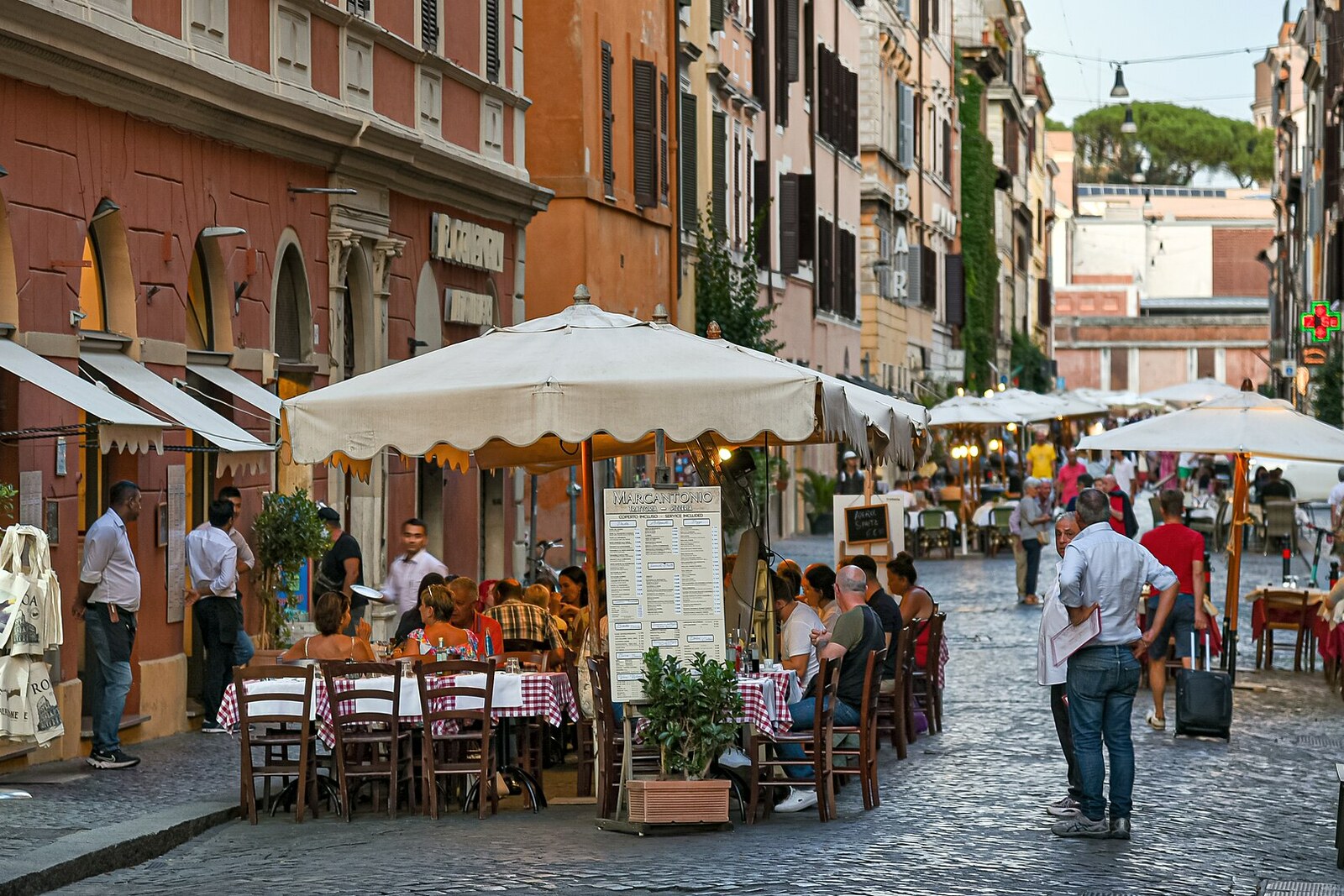
Look around first
What to notice
- The straight line of the narrow street
- Stone paving
- Dense rows of residential façades
The story of the place
The narrow, straight street of Borgo Pio appeared where a low strip of land had once lain north of Passetto di Borgo. When the Tiber flooded, it was inundated and the water stagnated. In the middle of the sixteenth century, the expansion of the square in front of St Peter's Basilica and the moats of Castel Sant'Angelo destroyed some of the housing. Pope Pius IV decided to build a new settlement and at the same time move the outer wall farther away from the old corridor.
The ground was raised with fill, water and sewers were laid in, a school was established, and three streets were built. The main one was named Borgo Pio, after the pope himself. The whole new area received an even more straightforward name: Civitas Pia, the city of Pius.
But laying out a street was not enough—residents were needed who were willing to invest in houses on this recently marshy outskirts. Pius IV promised benefits to those who built here. In the founding bull, he specifically allowed courtesans to settle here—women who earned money through paid liaisons. This provision was entirely practical. A few months earlier, city regulations had forbidden them from living near the homes of married noblewomen. In the new Borgo, they received a legal address, while plot owners gained tenants who could pay.
Pius IV died in December fifteen sixty-five. His successor, Pius V, sought strict observance of church morality and immediately revoked the earlier concession. At the end of June fifteen sixty-six, a Roman report stated that papal guards had forcibly cleared Borgo of courtesans. The women living there were the first to be expelled.
The consequences did not end there. Landlords were left with empty apartments. Merchants demanded payment for goods the women had taken on credit. Duty collectors complained of falling revenues. Some of the expelled women were robbed and killed by bandits outside the city. After these reports, city officials were no longer discussing total expulsion, but a place where women would be allowed to live under supervision.
Gregory XIII continued the construction of Borgo. By fifteen eighty, new houses had appeared here, and the streets had been paved with stone. Later, the outer wall and Porta Angelica were demolished, but the main line of Civitas Pia survived. The street's present name marks the pope who allowed courtesans to settle here—less than a year before his successor ordered them removed from here by force.
Useful on site
The pedestrian street is always open; shops and cafés keep their own hours.
Checked: June 25, 2026. Check the official source before visiting.This is a convenient place for a pause before the open spaces ahead. Do not treat the street as entirely pedestrian: watch for service vehicles and scooters.